Agave Care (Agave 'Blue Glow')

Also known as: Century Plant, Maguey
Agave

About Agave

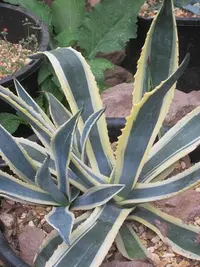
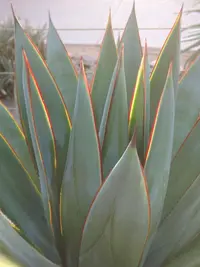
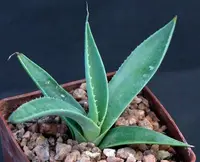
Agave 'Blue Glow' is a compact succulent known for its tight rosette of blue-green leaves edged with red and yellow lines. It grows slowly and stays relatively small, which makes it suitable for containers and small outdoor spaces in mild climates.

This plant is derived from species native to arid regions of Mexico and the southwestern United States, so it is adapted to strong sun and dry conditions. Its thick leaves store water, which increases drought tolerance but also means excess moisture can cause problems.

Agave 'Blue Glow' prefers bright light, fast-draining soil, and infrequent watering. These traits make it low maintenance once established, as long as basic how to care for Agave principles are followed.

Main Plant Requirements

Care Difficulty

Easy Care

Light Preference

Full Sun

Water Requirements

Low Water

Temperature Preference

Warm Climate

Hardiness Zone

9–11

Soil Texture

Sandy, Loamy, Rocky

Soil pH

Slightly acidic (6.5–7.0), Slightly alkaline (7.0–7.5)

Soil Drainage

Well-drained

Fertilization

Minimal (feed rarely)

Get Personalized Care Plan

Scan your plant to receive care tips personalized for your specific plant

Available on iOS and Android

How to Care for the Agave

This compact succulent needs strong, direct light to keep its blue-green color and tight rosette form.

  • Provide 6–8 hours of full sun daily; in very hot inland areas, aim for morning sun with light afternoon shade to prevent leaf scorch.
  • In coastal or mild climates, Agave 'Blue Glow' thrives in all-day sun; in hotter regions, filtered light after 2–3 p.m. reduces burn risk.
  • In winter, low sun is usually safe all day; in summer, watch for pale, stretched growth as a sign of insufficient light or brown patches from excess sun.

This species prefers infrequent, deep watering with thorough drying between soakings.

  • Water only when the top 3–5 cm of soil are completely dry; in hot growing seasons that may mean every 10–21 days, depending on heat and soil type.
  • Use fast-draining, gritty soil so water runs through quickly and does not pool around roots, which are very sensitive to standing moisture.
  • Reduce watering sharply in cool seasons; soft, yellowing leaves and a swollen base signal overwatering, while wrinkled, folding leaves indicate the plant needs a deep drink.

This plant is adapted to warm, dry climates but has some cold tolerance when kept dry.

  • Aim for active growth in 65–85°F (18–29°C); brief heat up to 95–100°F (35–38°C) is tolerated if soil drains well and airflow is good.
  • Protect from prolonged cold; the safe minimum is around 25°F (-4°C) for established plants, but damage risk increases below 28°F (-2°C), especially in wet soil.
  • In regions with frosts, keep the plant as dry as possible in winter and provide frost cloth or overhead cover during hard freezes to limit tissue damage.

Humidity is rarely a concern for Agave 'Blue Glow' in typical home conditions.

Soil for Agave 'Blue Glow' must be very fast-draining and mineral-heavy to prevent root rot.

  • Use a gritty, sandy mix such as 50–70% mineral material (pumice, coarse perlite, or grit) blended with 30–50% cactus potting mix.
  • Aim for slightly acidic to neutral pH around 6.0–7.0, avoiding highly alkaline or salty substrates that restrict nutrient uptake.
  • Ensure the mix stays loose and airy; avoid clay-heavy or compacted soils that hold water around the roots.
  • In rainy climates, increase the proportion of pumice or grit to speed drainage and reduce the risk of crown rot.

This species is very suitable for container growing outdoors and in bright, dry locations.

  • Choose a wide, heavy container to keep the shallow, spreading rosette stable against wind or accidental bumps.
  • Select unglazed terracotta when possible, as it allows faster evaporation and reduces the risk of prolonged wet roots.
  • Fill the pot so the crown sits slightly above the rim, which helps water run off and keeps moisture away from the leaf base.

This succulent needs only light feeding to support healthy growth in containers or poor soils.

  • Use a balanced liquid fertilizer at 1/4–1/2 strength or a low-dose slow-release formula designed for cacti and succulents.
  • Feed once in mid-spring and once in midsummer during active growth; skip feeding in nutrient-rich ground soil.
  • Avoid high-nitrogen products, which can cause weak, lush growth and reduce drought tolerance.
  • Stop feeding in fall and winter to respect natural semi-dormancy and prevent soft, cold-prone tissue.

Agave 'Blue Glow' requires minimal pruning, mainly for hygiene and safety around the sharp leaf tips.

  • Best time for cleanup is late winter or early spring before strong new growth starts.
  • Remove dead, damaged, or diseased leaves at the base with clean, sharp bypass pruners or a knife.
  • Trim or cap individual spine tips if they pose a hazard, without cutting deeply into the leaf blade.
  • Avoid heavy pruning, as removing many leaves weakens the rosette and does not improve flowering or vigor.

This slow-growing agave prefers to stay slightly pot-bound and is repotted only when clearly constrained.

  • Look for roots circling the container, pushing through drainage holes, or water quickly running through as signs to move it up 1 pot size.
  • Plan repotting or garden transplanting for late spring to early summer, when temperatures are warm and growth is active.
  • Typical interval is 3–5 years; use a coarse, fast-draining cactus mix and a container with large drainage holes.
  • Handle the root ball gently, keep roots at the same depth, and withhold water for 3–5 days after repotting to let any injuries callus.

Multiplication of Agave 'Blue Glow' is usually done by offsets rather than by seed in home settings.

  • Separate basal offsets in late spring or early summer once they have several leaves and a small root system.
  • Use a clean, sharp knife to detach pups close to the parent, then allow cut surfaces to dry and callus for 3–7 days.
  • Plant each offset in a gritty, well-drained cactus mix, keeping the rosette just above the soil line.
  • Provide bright light, warm temperatures (70–80°F), and very light watering until new roots and growth are visible.

This agave tolerates brief light frost but benefits from simple winter precautions in colder climates.

  • In-ground plants handle down to about 20–25°F if soil drains very well and stays relatively dry.
  • Apply a thin gravel or rock mulch to keep the root zone drier rather than warm and wet.
  • In areas with prolonged freezes or wet winters, grow in containers and move under bright, frost-free cover.
  • Keep indoor or sheltered plants cool and very dry in winter to reduce rot risk and maintain compact growth.

Care Tips

Manage Pup Production

Remove basal offsets with a clean, sharp knife once they reach 5–8 cm across so the main rosette keeps its compact form and energy is not diverted into overcrowded clumps.

Prevent Leaf Rot

Angle the plant very slightly in its pot or bed so water naturally drains away from the crown, reducing the chance of water sitting in the leaf rosette and causing fungal rot after heavy rain or irrigation.

Use Mineral Mulch

Apply a 2–3 cm top dressing of coarse gravel or pumice around the base to keep leaves clean, reduce soil splash, and improve drainage at the soil surface, which also discourages fungus gnats.

Protect From Hail

If hail or blowing debris is forecast, temporarily move container plants under a solid overhang or use a rigid cover to prevent permanent scarring on the leaves.

Rotate For Symmetry

Quarter-turn the pot every 3–4 weeks so all sides receive similar light exposure, helping to maintain the rosette’s even, symmetrical shape when growing Agave in a bright window or patio setting.

Common Pests and Diseases

Agave snout weevil

This pest bores into the plant base to lay eggs, and larvae tunnel through inner tissues, causing sudden collapse of the rosette. Symptoms include yellowing, wilting, and a loosening or rotting crown with a fermented smell.

Solution

Remove and discard any heavily infested plants, including the main root, to prevent spread. For remaining plants, keep soil very well drained, avoid fresh high-nitrogen fertilizer, and apply a systemic insecticide labeled for snout weevils to the soil around the base in spring before adult activity is high.

Mealybugs

These insects feed on sap and appear as white, cottony clusters in leaf axils and along the leaf margins. Symptoms include sticky honeydew, sooty mold growth, and slowed or distorted growth in young plants.

Solution

Isolate affected plants, then treat visible clusters with cotton swabs dipped in 70% isopropyl alcohol or wash them off with a strong stream of water. For persistent infestations, use an insecticidal soap or horticultural oil spray labeled for succulents, applied in the early morning and repeated as needed while improving airflow around the plant.

Scale insects

These insects form small, hard, dome-shaped bumps on leaves and stems and feed by sucking sap. Symptoms include patchy yellowing, a dull surface on leaves, and occasional honeydew with sooty mold on nearby surfaces.

Solution

Gently scrape off individual scales with a fingernail or soft brush and wipe leaves with a cloth dampened in diluted alcohol. For broader infestations, apply horticultural oil to thoroughly coat the insects, repeating after 7–10 days, and keep the plant in bright, dry conditions to reduce reinfestation risk.

Anthracnose leaf spot

This disease is caused by fungi that create tan to dark brown, sunken spots on leaves, sometimes with concentric rings or darker margins. Symptoms include lesions starting along leaf edges or tips that may merge and cause sections of the leaf to dry out.

Solution

Prune and dispose of affected leaves, cutting back to healthy tissue and keeping cuts dry. Improve airflow, avoid overhead watering, and if the problem continues in humid weather, use a copper-based fungicide labeled for ornamental succulents, applied according to label directions while reducing leaf wetness duration.

Erwinia soft rot

This disease leads to rapidly spreading, mushy, foul-smelling tissue starting at mechanical wounds or water-saturated areas near the base. Symptoms include collapse of individual leaves or whole rosettes with wet, brown, slimy areas.

Solution

Remove and discard the entire plant and surrounding infected debris promptly, as this bacterium spreads easily in moisture. For remaining plants, reduce watering, avoid water sitting in the crown, improve drainage, sanitize cutting tools with alcohol or a 10% bleach solution, and avoid injuring leaves and stems when handling the plant.

Interesting Facts

Hybrid, not wild

This plant is a cultivated hybrid between Agave attenuata and Agave ocahui and does not occur naturally in the wild, so all plants in collections trace back to horticultural propagation rather than a native population.

Distinct glowing margin

The narrow blue-green leaves have a very fine red edge lined with a yellow to golden margin that catches backlighting, creating a pronounced halo effect that is far stronger and more defined than in either parent species.

Compact solitary rosette

Unlike many agaves that offset heavily, this hybrid typically remains a single, symmetrical rosette, which makes it highly valued for geometric container displays and formal landscape designs.

Botan icon

Did you know?

The hybrid was selected and introduced by California plantsman Kelly Griffin and has since become one of the most widely used architectural agaves in modern drought-tolerant and coastal landscape design due to its stable form, strong color contrast, and tolerance of mild seaside exposure.

FAQs about Agave

Brown tips usually come from low humidity, salt buildup, or minor mechanical damage. Browning at the base suggests rot from excess moisture or poor drainage. Remove damaged tissue with sterile tools and correct watering and drainage immediately.

Grow Healthy Plants with Botan Care

Keep your plants happy and healthy with plant identification, disease detection, and easy care guidance.

Botan plant care app — identify plants on mobile

Explore More Plants