Pad stabilization
Use a short gravel berm or rocks around the base to brace heavy pads so they do not flop or snap at the joint in strong wind or after rain.

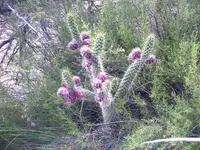
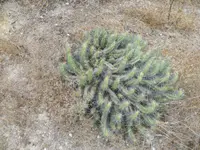
Austrocylindropuntia shaferi is a shrubby cactus known for its jointed, cylindrical stems and sparse but sharp spines. It often forms dense clumps that can create an effective barrier planting. Native to arid regions of South America, it is adapted to strong sun, low rainfall, and rocky, fast-draining soils.
This species has a tough, drought-tolerant nature, which makes it relatively easy to maintain if overwatering is avoided. Flowers are usually modest but add seasonal interest. Those who want to care for Austrocylindropuntia shaferi should provide bright light, minimal moisture, and gritty soil to match its natural habitat.

Care Difficulty
Easy Care

Light Preference
Full Sun

Water Requirements
Low Water

Temperature Preference
Warm Climate

Hardiness Zone
9–11

Soil Texture
Sandy, Loamy, Rocky

Soil pH
Slightly acidic (6.5–7.0), Neutral (7.0)

Soil Drainage
Well-drained

Fertilization
Minimal (feed rarely)
Scan your plant to receive care tips personalized for your specific plant
Available on iOS and Android
This sun-loving cactus needs strong light to maintain compact, healthy growth.
This drought-tolerant cactus requires infrequent, deep watering rather than small, frequent amounts.
This species thrives in warm, dry conditions and tolerates a reasonable range of outdoor temperatures.
Humidity is rarely a concern for Austrocylindropuntia shaferi in typical home or outdoor conditions in the US.
This cactus needs very fast-draining, mineral-based soil to prevent root rot.
This species is well suited to container growing outdoors in sunny, dry locations.
This cactus needs only light feeding to stay healthy in cultivation.
Pruning focuses on removing problem stems and controlling size rather than routine shaping.
Container plants and young outdoor specimens benefit from infrequent but careful transplanting.
Propagation is commonly done from stem cuttings, with seeds used less often in home settings.
This cactus is somewhat cold tolerant but benefits from protection in harsh winter climates.

Plant Health Check
Not sure what's wrong with your plant? Check your plant's health inside the app.
This species forms slender, cylindrical stems made of distinct jointed segments that detach easily, allowing broken pieces to root and start new plants under suitable conditions.
It is native to highland regions of northwestern Argentina and adjacent areas, where it grows in dry, open habitats with strong sun and large temperature fluctuations between day and night.
The plant produces relatively large, tubular white to cream flowers that often open at night or in the cooler hours, an adaptation that likely favors pollination by nocturnal insects or moths in its native range.
Growth is moderate for a cactus. In suitable outdoor conditions it may add 5–15 cm per year, often slower in containers. Cool temperatures, low light, cramped roots, and frequent disturbance will reduce growth rate significantly.
Keep your plants happy and healthy with plant identification, disease detection, and easy care guidance.