string-of-pearls Care (Curio rowleyanus)

Also known as: String-of-Pearls, String-Of-Beads Senecio
string-of-pearls

About string-of-pearls

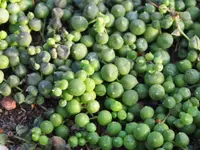
String-of-pearls (Curio rowleyanus) is a trailing succulent from arid regions of southwestern Africa. It stores water in its round, bead-like leaves, which hang on long, slender stems. This gives it a distinct cascading look, often used in hanging baskets or on shelves. The plant grows relatively slowly and prefers stable indoor conditions. Its drought tolerance can make it forgiving, but overwatering and low light quickly cause decline. Understanding how to care for string-of-pearls mainly involves matching its native bright, dry, well-drained habitat with careful watering and strong indirect light.

Main Plant Requirements

Care Difficulty

Moderate Care

Light Preference

Bright Indirect Light

Water Requirements

Low Water

Temperature Preference

Tropical / Frost Sensitive

Hardiness Zone

10–12

Soil Texture

Sandy, Loamy, Rocky

Soil pH

Slightly acidic (6.5–7.0), Neutral (7.0)

Soil Drainage

Well-drained

Fertilization

Minimal (feed rarely)

Get Personalized Care Plan

Scan your plant to receive care tips personalized for your specific plant

Available on iOS and Android

How to Care for the string-of-pearls

Curio rowleyanus needs bright light but protection from harsh midday sun to maintain compact, healthy growth.

  • Provide 4–6 hours of bright, indirect light daily; gentle morning sun from an east window or lightly filtered south light suits string-of-pearls well.
  • Avoid strong midday or afternoon sun behind clear glass, which can scorch pearls and bleach foliage; move 0.5–1 m back or use sheer curtains.
  • In lower light or north exposures, growth may stretch and pearls thin; supplement with a grow light for 10–12 hours in winter at higher latitudes.

Curio rowleyanus prefers infrequent, thorough watering with fast drainage to avoid root rot.

  • Allow the top 2–5 cm of soil to dry fully before watering; in bright, warm conditions this may mean roughly every 10–21 days, but always check the soil first.
  • Use a gritty, fast-draining succulent mix and water until excess runs out, then discard any runoff so roots do not sit in water.
  • In cooler or low-light seasons, lengthen the dry period; firm, wrinkling pearls indicate mild thirst, while mushy, translucent pearls signal overwatering.

This species prefers warm, stable conditions and is sensitive to frost and sudden temperature swings.

  • Aim for 65–80°F (18–27°C) for active growth; brief dips outside this range are tolerated if the soil stays on the dry side.
  • Protect from cold below 40°F (4°C); prolonged exposure near or below freezing can damage stems and roots, especially in wet soil.
  • In hot spells above 90°F (32°C), provide light shade and good airflow, and avoid watering during peak heat to reduce stress and rot risk.

This species tolerates typical indoor humidity and does not need extra moisture focus.

This succulent needs very fast-draining, airy soil to prevent root rot.

  • Use a cactus or succulent mix amended with 30–50% extra mineral material such as perlite, pumice, or coarse sand.
  • Aim for a gritty, open structure that dries within a few days, avoiding compact, peat-heavy substrates.
  • Keep pH slightly acidic to neutral, around 6.0–7.0, which suits most Curio rowleyanus plants.
  • Avoid moisture-retentive mixes with lots of fine compost or clay, which restrict aeration around the roots.

This plant is well suited to container growing, especially in hanging or elevated pots.

  • Choose a shallow, wide container to accommodate surface-leaning roots while allowing stems to trail freely over the rim.
  • Select a pot material that does not stay cold and wet for long periods, such as unglazed terracotta in humid climates.
  • Use containers with generous drainage holes and elevate the pot slightly so water exits quickly and does not pool under the base.

Curio rowleyanus benefits from light, controlled feeding during its active growing season.

  • Use a balanced liquid fertilizer (for example 10-10-10) at 1⁄4–1⁄2 strength for string-of-pearls in spring and summer.
  • Apply every 4–6 weeks when growth is active, on already-moist soil to avoid root burn.
  • Choose either balanced NPK, diluted organic compost extract, or a mild slow-release formula designed for succulents.
  • Stop feeding in fall and winter when growth slows, as excess nutrients can lead to weak, stretched stems.

Curio rowleyanus responds well to light pruning that manages length and maintains plant health.

  • Best time to prune is in spring or early summer, when the plant is actively growing.
  • Use clean, sharp scissors to remove dead, shriveled, or damaged pearls and stems.
  • Shorten overly long, tangled, or sparse strands to encourage denser, cascading growth.
  • Retain healthy tips, which can be rooted as cuttings to produce new plants and a fuller pot.

Curio rowleyanus grows well slightly root-bound, so repot only when clear signs appear.

  • Check for roots circling the pot base, emerging from drainage holes, or noticeably slowed growth as indicators.
  • Plan to repot every 2–3 years in spring, using a shallow container with excellent drainage and gritty succulent mix.
  • Gently loosen the root ball, remove a small amount of old soil, and trim dead roots to reduce stress.
  • After repotting, water lightly once, then allow the mix to dry almost fully before resuming normal watering.

Curio rowleyanus is commonly propagated from stem cuttings that root along the nodes.

  • Take 5–10 cm healthy stem cuttings in spring or summer, removing any shriveled pearls near the base.
  • Lay cuttings on the soil surface or lightly pin nodes into a gritty, barely moist succulent mix.
  • Provide bright, indirect light, warm temperatures (68–75°F), and good air movement for rooting.
  • Limit watering to a light mist or small sips until new growth appears, then transition to normal care.

Curio rowleyanus is frost-sensitive and needs careful winter management in temperate climates.

  • Keep indoor temperatures around 55–65°F in winter and avoid cold drafts from windows or doors.
  • In cold regions, grow Curio rowleyanus in containers that can be moved indoors before temperatures drop near 40°F.
  • Provide bright, indirect light indoors and reduce watering, allowing the soil to dry more between waterings.
  • Ensure pots have free-draining soil to prevent cold, wet conditions that lead to root rot.

Care Tips

Controlled trailing length

Allow vines to trail only 30–60 cm before trimming, then root the cuttings back into the pot to keep the plant dense and reduce stress on older, woody stems.

Strategic top dressing

Use a thin layer of coarse horticultural grit on the soil surface to keep pearls dry at the crown, reduce fungus gnat habitat, and stabilize the shallow root zone.

Supported window placement

Place the pot on an inverted cachepot or plant stand near a bright window so the foliage hangs freely, preventing crushed pearls and encouraging even light on all sides.

Seasonal rest management

During the lowest light months, slightly shorten vine length and remove weak strands so the plant uses its limited energy on maintaining firm, healthy pearls rather than stretched growth.

Routine stem inspection

Once a month, gently lift and separate a few strands to check for hidden rot, mealybugs, or shriveled pearls, which allows earlier intervention and improves long-term success when caring for string-of-pearls.

Common Pests and Diseases

Mealybugs

This pest feeds on sap in the leaf nodes and along the pearl strings, causing yellowing, shriveling, and sticky residue. Symptoms include cottony white clusters wedged between the beads or at the stem base.

Solution

Quarantine the plant, then dab visible mealybugs with cotton swabs dipped in 70% isopropyl alcohol and rinse the foliage gently after treatment. Repeat weekly until no new insects appear, and reduce excess nitrogen fertilization, as softer growth is more attractive to mealybugs when caring for string-of-pearls.

Spider mites

These insects thrive on string-of-pearls in warm, dry indoor air, leading to dull, stippled pearls and fine webbing along the strings. Symptoms include slowed growth, tiny moving dots on the stems, and loss of the plant’s normal plump look.

Solution

Shower the plant with a gentle, lukewarm spray to remove mites and webbing, let it dry, then apply an insecticidal soap or horticultural oil labeled for indoor use. Increase ambient humidity slightly and improve airflow, avoiding direct blasts from heaters or vents that favor mite outbreaks.

Fungal stem rot

This disease develops when stems stay wet for long periods, often in dense hanging pots, leading to blackened, mushy sections that collapse suddenly. Symptoms include yellowing pearls above the affected section and a foul smell at the soil surface or along rotted stems.

Solution

Cut away and discard all soft, black, or foul-smelling strings with sterile scissors, then let the remaining plant dry more thoroughly between waterings. Repot into a very fast-draining succulent mix with a high proportion of mineral grit, and water carefully at the soil level only when the mix is fully dry.

Aphids

These insects cluster on tender new growth and flower stalks, sucking sap and causing distorted, stunted strings and sticky honeydew. Symptoms include misshapen young pearls and presence of small green, black, or brown soft-bodied insects near the tips.

Solution

Rinse the plant under a gentle stream of water to dislodge aphids, then treat remaining colonies with insecticidal soap, ensuring good coverage of stems and undersides of pearls. Repeat every 5–7 days until the infestation is cleared, and remove heavily infested flower stalks if necessary.

Edema

This physiological disorder occurs when roots take up water faster than the plant can transpire, causing pearls to split, blister, or develop corky spots. Symptoms include individual beads bursting or scarring while nearby pearls appear otherwise healthy.

Solution

Allow the potting mix to dry more deeply between waterings and avoid sudden heavy soaking after a dry spell. Ensure the plant receives bright light and good airflow, and use a very porous, gritty mix so excess water drains rapidly from the root zone.

Interesting Facts

Pearl-shaped leaf anatomy

The spherical leaves have a specialized translucent tissue band, sometimes called a window, that allows light deeper into the leaf so more internal cells can photosynthesize in strong sun without overheating.

Drought-adapted storage

Each bead-like leaf acts as a water-storage organ, enabling the plant to survive long dry spells in its native arid habitats of southwestern Africa where rainfall is irregular and often sparse.

Ground-hugging growth habit

In the wild this species grows as a prostrate creeper over rocky slopes and sandy ground, with stems rooting at nodes and forming dense mats that help stabilize soil and reduce water loss from the surface.

Botan icon

Did you know?

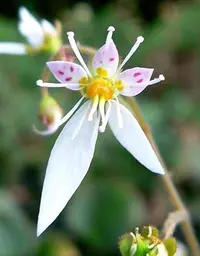
The flowers of Curio rowleyanus are small and white but release a noticeable sweet, clove-like scent, an adaptation thought to attract specific pollinating insects in its native range despite the flowers’ inconspicuous appearance.

FAQs about string-of-pearls

This species usually flowers in late winter to spring when given a cool, bright rest period. Blooms are more likely when days are shorter, nights are slightly cooler, and the plant is somewhat root-bound and not overfertilized.

Grow Healthy Plants with Botan Care

Keep your plants happy and healthy with plant identification, disease detection, and easy care guidance.

Botan plant care app — identify plants on mobile

Explore More Plants