


Stabilize Tall Stems
As stems gain height, anchor the pot with a heavy cachepot or top-dress with coarse gravel to prevent tipping, and use a single sturdy stake only if a leaning stem risks snapping at the base.

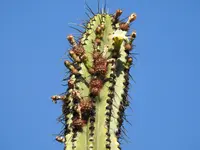
Stenocereus martinezii is a columnar cactus known for its tall, upright stems with clear ribbing and clusters of sharp spines. Mature plants can form multi-stemmed clumps that resemble a small, branching cactus tree.
This species is native to arid regions of Mexico, where it grows in rocky, well-drained soils and full sun. It is drought tolerant and slow growing, which makes it relatively low maintenance once established. Understanding how to care for Stenocereus martinezii mainly involves providing strong light, minimal water, and gritty soil that dries quickly.

Care Difficulty
Moderate Care

Light Preference
Full Sun

Water Requirements
Low Water

Temperature Preference
Tropical / Frost Sensitive

Hardiness Zone
10–11

Soil Texture
Sandy, Loamy, Rocky

Soil pH
Slightly acidic (6.5–7.0), Neutral (7.0)

Soil Drainage
Well-drained

Fertilization
Minimal (feed rarely)
Scan your plant to receive care tips personalized for your specific plant
Available on iOS and Android
This columnar cactus prefers strong sun but benefits from gradual exposure in hot climates.
This desert cactus needs thorough but infrequent watering and fast-draining soil.
This species thrives in warm, arid climates with hot days and mild nights.
This cactus tolerates dry indoor air and rarely needs humidity adjustment.
Use a very fast-draining, mineral-heavy mix to prevent root rot in containers.
This species adapts well to container growing when the pot supports its tall, heavy stems.
Feeding should be light, as this desert cactus is adapted to nutrient-poor soils.
Pruning needs for Stenocereus martinezii are minimal and mainly corrective.
This columnar cactus is slow-growing and dislikes frequent disturbance of its root system.
Propagation of Stenocereus martinezii is commonly done from stem cuttings or seeds under warm, dry conditions.
Cold protection is important for this frost-sensitive cactus, especially outside warm climates.

Plant Health Check
Not sure what's wrong with your plant? Check your plant's health inside the app.
This columnar cactus is naturally restricted to dry regions of western Mexico, where it grows on rocky slopes and canyon edges within tropical dry forest and thorn-scrub vegetation.
The plant produces large, white, nocturnal flowers that open after dusk and are adapted for pollination by bats and possibly large nocturnal moths, which are attracted by the pale color and strong scent.
In its native habitat it often forms multi-branched, tree-like clumps several meters tall, creating a candelabra silhouette that provides structural habitat and perching sites for birds and other wildlife.
Growth is generally slow to moderate. Young plants may add 5–15 cm per year, then speed up slightly once well established. Container size, light intensity, warmth, and nutrient availability strongly influence overall growth rate and final size.
Keep your plants happy and healthy with plant identification, disease detection, and easy care guidance.

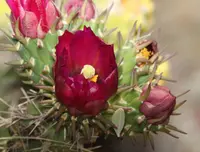
Thurber's Cholla
Cylindropuntia thurberi
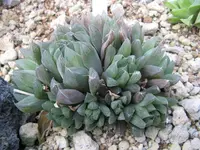
Haworthia cooperi var. pilifera
Haworthia cooperi var. pilifera
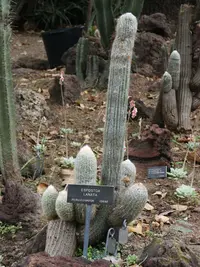
cotton ball cactus
Espostoa lanata
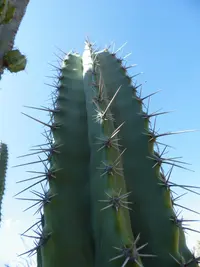
Stenocereus stellatus
Stenocereus stellatus
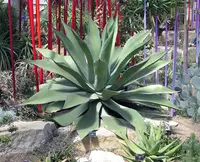
Butterfly agave
Agave potatorum
Aichryson parlatorei
Aichryson parlatorei
Spanish Aizoon
Aizoanthemopsis hispanica

Toumey's century plant
Agave toumeyana