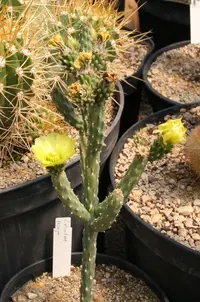
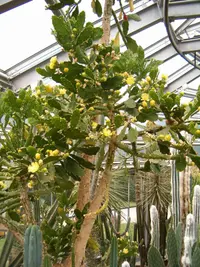
Thurber's Cholla Care (Cylindropuntia thurberi)

Thurber's Cholla

About Thurber's Cholla

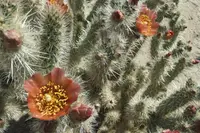
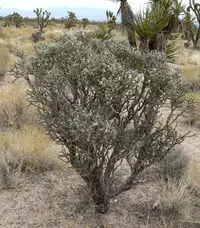
Thurber's cholla, Cylindropuntia thurberi, is a branching desert cactus native to the Sonoran Desert of the southwestern United States and northern Mexico. It forms upright, shrubby clumps with many jointed, cylindrical stems densely covered in sharp spines. In habitat it grows on dry, rocky slopes and open desert flats, often in very hot, sunny conditions with minimal rainfall. Its strong drought tolerance and low nutrient needs can make it relatively easy in suitable climates, but the spines require careful handling. Those who want to care for Thurber's Cholla should provide strong light, very fast-draining soil, and minimal watering to mimic its natural environment.

Main Plant Requirements

Care Difficulty

Moderate Care

Light Preference

Full Sun

Water Requirements

Low Water

Temperature Preference

Warm Climate

Hardiness Zone

9–11

Soil Texture

Sandy, Loamy, Rocky

Soil pH

Slightly acidic (6.5–7.0), Slightly alkaline (7.0–7.5)

Soil Drainage

Well-drained

Fertilization

Minimal (feed rarely)

Get Personalized Care Plan

Scan your plant to receive care tips personalized for your specific plant

Available on iOS and Android

How to Care for the Thurber's Cholla

This desert cactus needs intense light to stay compact and flower well outdoors.

  • Provide 8–10 hours of direct sun daily; Thurber's Cholla thrives in full, unfiltered exposure typical of open desert sites.
  • Accepts brief partial shade, especially light afternoon shade in very hot regions, but prolonged shade leads to weak, elongated stems and reduced spine density.
  • Newly planted specimens benefit from 1–2 weeks of filtered sun to prevent scorch; once established, only extreme heat plus reflected sun may cause tip yellowing.

This species is highly drought-tolerant and must dry thoroughly between waterings.

  • In the ground, water only after a prolonged dry spell; ensure the top 5–10 cm of soil is completely dry and stems are firm before adding any moisture.
  • Use very fast-draining, sandy or gravelly soil so water runs through quickly and does not pool around the roots of Cylindropuntia thurberi.
  • Overwatering shows as yellowing, soft, or collapsing segments, while severe drought shows shriveling ribs; reduce or stop watering during cool winter months.

This cactus is adapted to hot desert climates but has moderate cold tolerance when dry.

  • Optimal growth occurs around 75–95°F (24–35°C) during the growing season, with cooler nights improving overall vigor and stem firmness.
  • Mature plants can tolerate short dips to about 15–20°F (-9 to -6°C) if soil is dry, but prolonged freezing with wet soil greatly increases rot risk.
  • Handles extreme heat above 100°F (38°C) if roots are established and soil drains quickly; young plants may benefit from light afternoon shade during heat waves.

This desert cactus thrives in dry air and does not need added humidity.

  • Aim for 20–40% humidity, similar to typical heated indoor air in arid regions.
  • Dry indoor air is usually acceptable; excess humidity combined with cool temperatures raises rot risk.
  • Humidity stress appears as blackening at stem bases or persistent softness, so increase air movement and reduce crowding if this develops.

This species needs very fast-draining, mineral-rich soil to prevent root and stem rot.

  • Use a sandy, gritty mix such as 60–70% mineral material (pumice, coarse sand, small gravel) with 30–40% cactus potting mix.
  • Aim for slightly acidic to neutral pH, around 6.0–7.0, which suits most cactus substrates.
  • Improve aeration by adding extra pumice or perlite until water runs through in seconds and the mix feels loose, not compact.
  • Avoid clay-heavy, peat-dense, or water-retentive mixes, which hold moisture around the roots and quickly damage Cylindropuntia thurberi.

This cactus is suitable for container growing if the pot is stable and drains very quickly.

  • Choose a wide, heavy terracotta or concrete pot to counterbalance the tall, branching stems and reduce tipping risk in wind.
  • Select a pot only 2–3 cm wider than the root mass so the mix dries quickly and does not stay wet around unused edges.
  • Raise the pot on feet or bricks outdoors so water exits the drainage holes freely and the base does not sit on wet surfaces.

This desert cactus needs minimal feeding, as Cylindropuntia thurberi is adapted to poor, sandy soils.

  • If container-grown, use a low-nitrogen balanced cactus fertilizer (for example 5-10-10) at 1/2–1/4 strength.
  • Feed once at the start of active growth in spring and, at most, once more in early summer.
  • Avoid fertilizing in fall and winter to prevent soft, frost-sensitive growth.
  • Never apply fertilizer to dry soil; water lightly first to reduce root burn risk.

Pruning Cylindropuntia thurberi is mainly for safety, health, and space management rather than for stimulating growth.

  • Best time is late winter to early spring, before strong new growth begins.
  • Remove dead, diseased, storm-damaged, or rubbing joints using long-handled loppers or a pruning saw.
  • Cut whole segments cleanly at joints; this maintains the natural outline without stimulating excessive branching.
  • Use thick gloves and tongs, then safely collect and dispose of dropped segments to prevent unwanted rooting.

Container-grown plants need only infrequent repotting, while garden-grown Cylindropuntia thurberi is usually transplanted just once to a permanent site.

  • Plan transplanting or repotting for late spring, once frost risk has passed and soil is warming.
  • Look for roots circling the pot drainage holes, top-heaviness, or stalled growth as signs a larger container is needed.
  • Move up only 1 pot size, using a sharply draining cactus mix, and keep the root ball as intact as possible.
  • Water lightly after moving, then allow the mix to dry between waterings to limit rot and transplant shock.

New plants are most often raised from stem cuttings, though seeds are also possible for Cylindropuntia thurberi.

  • Take healthy stem segments in late spring to early summer, handling with thick gloves and tongs.
  • Allow cut surfaces to dry and callus for 5–10 days in a shaded, airy place before planting.
  • Set callused segments upright in a gritty, barely moist cactus mix and keep warm with bright light.
  • For seed, use shallow trays with sandy mix, provide warmth and light, and water very sparingly to avoid damping-off.

This species is fairly cold tolerant in dry conditions but benefits from simple winter management in cooler climates.

  • Mature plants usually handle brief drops near 15–20°F if the soil stays dry and drainage is excellent.
  • In colder or wetter regions, mound gritty mulch or gravel around the base to keep the root zone drier.
  • For container plants, move pots under a covered porch or unheated greenhouse to avoid prolonged freezing and winter rain.
  • Reduce or stop watering in winter so stems stay firm and roots do not rot in cold, wet soil.

Care Tips

Safe handling setup

Use long-handled tongs and thick leather gloves when repotting or moving the plant, and keep a dedicated tray or cart so you can reposition it without grabbing the stems directly.

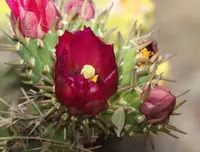
Spine and glochid removal

Keep duct tape and fine tweezers on hand to remove detached spines or tiny barbed hairs from skin or tools, pressing tape gently on the area first and then using tweezers for any remaining spines.

Stability in containers

Anchor tall plants in pots by using a heavy, wide container and a top dressing of coarse gravel, which adds weight and prevents the root ball from tipping in strong wind.

Sun acclimation routine

When moving a nursery or indoor plant into full desert sun, increase direct exposure by 30–60 minutes every few days over 2–3 weeks to avoid stem scald and allow tissues to thicken gradually.

Wildlife and child spacing

Position the plant well away from paths, play areas, and narrow gateways, and allow at least 60–90 cm of clear space around it to reduce accidental contact while still enjoying the structural form when growing Thurber's Cholla.

Common Pests and Diseases

Cochineal scale

This pest forms dense white, cottony clusters on joints and ribs, often exuding vivid red carminic dye when crushed. Infestations weaken segments and can attract ants that farm the insects for honeydew.

Solution

Remove heavily infested pads and dispose of them, then spray remaining stems with a strong jet of water to dislodge insects. Follow with applications of insecticidal soap or a light horticultural oil on a dry, cool morning, repeating every 7–10 days until no new colonies appear and reducing nearby ant activity to slow reinfestation.

Cactus longhorn beetle

This pest bores into stems near the base, causing internal tunneling, collapse of segments, and sometimes sudden plant death. Symptoms include oozing at entry holes and weakened, leaning stems.

Solution

Inspect the lower stems and soil surface at dusk or night and hand-pick adult beetles where practical. Cut out and destroy tunneled or collapsing segments, then reduce irrigation and fallen debris around the base to make the site less attractive to egg-laying beetles, using physical barriers or low-level night lighting in small plantings if pressure is high.

Armillaria root and crown rot

This disease attacks the base and underground portions of the plant, leading to gradual yellowing, shriveling, and eventual collapse despite apparently dry surface conditions. Symptoms include decayed tissue at the crown and possible white fungal fans under the bark or in surrounding soil on woody roots or bases.

Solution

Uproot and destroy severely affected plants, including as much surrounding root material as possible, and avoid replanting another cactus in the exact spot for several years. Improve drainage, avoid organic mulches at the base, and keep irrigation lines away from the crown to reduce moisture that favors this fungus, placing new plants in slightly raised, very well-drained mounds.

Fusarium stem canker

This disease causes localized sunken, discolored patches on stems that may expand into elongated cankers and lead to segment dieback. Symptoms include brown to purplish internal tissue beneath the lesion and, in advanced cases, cracking or oozing.

Solution

Prune out affected segments several cm above visible discoloration using a sterilized blade and discard them in the trash. Disinfect tools between cuts, avoid overhead watering, and maintain a sharp, gritty, fast-draining soil so wounds dry quickly and the fungus has fewer entry points.

Spider mites

These insects feed on the green tissue between spines, causing fine stippling, dull gray-green patches, and occasional fine webbing in sheltered areas. Infestations are more common in hot, very dry, wind-sheltered conditions, especially in Thurber's Cholla indoor care situations or greenhouse culture.

Solution

Spray stems thoroughly with a firm stream of water to knock mites off, then apply insecticidal soap to all surfaces, including between segments, repeating weekly until new damage stops. Increase airflow, avoid hot stagnant corners, and if grown under cover slightly raise humidity or periodically hose plants down to make conditions less favorable for mites.

Interesting Facts

Desert bat nursery

This cactus is a key nectar source for the lesser long-nosed bat in the Sonoran Desert, helping fuel the bats’ spring migration when few other plants are flowering.

Night-blooming strategy

Its pale, tubular flowers open mainly at night and in the very early morning, a timing that favors pollination by nocturnal bats and moths rather than daytime bees.

Specialist cactus host

In parts of its range, it serves as an important host for cactus-feeding insects such as cochineal scale, which in turn provide food for native birds and other predators, linking it tightly to local desert food webs.

Botan icon

Did you know?

Indigenous O’odham communities traditionally harvested and ate the ripe fruits of this cholla raw or dried, carefully using long hooked sticks to avoid the spines, and its fruit remains a culturally important seasonal wild food in parts of the Sonoran Desert.

FAQs about Thurber's Cholla

This cactus is very attractive to native bees and other insects when flowering, and its fruits provide food for birds. Positioning it in open, sunny spots helps support local pollinator activity and desert wildlife.

Grow Healthy Plants with Botan Care

Keep your plants happy and healthy with plant identification, disease detection, and easy care guidance.

Botan plant care app — identify plants on mobile

Explore More Plants