


Deep pot choice
Use a deep, heavy clay pot with ample drainage holes so the long taproot can develop properly and the plant stays stable in strong sun and wind.

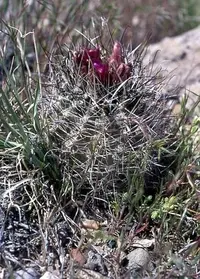
The desert valley fishhook cactus, Sclerocactus spinosior, is a small, slow-growing desert cactus with a rounded body and dense, hooked spines. It often remains compact, forming a single stem that can become slightly elongated with age.
This species is native to arid regions of the southwestern United States, where it grows in rocky, well-drained soils at higher elevations. It produces small, colorful flowers near the top of the stem, but blooming can be irregular in cultivation.
Sclerocactus spinosior is considered challenging, since it is sensitive to excess moisture, root disturbance, and poorly drained soil. It suits experienced growers who understand how to care for desert valley fishhook cactus in dry, bright conditions.

Care Difficulty
Hard Care

Light Preference
Full Sun

Water Requirements
Low Water

Temperature Preference
Cold Hardy

Hardiness Zone
5–9

Soil Texture
Sandy, Rocky, Loamy

Soil pH
Slightly acidic (6.5–7.0), Neutral (7.0)

Soil Drainage
Well-drained

Fertilization
Minimal (feed rarely)
Scan your plant to receive care tips personalized for your specific plant
Available on iOS and Android
This high-desert cactus needs strong sun but benefits from gradual exposure in cultivation.
Watering for this species must be sparse and controlled to avoid root rot.
This cactus is adapted to continental climates with hot summers and cold, dry winters.
Humidity is not a major factor for Sclerocactus spinosior, which thrives in very dry air similar to its native desert habitat.
This cactus needs a very fast-draining, mineral-rich substrate that mimics rocky desert scree.
This species is suitable for container growing when the pot is chosen to keep roots dry and stable.
This desert valley fishhook cactus thrives in lean soils and needs only minimal fertilization in containers.
Pruning needs for Sclerocactus spinosior are minimal and mostly limited to health and safety reasons.
Container-grown plants rarely need repotting, and in-ground Sclerocactus spinosior should be disturbed as little as possible.
Propagation of Sclerocactus spinosior is specialized and usually done from seed by experienced growers.
This species is quite cold hardy when kept dry but still benefits from thoughtful winter care in cultivation.

Plant Health Check
Not sure what's wrong with your plant? Check your plant's health inside the app.
This cactus naturally occurs in arid, high-elevation basins and foothills of the Great Basin region in the western United States, often between roughly 1,200–2,400 m where winters are cold and summers are intensely dry.
The plant develops distinctive, strongly hooked central spines that can help snag wind-blown debris, which in turn can trap moisture and provide slight protection from herbivores.
Unlike many warm-desert cacti, this species tolerates substantial winter cold and snow cover in its native range, surviving seasonal freeze–thaw cycles that would damage more tropical cactus species.

This species is considered of conservation concern in parts of its range, and some wild populations are monitored or regulated because habitat disturbance and illegal collecting have reduced local numbers, making ethical sourcing important for anyone who wants to grow Sclerocactus spinosior.
Growth is slow, often only 0.5–1 cm per year in cultivation. Seedlings may take several years to show noticeable size. Patience is essential when growing desert valley fishhook cactus, even under ideal light and drainage conditions.
Keep your plants happy and healthy with plant identification, disease detection, and easy care guidance.

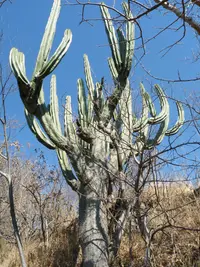
Pitaya de Queretaro
Stenocereus queretaroensis
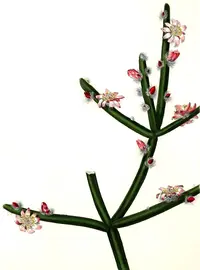
Rhipsalis dissimilis
Rhipsalis dissimilis
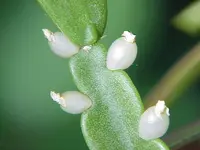
Rhipsalis micrantha
Rhipsalis micrantha
Brincadora Cholla
Cylindropuntia alcahes
branched pencil cholla
Cylindropuntia ramosissima
Tesajo Cholla
Cylindropuntia tesajo
Scheer's fishhook cactus
Sclerocactus scheerii
Eulychnia castanea
Eulychnia castanea