Use hanging height
Position the pot high enough that stems can hang freely without touching furniture or walls, which reduces mechanical damage and helps you see and remove any shriveled or damaged segments early.

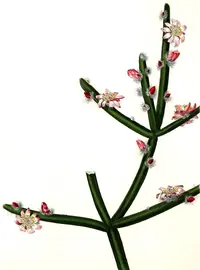
Rhipsalis dissimilis is an epiphytic cactus native to tropical forests of Brazil, where it grows on tree branches rather than in desert soil. It forms long, slender, branching stems that drape or cascade, giving it a soft, hanging appearance ideal for baskets and high shelves.
Unlike most cacti, it prefers filtered light, regular moisture, and a loose, well-drained mix similar to orchid or epiphyte soil. Its tolerance of indoor conditions and moderate growth rate make it relatively easy for beginners who want to learn how to care for Rhipsalis dissimilis without dealing with sharp spines.

Care Difficulty
Easy Care

Light Preference
Bright Indirect Light

Water Requirements
Moderate Water

Temperature Preference
Tropical / Frost Sensitive

Hardiness Zone
11–12

Soil Texture
Sandy, Loamy, Organic-rich

Soil pH
Acidic (5.5–6.5), Slightly acidic (6.5–7.0)

Soil Drainage
Well-drained

Fertilization
Light (every 4–6 weeks)
Scan your plant to receive care tips personalized for your specific plant
Available on iOS and Android
This forest cactus prefers bright, indirect light that mimics dappled woodland shade.
Moist but not saturated conditions suit this epiphytic cactus best.
Stable, mild temperatures support healthy growth and prevent stress in this species.
This epiphytic cactus handles typical indoor humidity but benefits from slightly moist air.
Use a loose, airy mix that drains rapidly yet holds light, even moisture around the roots.
This species is very suitable for container growing, especially in hanging pots that showcase its trailing stems.
Light feeding supports healthy, cascading growth without overwhelming this epiphytic cactus.
Pruning is mainly used to tidy the plant and guide its hanging shape.
Repotting focuses on refreshing the airy mix rather than giving a much larger pot.
Propagation is commonly done from stem cuttings rather than seed.
This species dislikes frost and benefits from moderate winter protection in cool climates.

Plant Health Check
Not sure what's wrong with your plant? Check your plant's health inside the app.
This species naturally grows as an epiphyte on tree branches in Atlantic rainforest remnants of Brazil, anchoring to bark rather than rooting in deep soil.
It forms long, strongly pendant stems made of flattened, jointed segments, which allows the plant to drape from branches and capture light under a forest canopy.
Its thin, leafless stems perform all photosynthesis and absorb water quickly from passing rain and mist, an adaptation to the frequent but brief moisture pulses in its native habitat.
This species grows moderately, adding noticeable length each year rather than each month. Growth is faster in warm, bright seasons and slows in winter. Limited root space, poor nutrition, and low light all reduce extension of the hanging stems.
Keep your plants happy and healthy with plant identification, disease detection, and easy care guidance.

-1-200x150.webp)