


Rotate For Symmetry
Turn the pot 90° every 2–3 weeks during active growth so light reaches all sides evenly and the column stays straight and evenly woolly instead of leaning toward the window.

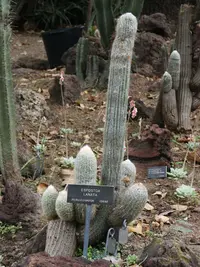
Cotton ball cactus, Espostoa lanata, is a slow-growing columnar cactus known for its dense white wool that covers the stems like soft cotton. This wool helps protect the plant from intense sun and temperature swings in its native Andean habitat in Peru and Ecuador.
Mature plants form upright columns with small spines hidden under the hair-like covering and may eventually branch or produce fragrant night-blooming flowers in ideal conditions. It is moderately easy to grow if given strong light, very well-drained gritty soil, and careful, infrequent watering. Understanding how to care for cotton ball cactus mainly involves avoiding excess moisture and providing as much bright light as possible indoors.

Care Difficulty
Moderate Care

Light Preference
Full Sun

Water Requirements
Low Water

Temperature Preference
Tropical / Frost Sensitive

Hardiness Zone
10–12

Soil Texture
Sandy, Rocky, Loamy

Soil pH
Slightly acidic (6.5–7.0), Neutral (7.0)

Soil Drainage
Well-drained

Fertilization
Minimal (feed rarely)
Scan your plant to receive care tips personalized for your specific plant
Available on iOS and Android
Espostoa lanata thrives in bright, strong light that mimics its high-altitude desert habitat.
Watering for this cactus should mimic infrequent desert rains with thorough drying between events.
This species prefers warm, dry conditions with a distinct cool, but not freezing, rest period.
Humidity is a minor factor for this arid-adapted cactus, which thrives in dry indoor air.
Espostoa lanata prefers a very fast-draining, mineral-heavy substrate that dries quickly between waterings.
This species is very suitable for container growing due to its slow, upright habit and modest root system.
Espostoa lanata benefits from modest, controlled feeding during its active season in spring and summer.
Espostoa lanata needs almost no structural pruning, only occasional maintenance to remove problem tissue.
Container-grown Espostoa lanata prefers infrequent repotting with minimal root disturbance.
Multiplying Espostoa lanata is usually done from seed, since mature plants branch slowly and offsets are limited.
Espostoa lanata is frost-sensitive and needs cool, dry, bright conditions with protection from freezing in winter.

Plant Health Check
Not sure what's wrong with your plant? Check your plant's health inside the app.
This cactus grows on arid Andean slopes in Peru and southern Ecuador, where its dense white hairs help trap moisture from frequent mountain mists, improving water availability around the stem surface.
The thick, wool-like covering is made of specialized hairs called trichomes that reflect intense high-altitude sun, reduce temperature swings on the stem, and offer some protection from herbivores.
Mature plants produce tubular white flowers that open mainly at night, an adaptation thought to favor pollination by nocturnal visitors such as moths or bats in its native range.

In its natural habitat this species can form tall, columnar stems that cluster over time, creating visually striking groups that can dominate rocky slopes and become a distinctive element of dry montane landscapes.
This species usually needs to reach several years of age and form a woody, mature stem before flowering. Outdoor conditions with strong light and cooler, dry winters promote buds. Indoor plants often stay juvenile and may never bloom.
Keep your plants happy and healthy with plant identification, disease detection, and easy care guidance.

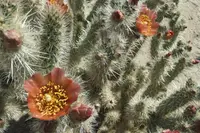
Wolf's opuntia
Cylindropuntia wolfii
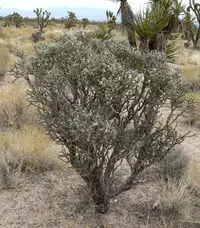
branched pencil cholla
Cylindropuntia ramosissima

Toumey's century plant
Agave toumeyana
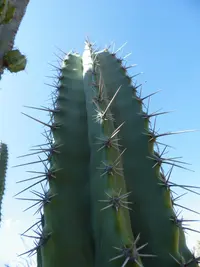
Stenocereus stellatus
Stenocereus stellatus
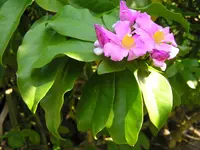
rose cactus
Rhodocactus grandifolius
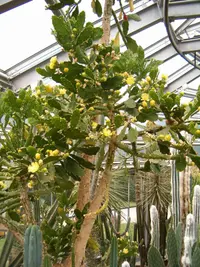
Brazilian Prickly Pear
Brasiliopuntia brasiliensis
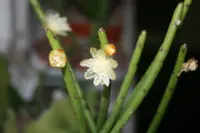
Rhipsalis floccosa
Rhipsalis floccosa
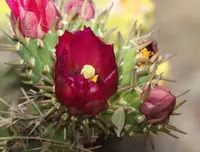
Thurber's Cholla
Cylindropuntia thurberi