threadleaf giant hyssop Care (Agastache rupestris)

threadleaf giant hyssop

About threadleaf giant hyssop

Threadleaf giant hyssop (Agastache rupestris) is a compact, upright perennial herb from the arid regions of the southwestern United States and northern Mexico. It belongs to the mint family and is valued in dry, pollinator-friendly gardens.

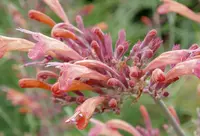
Plants form narrow, bushy clumps of fine, aromatic foliage with tall spikes of warm orange to salmon flowers that age to soft purple. The airy, threadlike leaves and vertical stems create a light, textured look in mixed borders.

This species is adapted to lean, well-drained soils and low to moderate moisture, making it suitable for xeriscapes and low-maintenance plantings. Once its basic needs are understood, it is relatively straightforward to care for threadleaf giant hyssop in full sun and dry conditions.

Main Plant Requirements

Care Difficulty

Easy Care

Light Preference

Full Sun

Water Requirements

Low Water

Temperature Preference

Cold Hardy

Hardiness Zone

5–9

Soil Texture

Sandy, Loamy, Rocky

Soil pH

Slightly acidic (6.5–7.0), Neutral (7.0)

Soil Drainage

Well-drained

Fertilization

Minimal (feed rarely)

Get Personalized Care Plan

Scan your plant to receive care tips personalized for your specific plant

Available on iOS and Android

How to Care for the threadleaf giant hyssop

This sun-loving perennial thrives in bright, open conditions typical of dry western landscapes.

  • Provide 6–8 hours of direct sun daily; morning to mid-afternoon sun produces the best flowering and compact growth in threadleaf giant hyssop.
  • Plant in an open site; it tolerates light afternoon shade in hotter regions, but flowering and fragrance decrease in heavier shade.
  • Avoid densely shaded locations, which cause weak, floppy stems; in very intense summer sun, slight afternoon shade can reduce leaf scorch, especially in dry, reflective sites.

This species prefers dry, fast-draining conditions and is highly drought tolerant once established.

  • Water deeply only when the top 5–7 cm of soil is completely dry; in many climates this means less than once per week after establishment.
  • Ensure sharply drained, gritty or sandy soil so excess water moves away quickly; standing water or heavy clay greatly increases root and crown rot risk.
  • Reduce or stop supplemental water in cool or wet seasons; wilting that recovers at night suggests dryness, while yellowing, limp stems often indicate overwatering for Agastache rupestris.

This plant is adapted to continental climates with cold winters and hot, dry summers.

  • Active growth and flowering are strongest in 65–85°F (18–29°C); plants tolerate short spikes to about 95°F (35°C) if soil drains well and air movement is good.
  • Established clumps typically survive winter lows near -10°F (-23°C) with snow cover and drainage; avoid siting in low, soggy spots that freeze and thaw repeatedly.
  • Young plants are more vulnerable to hard frost; in very cold zones, mulch crowns lightly after soil freezes to buffer rapid temperature swings and protect roots.

Agastache rupestris prefers dry air and usually does not need special humidity management.

  • Target 30–50% humidity, similar to typical indoor or outdoor air in arid and semi-arid regions.
  • Low humidity is well tolerated; problems are more often from excess moisture around foliage than from dry air.
  • Humidity stress shows as grey mold or limp, spotting leaves in overly damp, stagnant air; improve air movement rather than misting threadleaf giant hyssop.

This species needs lean, fast-draining soil that mimics rocky, arid habitats.

  • Use a sandy or gravelly loam with coarse particles that resist compaction and keep roots aerated.
  • Aim for slightly alkaline to neutral pH, around 6.8–7.5, which suits Agastache rupestris well.
  • Blend roughly 50–60% mineral material (coarse sand or grit) with 40–50% loam and a small amount of compost.
  • Avoid heavy clay, waterlogged zones, or peat-heavy mixes that hold persistent moisture and suffocate roots.

This species adapts well to container growing when drainage and root space are carefully managed.

  • Choose a deep, narrow container to support the taproot and keep the plant from rocking in strong wind.
  • Select a gritty, fast-draining potting mix so water passes through rapidly and does not linger at the base.
  • Use unglazed clay or another breathable pot material to let excess moisture evaporate faster in wet periods.

This drought-tolerant perennial stays compact and floriferous with modest feeding suited to Agastache rupestris care.

  • Apply a light dressing of compost around the base in early spring to support flowering without excess foliage growth.
  • During the growing season, use a balanced slow-release fertilizer (around 10-10-10) once, worked lightly into the topsoil.
  • For container plants, use a balanced liquid fertilizer at 1/2 strength every 4–6 weeks while actively growing.
  • Stop feeding in late summer to early fall so plants harden off before winter dormancy.

Pruning Agastache rupestris keeps plants tidy and supports dense growth and flowering.

  • In late winter or very early spring, cut back old stems to 5–10 cm above the ground using clean, sharp pruners.
  • During the growing season, deadhead spent flower spikes to extend blooming and reduce unwanted self-seeding.
  • Remove dead, damaged, or crowded stems whenever noticed to improve airflow and reduce fungal problems.
  • Avoid cutting into fresh basal growth in spring; leave some framework stems in windy sites for extra support.

This species is usually grown in the ground, with transplanting more common than container repotting.

  • Transplant in spring or early fall when temperatures are mild and soil is workable, avoiding peak summer heat.
  • Move plants if growth declines, flowering drops, or clumps become congested, typically every several years.
  • Dig a wide hole, lift the root ball with minimal disturbance, and replant at the same depth in well-drained soil.
  • Water deeply after transplanting, then keep soil lightly moist for 1–2 weeks to limit transplant shock and root stress.

Agastache rupestris is commonly propagated by seed, softwood cuttings, or careful division of mature clumps.

  • Sow fresh seed in late winter to early spring in a well-drained mix, keeping temperatures near 65–70°F and moisture even.
  • Take softwood stem cuttings in late spring, use rooting hormone, and root in a bright, warm, humid environment.
  • Divide established clumps in early spring, retaining generous roots for each section and replanting promptly.
  • Label seed-grown plants, as color and height can vary compared with the parent plant.

This plant is generally cold hardy and needs only modest winter care in most temperate climates.

  • In zones where winters drop below freezing, apply a light mulch layer (5–7 cm) over the root zone after the ground cools.
  • Leave some stems standing through winter to catch snow and insulate the crown, cutting them back in late winter.
  • Ensure soil drainage is excellent; persistent winter wet is more damaging than typical frost for threadleaf giant hyssop.

Care Tips

Encourage Bushy Habit

Pinch out the soft tips of young stems in late spring to encourage branching and a denser, more wind-resistant clump with more flowering spikes.

Support In Windy Sites

In exposed gardens, install low, discreet ring supports or short stakes around the plant in early summer so tall flowering stems stay upright without snapping.

Optimize For Pollinators

Group 3–5 plants together in a sunny, open spot and avoid pesticide use during bloom to create a stable nectar source that attracts hummingbirds and beneficial insects.

Winter Crown Protection

In colder climates, leave the dry stems standing over winter and apply a light, dry gravel or coarse sand mulch around the crown to improve drainage and protect buds from freeze-thaw cycles.

Manage Self-Seeding

If you want to control spread while still growing threadleaf giant hyssop, shear off most seed heads after the main flush, leaving only a few spent spikes where you want volunteer seedlings.

Common Pests and Diseases

Spider mites

This pest often appears in hot, dry conditions and can cause fine speckling, dull foliage, and webbing on stems and leaves. Symptoms include slowed growth and leaves that look dusty or bronzed.

Solution

Rinse plants thoroughly with a strong stream of water, focusing on leaf undersides, and repeat every few days. If needed, apply insecticidal soap or a horticultural oil labeled for mites, and increase humidity slightly around the plant while maintaining good airflow.

Leafhoppers

These insects feed on tender growth, causing pale stippling, small white spots, or marginal yellowing on leaves. Symptoms include quick movement of tiny wedge-shaped insects that hop or fly when disturbed.

Solution

Reduce nearby tall weeds where leafhoppers hide and use a strong water spray to dislodge them from foliage. For persistent infestations, apply insecticidal soap or a low-impact contact insecticide in the evening to protect pollinators, following label directions carefully.

Powdery mildew

This disease appears as white or gray powdery patches on leaves, especially in crowded plantings with poor air movement. Symptoms include distorted or yellowing foliage and reduced flowering if the infection is heavy.

Solution

Improve spacing and airflow, water at the base rather than overhead, and remove heavily infected leaves to limit spread. If conditions stay humid, use a sulfur or potassium bicarbonate fungicide labeled for powdery mildew and apply at the first sign of symptoms as part of broader Agastache rupestris care.

Rust

This disease produces small orange to brown pustules on the undersides of leaves, with yellow spotting visible on the upper surface. Symptoms include premature leaf drop and weakened plants if the infection is severe or repeated over seasons.

Solution

Promptly remove and discard affected leaves and any fallen debris around the plant to reduce spore levels. Ensure good spacing, avoid wetting foliage late in the day, and use a suitable systemic or contact fungicide if rust recurs regularly in the garden.

Interesting Facts

Licorice-anise aroma

Crushed foliage of this species releases a strong sweet scent often compared to licorice or anise, which comes from volatile essential oils in the leaves and stems.

High-elevation specialist

This plant is native to rocky slopes and canyons of the southwestern US, especially in New Mexico and Arizona, where it grows naturally at relatively high, dry elevations.

Pollinator magnet

Its long, tubular orange flowers with purple calyxes are shaped for access by hummingbirds and long-tongued bees, which are frequent visitors in its native range.

Botan icon

Did you know?

In its native habitats, this species often flowers for an extended season from mid-summer into fall, providing one of the more reliable late nectar sources for hummingbirds in high-desert landscapes.

FAQs about threadleaf giant hyssop

This species is highly attractive to pollinators. Tubular orange flowers with strong nectar scent draw many bees, butterflies, and hummingbirds. Dense plantings can significantly increase garden pollinator activity throughout its long summer to fall bloom period.

Grow Healthy Plants with Botan Care

Keep your plants happy and healthy with plant identification, disease detection, and easy care guidance.

Botan plant care app — identify plants on mobile

Explore More Plants