Slipper Plant Care (Euphorbia lomelii)

Slipper Plant

About Slipper Plant

Slipper plant, Euphorbia lomelii, is a shrubby succulent from arid regions of northwestern Mexico. It has many slender, leafless green stems and small tubular red flowers. The flowers resemble narrow slippers, which gives the plant its common name and ornamental interest. It stays quite narrow and upright, making it suitable for containers and small dry gardens. This species is adapted to heat, sun, and drought, so it suits low-water landscapes and minimal-maintenance collections. It prefers bright light, fast-draining gritty soil, and careful watering that allows the roots to dry between soakings. These traits make it relatively easy to care for Slipper Plant in warm, frost-free climates or indoors with strong light.

Main Plant Requirements

Care Difficulty

Easy Care

Light Preference

Full Sun

Water Requirements

Low Water

Temperature Preference

Tropical / Frost Sensitive

Hardiness Zone

9–11

Soil Texture

Sandy, Loamy, Rocky

Soil pH

Slightly acidic (6.5–7.0), Slightly alkaline (7.0–7.5)

Soil Drainage

Well-drained

Fertilization

Minimal (feed rarely)

Get Personalized Care Plan

Scan your plant to receive care tips personalized for your specific plant

Available on iOS and Android

How to Care for the Slipper Plant

This shrubby succulent thrives in bright, mostly direct sun with some protection at the hottest times of day.

  • Provide 6–8 hours of sun daily, ideally full morning sun with light afternoon shade, especially in hot, arid regions.
  • Tolerates open, all-day sun outdoors once established, but in very intense climates use filtered light during midafternoon to prevent stem scorch.
  • In lower light or partial shade (3–4 hours sun), Slipper Plant becomes thinner and may lean; move gradually to brighter exposure to avoid shock.

This species is drought-tolerant and prefers deep, infrequent watering rather than frequent light drinks.

  • Outdoors in warm seasons, water only when the top 3–5 cm of soil are completely dry; in most dry climates this may mean every 10–21 days.
  • Ensure very sharp drainage; water until it runs through, then let soil dry fully, watching for soft, yellowing, or splitting stems as signs of overwatering.
  • In winter or cool weather, cut watering to a minimum; wrinkling or slight stem shrinking on Euphorbia lomelii indicates it is time to water again.

This plant prefers warm, arid conditions and does not tolerate prolonged cold or frost.

  • Ideal growing temperatures are 70–90°F (21–32°C), with warm days and cooler but not cold nights for strongest stem growth.
  • Tolerates short heat spikes up to about 100°F (38°C) if soil is well-drained and roots are not sitting in water, but provide some shade and airflow.
  • Minimum safe temperature is around 30–32°F (-1–0°C); repeated frosts damage stems, so in regions below this, protect plants or grow in movable containers.

This species handles low household humidity well and rarely needs special humidity management.

  • Target 30–50% humidity, similar to most heated or air-conditioned homes.
  • Dry air is usually tolerated; issues arise more from overwatering than from low humidity.
  • If stems shrivel despite dry, fast-draining soil, briefly raise humidity with a nearby pebble tray rather than misting.

This species needs very fast-draining, mineral-based soil to prevent root and stem rot.

  • Use a gritty, sandy mix such as 50–70% inorganic materials (coarse sand, pumice, or perlite) blended with 30–50% cactus potting mix.
  • Aim for slightly acidic to neutral pH, around 6.0–7.0, which suits most commercial cactus mixes.
  • Improve aeration by including chunky particles (pumice, lava rock, or coarse grit) that keep pore spaces open around roots.
  • Avoid peat-heavy, compacted, or moisture-retentive mixes that stay wet for more than 2–3 days, as Euphorbia lomelii is highly rot-prone in such conditions.

This species is well suited to container culture, especially in dry or frost-prone climates.

  • Choose a deep, heavy pot that balances the tall, narrow stems and reduces tipping in windy or high-traffic areas.
  • Select unglazed terracotta if extra evaporation is needed for faster drying between waterings in cooler or humid regions.
  • Use a container only 2–5 cm wider than the root mass so the soil volume does not stay wet for long periods.

Euphorbia lomelii grows well in lean soil and needs only light feeding during active growth.

  • Use a balanced liquid fertilizer at 1/4–1/2 strength every 4–6 weeks in spring–summer for potted plants.
  • Choose a low-nitrogen, balanced NPK or cactus formula to avoid weak, elongated growth.
  • Stop feeding in fall and winter when growth slows or stops.
  • For in-ground plants, a thin layer of compost in spring is usually sufficient when caring for Slipper Plant.

Pruning Euphorbia lomelii is mainly for safety, tidiness, and controlling size.

  • Best time is late winter to early spring before strong new growth starts.
  • Remove dead, damaged, or crossing stems to maintain an open, upright clump and support flowering.
  • Shorten overly tall or leaning stems to shape the plant, cutting just above a node or branch point.
  • Use sharp, clean pruners and wear gloves, avoiding skin contact with the milky sap.

Repotting or transplanting this Euphorbia is infrequent because it prefers stable, slightly tight root conditions.

  • Repot or transplant every 3–5 years, or when roots circle the pot, emerge from drainage holes, or growth slows.
  • Choose late spring to early summer so warm conditions support recovery.
  • Move to a pot only 2–5 cm wider, using fast-draining cactus or succulent mix to limit root rot risk.
  • Handle roots gently, keep the root ball mostly intact, and water lightly after moving to reduce stress.

Euphorbia lomelii is usually propagated from cuttings, with care taken due to its sap.

  • Take semi-firm stem cuttings in late spring–summer, during active growth.
  • Allow cut ends to dry and callus for 2–3 days before planting in a gritty, well-drained mix.
  • Provide bright, indirect light, warmth around 70–80°F, and very light watering until roots form.
  • Seed propagation is possible but slower; sow fresh seed in warm, sharply drained soil.

This species is somewhat drought-tolerant but sensitive to hard frost, especially in containers.

  • In regions below about 25°F, grow in pots so plants can be moved indoors or into a cold greenhouse.
  • Provide bright light indoors and keep soil almost dry through winter dormancy.
  • Outdoors in mild climates, add a light gravel mulch to improve drainage around the root zone.
  • Avoid overhead watering in cold weather to reduce stem damage and rot.

Care Tips

Protective handling

Always wear gloves and avoid touching your face when cutting or repotting, since the milky sap can irritate skin and eyes, and rinse tools under running water after use to remove residue.

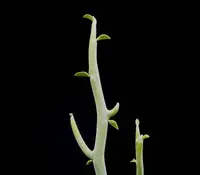
Stem clump management

Periodically remove the weakest, thinnest stems at the base rather than just trimming tips, which keeps the clump open, improves air flow, and encourages stronger, upright new growth.

Targeted staking

Use a few discreet, sturdy stakes placed just inside the pot rim and loosely tie only the heaviest or leaning stems, which stabilizes tall growth without crowding or girdling the plant.

Winter light boost

In winter, rotate the pot a quarter turn every 2–3 weeks and, if possible, move it to the brightest window available to prevent lopsided, weak stems when growing Slipper Plant indoors.

Drainage checkup

Once a year, slide the root ball partly out of the pot to confirm that drainage holes are not blocked by compacted mix or roots, trimming circling roots and refreshing the lowest 2–3 cm of mix if needed.

Common Pests and Diseases

Spider mites

This pest often appears on thin, leafless stems kept in very dry, warm indoor conditions, causing tiny pale stippling and fine webbing. Symptoms include slowed growth and a dull, dusty look to the stems.

Solution

Rinse stems thoroughly with a strong but controlled stream of water, then increase humidity slightly and improve air movement around the plant. Treat remaining mites with insecticidal soap or a horticultural oil labeled for succulents, repeating every 7–10 days until no new damage appears.

Mealybugs

These insects hide in stem joints and along ridges, forming white cottony clusters and excreting sticky honeydew that can lead to sooty mold. Affected areas may show distorted new growth and general decline if infestations persist.

Solution

Isolate the plant, then dab visible mealybugs with cotton swabs dipped in 70% isopropyl alcohol and wipe crevices carefully. Follow with 2–3 applications of insecticidal soap, ensuring good coverage of all stems, and monitor new growth closely as part of Euphorbia lomelii plant care.

Scale insects

This pest appears as small, hard, brown or tan bumps tightly attached to the green stems, often along the lower sections and protected by the plant’s ridges. Symptoms include yellowing areas, reduced vigor, and sticky residue on nearby surfaces.

Solution

Gently scrape or peel off individual scales with a fingernail or soft tool, then wash stems with lukewarm water and mild insecticidal soap. For persistent infestations, repeat soap or horticultural oil treatments every 10–14 days, focusing on the lower and shaded parts of the plant.

Powdery mildew

This disease can develop on plants grown in shade with poor air circulation, producing a fine white, powdery coating on stems and any remaining leaves. Symptoms include patchy discoloration and weakened tissue where the fungus covers the surface.

Solution

Improve light levels and airflow by thinning surrounding plants and avoiding overhead watering, then remove the most affected sections if practical. Treat remaining stems with a sulfur-based or potassium bicarbonate fungicide labeled for ornamentals, applying according to label directions until new growth stays clean.

Stem canker

This disease causes localized sunken, brown to black lesions on the succulent stems, sometimes cracking the surface and leading to dieback above the infected area. Symptoms include shriveling and collapse of individual segments while the rest of the plant appears healthy.

Solution

Cut out affected stem sections well below the visible lesion with a sterile, sharp blade, and discard all infected material in the trash. Allow cuts to dry and callus in bright, dry conditions, avoid overhead watering, and keep the plant in fast-draining soil to reduce further fungal entry points.

Interesting Facts

Desert stem specialist

This species largely lacks leaves and relies on its tall, pencil-thin green stems for photosynthesis, an adaptation that reduces water loss in its native Sonoran Desert habitat.

Nectar-rich slipper flowers

The red, tubular cyathia (the specialized flower structure in Euphorbia) produce abundant nectar that attracts hummingbirds and certain bees as pollinators in its native range.

Late-season bloomer

In warm climates it often flowers from late spring into fall, providing nectar and color during hot, dry periods when many other desert plants are not in bloom.

Botan icon

Did you know?

The plant produces a white, latex-like sap typical of the Euphorbia genus, which deters many herbivores and can cause skin and eye irritation, giving it a natural chemical defense against being eaten.

FAQs about Slipper Plant

Lack of blooms usually comes from insufficient light, cool temperatures, or recent repotting. It flowers best when slightly root-bound, kept warm, and given a pronounced bright, dry rest period between growth flushes.

Grow Healthy Plants with Botan Care

Keep your plants happy and healthy with plant identification, disease detection, and easy care guidance.


Botan plant care app — identify plants on mobile

Explore More Plants