Stake Tall Columns
Install sturdy, rot-resistant stakes or a simple wooden or metal frame when the stems reach 60–90 cm to keep heavy columns upright and reduce the risk of wind or handling damage.

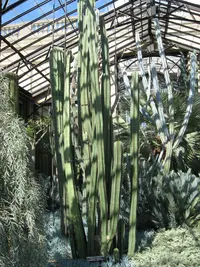
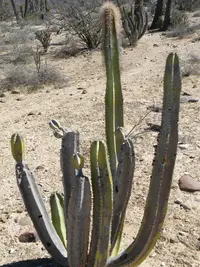
The Mexican fence-post cactus, Lophocereus marginatus, is a columnar cactus known for its tall, upright stems that resemble green fence posts. It forms dense, vertical clumps and can become a striking architectural feature in landscapes or large containers.
This species is native to central and southern Mexico, where it grows in arid and semi-arid regions with strong sun and fast-draining soils. It is generally considered a durable, low-maintenance plant, as long as excess moisture and prolonged cold are avoided.
Its slow to moderate growth, drought tolerance, and minimal pruning needs make it suitable for beginners learning how to care for Mexican fence-post cactus, especially in warm, bright climates or bright indoor spaces with enough light.

Care Difficulty
Easy Care

Light Preference
Full Sun

Water Requirements
Low Water

Temperature Preference
Tropical / Frost Sensitive

Hardiness Zone
9–11

Soil Texture
Sandy, Loamy, Rocky

Soil pH
Slightly acidic (6.5–7.0), Neutral (7.0)

Soil Drainage
Well-drained

Fertilization
Minimal (feed rarely)
Scan your plant to receive care tips personalized for your specific plant
Available on iOS and Android
This cactus thrives with abundant direct sun but needs gradual adaptation to avoid scorch in exposed sites.
This species prefers thorough but infrequent watering in very fast-draining soil.
This desert cactus prefers warm, dry conditions and is sensitive to prolonged cold and frost.
This cactus prefers dry air and humidity is rarely a limiting factor indoors.
This species needs a very fast-draining, mineral-based substrate to prevent root rot.
This species adapts well to container culture when the pot supports its tall, columnar growth.
Lophocereus marginatus grows well with light, targeted feeding during its warm growing season.
Lophocereus marginatus needs minimal pruning, mainly to keep stems healthy and safely managed.
This cactus prefers to stay undisturbed, so repotting or transplanting is infrequent and mainly for outgrown containers or sites.
Lophocereus marginatus is usually propagated from stem cuttings under warm, dry conditions.
This cactus is frost sensitive and needs cold-season protection in most temperate climates, especially in containers.

Plant Health Check
Not sure what's wrong with your plant? Check your plant's health inside the app.
In its native range of central Mexico, this columnar cactus is widely planted in tight rows to form livestock barriers and property boundaries, because its upright, closely spaced stems create a dense, long-lived living fence that roots easily from cut segments.
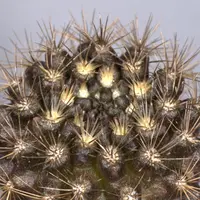
The stems typically have 5–7 broad ribs with narrow, whitish margins and evenly spaced clusters of short, stiff spines, giving the plant its characteristic banded look and the species epithet marginatus, which refers to the marked stem edges.
Compared with many tropical cacti, this species tolerates brief exposure to temperatures slightly below 32°F when kept dry, which helps explain its successful cultivation in arid and semi-arid regions with occasional light frosts.

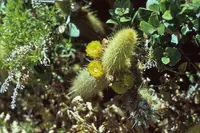
Mature plants can produce tall, night-blooming tubular flowers high on the stems that are pollinated primarily by nocturnal animals such as bats and moths in their native Mexican habitats, an adaptation to arid climates where daytime pollinators are less active.
Growth is moderately fast for a columnar cactus, often 10–30 cm per year in warm, bright, outdoor conditions. In containers or cooler climates, growth is slower. Adequate root space and infrequent repotting help maintain steady vertical growth.
Keep your plants happy and healthy with plant identification, disease detection, and easy care guidance.