Echinopsis aurea Care

Echinopsis aurea

About Echinopsis aurea

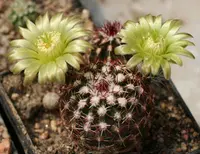
Echinopsis aurea is a small, globular cactus from arid regions of Argentina. It forms rounded, ribbed stems with short spines and a neat, compact shape. In season it produces large, showy funnel-shaped flowers, often yellow or white, that open dramatically from the sides of the stem. Plants usually stay modest in size, which suits windowsills and small indoor spaces. This species is considered relatively easy for beginners, as long as light is strong, watering is infrequent, and the soil drains very quickly. Understanding how to care for Echinopsis aurea mainly involves avoiding excess moisture and providing plenty of sun.

Main Plant Requirements

Care Difficulty

Easy Care

Light Preference

Full Sun

Water Requirements

Low Water

Temperature Preference

Tropical / Frost Sensitive

Hardiness Zone

10–11

Soil Texture

Sandy, Loamy, Rocky

Soil pH

Slightly acidic (6.5–7.0), Neutral (7.0)

Soil Drainage

Well-drained

Fertilization

Minimal (feed rarely)

Get Personalized Care Plan

Scan your plant to receive care tips personalized for your specific plant

Available on iOS and Android

How to Care for the Echinopsis aurea

This cactus prefers strong light but benefits from some protection during the hottest hours.

  • Provide 6–8 hours of direct sun daily, ideally with morning sun and light afternoon shade, especially in hot, dry climates.
  • Echinopsis aurea tolerates bright, open exposure but can scorch in intense afternoon sun; yellowing or brown patches indicate sunburn.
  • In summer, gradually increase light when moving outdoors; in winter, place in the brightest spot available to compensate for shorter days.

This drought-tolerant cactus needs infrequent but deep watering in fast-draining soil.

  • Water only when the top 3–5 cm of soil are completely dry; in warm growing seasons this may mean every 7–21 days depending on heat and wind.
  • Ensure very sharp drainage; water thoroughly, then let excess drain away so roots do not sit in waterlogged soil, which encourages rot.
  • Wrinkling and slight softening suggest underwatering, while blackened base tissue, sour smell, or mushy stems indicate overwatering and require reducing moisture.

This species prefers warm conditions with a distinct cool, dry rest period.

  • Aim for 65–80°F (18–27°C) during active growth, with good airflow to prevent heat buildup in full sun sites.
  • It tolerates short dips to about 40°F (4°C) if kept completely dry, but prolonged exposure near this minimum increases rot risk.
  • Protect from frost and extreme heat above 95°F (35°C); use shade cloth or move to a slightly cooler, bright spot during heatwaves.

This cactus handles typical indoor humidity well and rarely needs special adjustments.

  • Target 30–50% relative humidity, similar to most heated homes, for stable growth.
  • Dry air from heating is usually tolerated, but soft, puckering stems may indicate combined low humidity and underwatering.
  • Avoid misting; instead, ensure correct watering and bright light to reduce stress signs such as shriveling ribs.

This species needs a very fast-draining, mineral-rich cactus substrate to prevent root rot.

  • Use a sandy, gritty mix such as 50% cactus potting mix blended with 50% mineral material like pumice, perlite, and coarse sand.
  • Aim for slightly acidic to neutral pH, around 6.0–7.0, which supports nutrient uptake without encouraging rot pathogens.
  • Ensure a loose, crumbly texture with visible coarse particles so air can reach roots and water drains within seconds.
  • Avoid peat-heavy, compact, or moisture-retentive mixes, which keep roots wet for too long and quickly damage Echinopsis aurea.

This compact cactus is very suitable for container growing.

  • Choose a pot only 2–3 cm wider than the plant’s body so the soil dries evenly after each watering.
  • Select unglazed terracotta if extra evaporation is needed in cool or low-light locations to lower rot risk.
  • Use a pot shape that is wider than deep to stabilize the plant’s shallow root system and prevent tipping after flowering.

This small cactus benefits from light feeding during active growth but tolerates lean conditions.

  • Apply a diluted balanced liquid fertilizer (for example 5-5-5 or 10-10-10 at 1/4 strength) every 4–6 weeks in spring–summer.
  • Use a cactus-specific or low-nitrogen product to avoid soft, weak tissue in Echinopsis aurea.
  • Skip compost-heavy mixes; choose mineral soils and liquid or slow-release fertilizers formulated for cacti.
  • Stop feeding in fall–winter to allow a cool, dry rest period and support better flowering next season.

This cactus needs minimal pruning, mainly for health and safety.

  • Carry out any pruning in late spring–summer, when wounds dry and seal faster.
  • Remove dead, diseased, or badly scarred segments with a clean, sharp knife or pruning saw.
  • Cut away crowded or awkward offsets to refine shape and improve air flow between stems.
  • Disinfect tools before and after use to limit disease spread, and let cut surfaces dry in bright, indirect light.

Container-grown plants need occasional repotting to refresh the substrate and manage offsets.

  • Repot every 3–4 years or when roots circle the pot, drainage slows, or growth declines.
  • Choose late spring for repotting, when Echinopsis aurea is entering active growth and recovers faster.
  • Gently loosen the root ball, remove old compacted mix, and separate offsets only if they detach easily.
  • Replant in a slightly larger pot with fast-draining cactus mix, keep roots shaded, and water lightly after 5–7 days to reduce stress.

This species is commonly propagated by offsets and seeds under warm, bright, dry conditions.

  • In late spring–summer, twist or cut offsets at the base, then air-dry until a firm callus forms.
  • Root offsets in a sterile, gritty cactus mix, providing bright indirect light and very light watering.
  • For seed propagation, sow fresh seed on the surface of barely moist cactus mix and cover lightly with grit.
  • Maintain 70–80°F, good airflow, and consistent but not wet moisture until seedlings establish.

This cactus benefits from a cool, dry winter rest and is vulnerable to prolonged frost.

  • Keep outdoor plants in climates warmer than about 25°F; in colder areas, grow Echinopsis aurea in containers.
  • Move pots indoors to a bright, cool room (45–55°F) before hard frost arrives.
  • Water very sparingly in winter, just enough to prevent severe shriveling, and do not fertilize.
  • Ensure soil drains quickly so roots do not stay wet in cold conditions, which encourages rot.

Care Tips

Shallow pot choice

Use a wide, shallow clay pot rather than a deep one to keep the root zone airy and prevent the heavy stem from becoming unstable as it matures.

Spring repot timing

Repot only in early spring just as new growth begins, which shortens recovery time and encourages a strong root flush before the main growing season.

Cold rest period

Provide a cool, dry rest at 45–55°F in winter with minimal watering to promote stronger flowering the following spring and reduce rot risk.

Flowering support ring

For large plants with many buds, place a low, open support ring or stones around the base so the heavy flowering stems do not lean and stress the roots.

Systematic rotation

Rotate the pot 90° every 2–3 weeks during active growth so the stem remains evenly cylindrical and does not bend permanently toward the light when growing Echinopsis aurea.

Common Pests and Diseases

Red spider mites

This pest often appears on stressed, indoor or greenhouse-grown plants, causing a dull, bronzed look to the stems and fine webbing in the ribs and areoles. Symptoms include tiny yellow stippling, slow growth, and a generally dusty appearance on the cactus surface.

Solution

Increase humidity locally by occasional misting around the plant (not soaking the stem), then hose the cactus thoroughly or shower it with lukewarm water to remove mites and webbing. Follow with applications of insecticidal soap or a neem oil solution every 5–7 days for several cycles, and improve air movement plus avoid prolonged, hot, dry stagnation to prevent recurrence when caring for Echinopsis aurea.

Mealybugs

These insects hide in the areoles and around the base of the plant, forming white, cottony clusters that suck sap and weaken the cactus. Symptoms include distorted new growth, sticky honeydew, and sooty mold on nearby surfaces.

Solution

Isolate the plant, then dab visible mealybugs with cotton swabs dipped in 70% isopropyl alcohol, repeating weekly until no new insects appear. For heavier infestations, rinse the plant thoroughly and apply an insecticidal soap or neem oil spray, ensuring it reaches crevices between ribs, and inspect any offsets or roots before reusing soil or pots.

Scale insects

These insects appear as small, hard, brown or gray bumps on ribs and areoles that do not wipe off easily and cause gradual yellowing or patchy discoloration. This pest feeds on plant sap, leading to stunted growth and weakened tissue.

Solution

Gently scrape or pry off scale with a soft brush or fingernail, then wipe affected areas with a cloth or cotton pad dipped in 70% isopropyl alcohol. Repeat inspections every 1–2 weeks, and use a systemic insecticide labeled for cacti or regular neem oil/insecticidal soap sprays if new scale continues to appear.

Fusarium stem rot

This disease usually enters through wounds or old flower scars, causing localized soft, brown or reddish lesions that can expand and hollow out sections of the stem. Symptoms include sunken, discolored areas that may ooze and spread along ribs while the rest of the plant stays firm at first.

Solution

At an early stage, cut out all affected tissue with a sterile knife, removing an extra margin of healthy-looking tissue until only clean, firm, green flesh remains, then allow the wound to dry and callus in a dry, bright spot for several days. Discard severely infected plants and any contaminated soil, reduce watering, provide strong light, and keep tools and pots clean to limit future infections.

Anthracnose spots

This disease causes small, sunken, tan to dark-brown spots on the ribs that can merge into larger cankers, especially under warm, humid conditions. Symptoms include dry, corky lesions with a defined edge that may crack and deform the stem surface over time.

Solution

Remove and discard heavily spotted areas if practical, or cull severely affected plants, then keep the cactus in a bright, well-ventilated, low-humidity environment with overhead watering avoided. Apply a copper-based fungicide or other fungicide labeled for anthracnose on cacti according to label directions, and ensure the plant dries quickly after any watering to prevent new infections.

Interesting Facts

High-altitude native range

This species naturally occurs in northwestern Argentina, often on rocky slopes and foothills at higher elevations where nights are cool and light is intense.

Golden funnel-shaped flowers

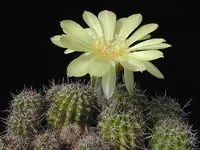
It produces large, golden-yellow, funnel-shaped flowers that are disproportionately big compared with the small, globular stem, creating a short-lived but very conspicuous floral display.

Nocturnal pollination strategy

The flowers typically open in the evening or at night and have a strong visual contrast, an adaptation linked to pollination by nocturnal insects that are active in its native habitat.

Botan icon

Did you know?

Echinopsis aurea can form clusters of many heads over time, creating broad, cushion-like mounds in habitat that help stabilize shallow soils and slightly buffer temperature swings at the soil surface.

FAQs about Echinopsis aurea

This species usually blooms in late spring to early summer, often in flushes. It produces relatively large, funnel-shaped flowers, typically yellow, that open for a short time but may be followed by several successive blooms.

Grow Healthy Plants with Botan Care

Keep your plants happy and healthy with plant identification, disease detection, and easy care guidance.

Botan plant care app — identify plants on mobile

Explore More Plants