Encourage Compact Shape
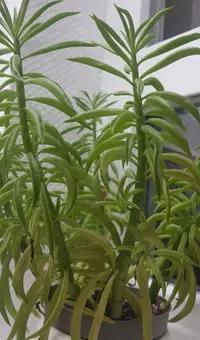
Rotate the pot 90° every 1–2 weeks during active growth so the stems receive even light and stay upright and compact rather than stretching toward one side.

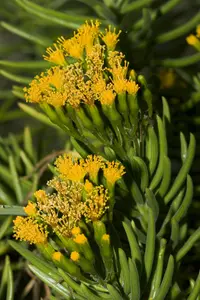
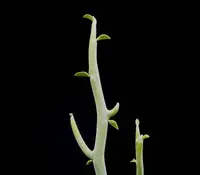
Barberton groundsel, Kleinia barbertonica, is a succulent shrub from rocky regions of South Africa. It forms slender, upright, leafless stems with a distinctive, architectural look. New growth is often green, maturing to a bluish or gray-green tone.
This plant stores water in its stems, which makes it relatively drought-tolerant and suited to dry indoor conditions. It usually stays compact in containers but can branch and form a sculptural clump over time.
Because it prefers bright light, sharp drainage, and infrequent watering, it is considered moderately easy for those familiar with succulents. Learning how to care for Barberton groundsel mainly involves avoiding overwatering and providing enough sun.

Care Difficulty
Easy Care

Light Preference
Full Sun

Water Requirements
Low Water

Temperature Preference
Tropical / Frost Sensitive

Hardiness Zone
10–11

Soil Texture
Sandy, Loamy, Rocky

Soil pH
Slightly acidic (6.5–7.0), Neutral (7.0)

Soil Drainage
Well-drained

Fertilization
Minimal (feed rarely)
Scan your plant to receive care tips personalized for your specific plant
Available on iOS and Android
This succulent prefers bright, dry conditions that mimic its native habitat.
Watering should mimic an arid climate, with deep drinks followed by thorough drying.
Stable warmth supports strong growth and reduces stress for this succulent.
This succulent handles typical indoor humidity well and rarely needs special adjustments.
Soil for this species must be very fast-draining to prevent root and stem rot.
This species is well suited to container growing, indoors or outdoors in mild climates.
This drought-tolerant succulent grows well with light feeding, so focus on modest, controlled nutrition for Barberton groundsel.
Pruning supports compact, tidy growth in Kleinia barbertonica and helps maintain healthy stems.
This succulent prefers slightly snug containers and only needs repotting when growth or root space becomes limited.
Kleinia barbertonica is most often propagated from stem cuttings taken during the active growing season.
This succulent is tender to frost and needs protection in climates with cold winters.

Plant Health Check
Not sure what's wrong with your plant? Check your plant's health inside the app.
The long, pencil-thick structures often called leaves are actually cylindrical stems, while the true leaves are tiny and short-lived, dropping early to reduce water loss in its arid habitat.
In its native South African grasslands, this species grows among grasses and rocky outcrops, and its semi-woody, clumping base allows it to resprout after damage such as grazing or grassland fires.
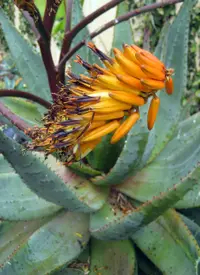
It produces bright orange to red tubular flower heads on tall stalks mainly in the cooler months, attracting pollinating insects when many surrounding grassland plants are not in peak bloom.
Lack of bloom often comes from insufficient light, very frequent watering, or heavy, nutrient-rich soil. This species flowers best when slightly stressed, with lean, gritty substrate and a pronounced bright, dry rest in winter.
Keep your plants happy and healthy with plant identification, disease detection, and easy care guidance.