dog stinkhorn Care (Mutinus caninus)

dog stinkhorn

About dog stinkhorn

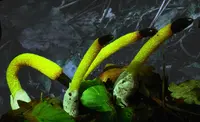
Dog stinkhorn, Mutinus caninus, is a saprophytic fungus, not a true plant. It breaks down decaying organic matter in soil and woodland litter. The fruiting body is slender, orange to pink, with a dark, foul-smelling tip that attracts flies. These insects help spread its spores.

This species occurs naturally in Europe and parts of North America, often in damp woods, mulched beds, or rich garden soils. It tends to appear suddenly after rain and then collapse within a day or two. For those who want to learn how to care for dog stinkhorn, it is generally low-maintenance if soil stays moist, rich in organic matter, and lightly shaded.

Main Plant Requirements

Care Difficulty

Moderate Care

Light Preference

Partial Shade

Water Requirements

Keep Soil Moist

Temperature Preference

Cool Climate

Hardiness Zone

5–9

Soil Texture

Loamy, Silty, Organic-rich

Soil pH

Acidic (5.5–6.5), Slightly acidic (6.5–7.0)

Soil Drainage

Moist but well-drained

Fertilization

Minimal (feed rarely)

Get Personalized Care Plan

Scan your plant to receive care tips personalized for your specific plant

Available on iOS and Android

How to Care for the dog stinkhorn

This woodland fungus thrives in shaded to partially shaded sites with gentle, indirect light.

  • Provide dappled or filtered light under shrubs or trees, with 1–3 hours of weak morning sun but no harsh afternoon sun.
  • Site dog stinkhorn where it receives bright shade in summer; deep shade slows fruiting, while full sun can dry the substrate and shorten mushroom lifespan.
  • In open gardens, use leaf litter, taller plants, or logs to create broken light and protect the underlying mycelium from direct, drying rays.

This species prefers consistently moist, humus-rich soil but is sensitive to prolonged waterlogging.

  • Aim for soil that stays evenly damp to 5–8 cm depth; allow only the top 1–2 cm to begin drying between natural rains or supplemental watering.
  • In dry spells, water the surrounding soil, not the fruiting bodies, stopping when moisture penetrates 8–10 cm and excess water drains away freely.
  • If Mutinus caninus patches decline, check for sour odor, algae, or standing water as signs of overwatering, or cracked, powdery soil as a sign of drought stress.

This fungus develops best in mild, cool to warm conditions typical of temperate woodlands.

  • Optimal fruiting occurs around 55–70°F (13–21°C), with mycelium growth continuing in slightly cooler or warmer periods if moisture stays stable.
  • The organism in the soil tolerates down to about 20–25°F (-6 to -4°C), but repeated hard freezes without insulating leaf litter can reduce vigor.
  • Hot spells above 85°F (29°C) quickly dry surface soil and shorten fruiting; use mulch and shade to buffer temperature swings through summer and shoulder seasons.

Humidity is not a major factor for outdoor Mutinus caninus growth, as it relies mainly on moist soil conditions.

This fungus thrives in consistently moist, loose, organic-rich soil with rapid drainage.

  • Use a mix of leaf mold, compost, and loamy garden soil to mimic decaying woodland litter.
  • Ensure fast drainage with 20–30% coarse sand or fine bark to keep pores open while retaining even moisture.
  • Target slightly acidic to neutral pH, roughly 6.0–7.0, which supports the soil fungi and microbes it depends on.
  • Avoid compacted, heavy clay or waterlogged spots, which reduce aeration and quickly rot the underground structures.

This species can be grown in containers outdoors if the pot maintains cool, evenly moist, well-drained substrate.

  • Choose a deep container so the subterranean structures have room to form and remain insulated from rapid temperature swings.
  • Use a heavy, stable pot material to prevent tipping when fruiting bodies emerge unevenly on one side.
  • Drill extra side holes near the base if necessary to let excess water escape quickly while still holding a thick organic mulch layer on top.

Mutinus caninus (dog stinkhorn) is a saprobic fungus that gains nutrients from decaying organic matter and does not need intentional fertilization.

Mutinus caninus requires no true pruning, but spent fruiting bodies can be removed for tidiness or to limit spore spread near paths.

  • Cut or pinch off mature or collapsing fruiting bodies at their base using disposable gloves or clean scissors.
  • Discard removed tissue in sealed trash rather than compost to avoid unwanted spread in small gardens.
  • Avoid disturbing the underlying soil or wood debris, since the main fungal body (mycelium) lives below the surface.

This fungus is rarely grown in containers, so care focuses on moving or managing its outdoor habitat rather than classic repotting.

  • Transplant only when colonies appear in high-traffic or unsuitable areas, as the fungus usually thrives undisturbed.
  • Time any soil moving for cool, moist weather in spring or fall to reduce stress on the underground mycelium.
  • Lift and relocate chunks of colonized soil or decaying wood gently, keeping them intact and evenly moist.
  • After transplanting, water lightly to settle soil and maintain shade and organic debris similar to the original site.

Mutinus caninus spreads primarily by spores, so home propagation is slow and somewhat unpredictable.

  • Leave mature fruiting bodies in place so spores can disperse naturally with insect and air movement.
  • For targeted spread, move small sections of spore-rich slime and surrounding decaying wood or leaf litter to a new shaded site.
  • Maintain high organic content and consistent moisture, as the mycelium establishes best in cool, damp, woody debris.
  • Avoid chemical fungicides and heavy soil disturbance in the target area to encourage gradual colony development.

Mutinus caninus is cold hardy in temperate climates and normally needs no special winter care.

  • Allow above-ground fruiting bodies to die back naturally as temperatures drop; the mycelium remains viable underground.
  • In very exposed sites, a light mulch of leaves or wood chips can stabilize soil moisture and temperature.
  • Containers, if used, can be overwintered outdoors in a shaded, sheltered spot as long as the substrate does not dry out completely.

Care Tips

Use mulch collars

Place small rings of coarse wood chips or bark around each planting spot to retain moisture, suppress competing weeds, and give the emerging fruiting bodies clean space to develop without soil splashing onto them.

Rotate substrate patches

Renew colonized beds every 2–3 years by creating a fresh woodchip or leaf-litter patch nearby, then moving a portion of the old colonized material into the new area to maintain vigorous fruiting over time.

Encourage natural dispersal

Allow flies and other insects to access the slime-covered tips, since their movement helps spread spores into surrounding organic matter and supports longer-term sustainability of the colony.

Spot-remove unwanted clusters

If fruiting bodies appear in high-traffic or sensitive areas, twist and pull them at the base as soon as they emerge and cover the spot with fresh mulch to reduce reappearance where they are not desired.

Control competing fungi

When caring for dog stinkhorn in a mixed fungal bed, occasionally remove dense clusters of faster-growing mushrooms and refresh the organic layer so this species is not overrun by more aggressive decomposers.

Common Pests and Diseases

Larval mycophagous beetles

These insects feed on the fruiting bodies, tunneling through the sponge-like stem and gleba and accelerating collapse of the stinkhorn structure.

Solution

Remove and discard heavily damaged fruiting bodies promptly to reduce breeding sites, and limit thick surface litter directly around known fruiting spots to make it less attractive as a nursery habitat while still keeping soil humus-rich for normal Mutinus caninus care instructions.

Slugs and snails

These pests rasp away tissue on young emerging stinkhorns and can completely consume small fruiting bodies overnight, especially in damp, shaded beds.

Solution

Hand-pick slugs and snails in the evening or early morning, use iron phosphate pellets around the area if populations are high, and reduce nearby hiding spots such as stacked boards or dense groundcovers to lower grazing pressure on emerging fungi.

Fungal fruiting-body decay

This disease is caused by opportunistic fungi that colonize the slimy spore mass and porous stem, leading to rapid softening, discoloration, and foul-smelling collapse beyond the normal short lifespan of the stinkhorn.

Solution

Collect and dispose of excessively slimy, discolored fruiting bodies in sealed bags, avoid overhead watering that soaks the fruiting structures, and keep leaf litter moderately thinned so there is good air movement at ground level while the underlying wood or mulch remains moist.

Bacterial soft rot

This disease develops in very wet, warm conditions when bacteria invade damaged gleba or stem tissue, creating a watery, sour-smelling mush and sometimes localized darkening of surrounding mulch.

Solution

Remove and discard any rotting tissue and adjacent heavily contaminated mulch, improve drainage and avoid saturating irrigation in that area, and use coarse, well-aerated organic mulch instead of compacted, continuously soggy material to reduce future outbreaks.

Interesting Facts

Specialized fly partner

The foul odor of the mature fruiting body specifically attracts blowflies and other carrion-associated flies, which land on the slimy spore mass and transport the spores on their legs and mouthparts to new sites.

Hidden egg stage

Before the orange stalk emerges, this fungus develops as a whitish, rubbery egg partially buried in leaf litter or soil, containing the fully formed but compressed receptacle that expands rapidly when conditions are moist.

Narrow and hollow structure

The visible stalk is slender, hollow, and sponge-like, with the tip covered in dark olive-brown gleba, a spore-bearing slime that is gradually eaten or washed away, leaving a bare orange tip.

Botan icon

Did you know?

DNA-based phylogenetic studies place this species firmly within the stinkhorn family Phallaceae, confirming that its dog-like shape and carrion-mimicking odor evolved as a specialized strategy to exploit fly-mediated spore dispersal rather than wind.

FAQs about dog stinkhorn

This fungus can appear suddenly and in clusters, but it does not spread aggressively like invasive plants. It fruits where decaying wood or rich organic matter is present, then disappears quickly after the short-lived fruiting bodies collapse.

Grow Healthy Plants with Botan Care

Keep your plants happy and healthy with plant identification, disease detection, and easy care guidance.

Botan plant care app — identify plants on mobile

Explore More Plants