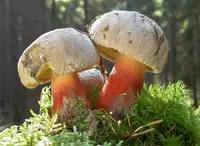
Dark Bitter Bolete Care (Caloboletus conifericola)

Dark Bitter Bolete

About Dark Bitter Bolete

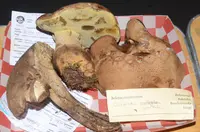
Dark bitter bolete, Caloboletus conifericola, is a mycorrhizal mushroom that forms symbiotic relationships with conifer trees, especially pines, in western North America. It typically appears as a sturdy, stout bolete with a dark brown cap, yellow pores that bruise blue, and a thick, pale to yellowish stem. This species grows on the ground in forest soil, often in small groups, during the warmer, wetter seasons. Its very bitter flesh makes it undesirable as an edible species and helps prevent accidental consumption. Because it relies on living conifers, it is not practical to cultivate indoors or in typical gardens, so attempts to care for Dark Bitter Bolete focus mainly on conserving its natural forest habitat.


Main Plant Requirements

Care Difficulty

Hard Care

Light Preference

Partial Shade

Water Requirements

Keep Soil Moist

Temperature Preference

Cool Climate

Hardiness Zone

5–9

Soil Texture

Loamy, Sandy, Organic-rich

Soil pH

Acidic (5.5–6.5)

Soil Drainage

Moist but well-drained

Fertilization

Minimal (feed rarely)

Get Personalized Care Plan

Scan your plant to receive care tips personalized for your specific plant

Available on iOS and Android

How to Care for the Dark Bitter Bolete

This mycorrhizal mushroom prefers dappled forest light rather than direct, open sun.

  • Aim for bright, filtered light under conifers, with 2–4 hours of soft morning sun and shade or broken light the rest of the day.
  • Dark Bitter Bolete fruits best where tree canopies provide 40–70% shade, protecting the forest floor from harsh midday and afternoon sun.
  • Excessive full sun can dry the upper 2–5 cm of soil and suppress fruiting, while deep continuous shade may reduce mushroom numbers.

This ectomycorrhizal fungus depends on consistently moist, not soggy, forest soil.

  • Allow the top 2–3 cm of soil to dry slightly between rains or supplemental watering, then moisten gently to mimic a steady forest wet–dry rhythm.
  • During dry, hot periods, water the surrounding conifer root zone every few days, focusing on slow soaking and very good drainage rather than frequent light sprinkling.
  • Signs of overwatering include persistent standing water, sour smell, and mossy surface, while underwatering shows as cracked soil and brittle top litter where Caloboletus conifericola associates.

This species fruits in cool to mild conditions typical of conifer forests.

  • Optimal fruiting usually occurs around 50–68°F (10–20°C), with moist soil and stable shade supporting reliable emergence.
  • Mycelium in the soil tolerates down to about 28–32°F (-2–0°C), but hard, prolonged freezes below this can damage fine fungal threads near the surface.
  • Heat above 77–82°F (25–28°C), especially with dry soil, can halt fruiting; cooler nights and mild daytime temperatures in spring or fall are most favorable.

This mycorrhizal mushroom is not suited to controlled indoor humidity and is best left in its natural outdoor forest conditions.

This fungus relies on natural forest soil rather than prepared mixes, because it forms a mycorrhizal partnership with conifer roots.

  • Prefers undisturbed, well-drained, sandy to sandy-loam soil commonly found in coniferous forests.
  • Performs best in organic-rich layers with abundant decomposing needles, twigs, and leaf litter.
  • Thrives in slightly acidic conditions, typically pH 5.0–6.5, rather than neutral or alkaline substrates.
  • Avoid compacted, waterlogged, fertilized, or heavily tilled soils, which disrupt the fine root-fungus contact essential for Caloboletus conifericola.

This species is not suitable for container growing because it requires a long-term symbiosis with living conifer roots in undisturbed ground.

Caloboletus conifericola is a wild mycorrhizal fungus that usually does not need added fertilizer when growing in suitable coniferous woodland soil.

Pruning is not applicable to Caloboletus conifericola, as it is a wild, seasonal mushroom rather than a managed garden plant.

This species is not suited to typical repotting; it forms a mycorrhizal partnership with conifer roots and is best left in stable soil conditions.

  • Avoid disturbing soil where the fungus appears, since digging or transplanting nearby trees can disrupt the mycorrhizal network.
  • If a host conifer must be moved, expect that associated fungi may not re-establish in the new location.
  • Maintaining similar soil type, drainage, and conifer species offers the best chance for the fungus to persist.
  • Limit foot traffic and compaction in the fruiting area to reduce stress on fine tree and fungal roots.

Propagation of Caloboletus conifericola is indirect and relies on spore dispersal and successful association with suitable conifer hosts.

This wild fungus is naturally cold hardy in its native range and does not require specific winter care from gardeners when growing Dark Bitter Bolete in situ.

Care Tips

Targeted habitat mapping

Before harvesting or studying, map out existing fruiting spots under specific conifer species and note slope, canopy density, and litter depth so you can return to microhabitats that reliably support growing Dark Bitter Bolete in future seasons.

Litter layer management

In semi-managed woodlands, avoid raking or compacting the conifer needle layer and restrict foot traffic to marked paths so the mycelium network remains insulated, moist, and structurally intact for future flushes.

Minimal disturbance harvesting

Cut fruiting bodies at the base with a clean knife instead of pulling them out, then gently replace disturbed needles to reduce mechanical damage and desiccation of the underlying mycelium.

Seasonal moisture buffering

In dry regions where regulations and land ownership allow, place loose conifer branches or coarse woody debris upslope of known patches to shade the soil surface and slow moisture loss without smothering the litter layer.

Monitoring tree health

Regularly assess the vigor of nearby conifers (needle color, annual shoot growth, crown density) because this ectomycorrhizal fungus depends on healthy host trees, and report or manage pests and stresses that could degrade the shared root-fungus system.

Common Pests and Diseases

Mycophagous springtails

These insects feed on fungal tissue and can scar or hollow young fruiting bodies, especially in damp litter around conifers. Symptoms include pitted caps and tunnels in the pore surface shortly after emergence.

Solution

Gently remove and discard heavily infested mushrooms, then reduce excessive surface moisture by improving drainage and avoiding standing water in the habitat. Lightly disturb and thin the needle litter so it dries faster between rains, and if collecting for study or food, harvest young, firm specimens promptly before damage develops.

Fungus gnat larvae

This pest lives in moist soil and litter, where larvae tunnel into developing boletes and rapidly cause soft, discolored, wormy flesh. Symptoms include spongy stems, brown internal streaks, and small entrance holes at the base of the stipe.

Solution

Harvest fruiting bodies as soon as they reach usable size and discard any with obvious tunneling or softness. To limit future damage in managed beds, keep organic debris layers thinner, avoid constant saturation, and encourage airflow so the surface stays slightly drier and less attractive for egg laying.

Mite infestation

These insects are microscopic arthropods that graze on pore surfaces and cap tissue, leading to rough, eroded tubes and patchy discoloration. Symptoms include fine speckling, powdery frass, and a sanded texture on the underside of the cap.

Solution

Remove and discard damaged mushrooms and gently disturb the immediate litter layer to break up dense, humid microhabitats where mites accumulate. In small cultivation or observation setups, reduce overcrowding of fruiting bodies and maintain moderate humidity with good air movement to make conditions less favorable for large mite populations.

Bacterial soft rot

This disease develops when bacteria invade bruised or waterlogged tissue, causing rapid softening, foul odor, and dark, slimy patches on caps and stems. Symptoms include collapse of the fruiting body from the base upward in very wet, warm conditions.

Solution

Promptly collect and remove any rotting mushrooms from the area to reduce bacterial spread and avoid handling caps roughly, which creates entry points. Improve drainage and limit prolonged saturation of the fruiting zone by redirecting runoff, slightly raising beds, or spacing fruiting sites so they dry more quickly after rain.

Competitive parasitic fungi

This disease occurs when other fungi colonize living or senescing boletes, producing moldy coatings, colored mycelial patches, or distorted growth. Symptoms include white, gray, or green fuzz on caps and pores, often starting where debris contacts the mushroom.

Solution

Carefully remove and discard parasitized fruiting bodies, including any obviously colonized debris around them. In managed or semi-cultivated settings for grow Caloboletus conifericola, avoid heavy, matted litter and keep fruiting areas clean of old, decomposing mushrooms to reduce inoculum levels.

Interesting Facts

Bitter but not poisonous

This dark-capped bolete is considered inedible because of its strongly bitter taste, yet it is not regarded as poisonous and does not have the toxic profile of some other boletes such as the rubroboletus group.

Strict conifer associate

The species forms ectomycorrhizal partnerships with conifer trees, especially pines and related species in western North America, exchanging mineral nutrients from the soil for sugars produced by its host.

Blue bruising reaction

When the yellow pores or flesh are handled or damaged, they quickly stain bluish due to oxidation of specific pigment compounds, a reaction commonly used by field mycologists to separate it from similar boletes.

Botan icon

Did you know?

This bolete was only relatively recently segregated into the genus Caloboletus after molecular phylogenetic studies showed that several traditionally named Boletus species in conifer forests of western North America formed a distinct evolutionary lineage.

FAQs about Dark Bitter Bolete

This mushroom is considered inedible due to its very strong bitter taste, which ruins dishes even in small amounts. It is not recommended for culinary use, although it is not usually classified as dangerously poisonous.

Grow Healthy Plants with Botan Care

Keep your plants happy and healthy with plant identification, disease detection, and easy care guidance.

Botan plant care app — identify plants on mobile

Explore More Plants