Caloboletus firmus Care

Caloboletus firmus

About Caloboletus firmus

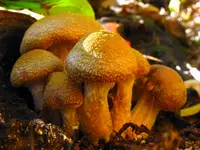
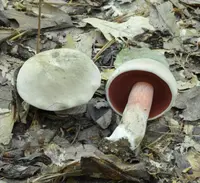
Caloboletus firmus is a wild bolete fungus, not a typical houseplant, forming a mycorrhizal partnership with tree roots in forests. It produces stout, fleshy mushrooms with a brown cap and yellow pores instead of gills.

This species is usually found in temperate woodlands, especially with hardwoods, emerging from soil rich in leaf litter. It relies on its tree partners, so it cannot be grown like a stand‑alone potted plant.

Because of this dependency, it is considered difficult to cultivate intentionally at home. Anyone exploring how to care for Caloboletus firmus should focus on conserving suitable woodland habitat rather than traditional garden culture.

Main Plant Requirements

Care Difficulty

Moderate Care

Light Preference

Partial Shade

Water Requirements

Regular Water

Temperature Preference

Cool Climate

Hardiness Zone

Unknown

Soil Texture

Loamy, Sandy, Organic-rich

Soil pH

Acidic (5.5–6.5)

Soil Drainage

Moist but well-drained

Fertilization

Minimal (feed rarely)

Get Personalized Care Plan

Scan your plant to receive care tips personalized for your specific plant

Available on iOS and Android

How to Care for the Caloboletus firmus

This ectomycorrhizal bolete prefers dappled woodland light that mimics its natural forest habitat.

  • Provide bright, filtered light under deciduous or mixed woodland canopy, roughly 2–4 hours of gentle morning sun with shade or broken light for the rest of the day.
  • Plant near host trees so fallen leaves and understory shrubs create partial shade; avoid open, exposed sites with full midday or afternoon sun that can dry the soil surface too quickly.
  • In summer, protect from intense 11 a.m.–4 p.m. sun with leaf litter and understory cover; in cooler seasons, slightly more open light is acceptable as long as the soil does not crust or overheat.

This forest-dwelling fungus needs consistently moist, well-drained soil rather than frequent surface soaking.

  • Aim for soil that stays evenly moist in the top 5–10 cm, allowing only the upper 1–2 cm to dry slightly between natural rain or supplemental watering.
  • Use watering mainly to support host trees during dry spells; provide a deep soak when leaves begin to flag, then allow excess water to drain fully to avoid waterlogging and anaerobic (oxygen-poor) soil.
  • Overwatering shows as persistently saturated, muddy soil with possible moldy odors, while underwatering appears as hard, cracking soil and stressed host trees; adjust irrigation to maintain a cool, crumbly forest-floor texture.

This species develops best in mild to warm conditions typical of temperate woodlands.

  • Active fruiting is most common when soil and air temperatures stay around 60–75°F (16–24°C), with stable moisture supporting mycelium growth below the surface.
  • The fungus tolerates cool weather down to about 25–30°F (-4 to -1°C) in dormant phases, but hard, prolonged freezes below this range can damage fine mycelial strands near the soil surface.
  • Heat above 85°F (29°C), especially combined with dry winds and full sun, slows development; maintain shade, leaf litter, and soil moisture during hot spells to buffer temperature swings around the root zone.

Humidity is not a meaningful care factor for Caloboletus firmus, which grows as a mycorrhizal fungus in soil and tree root zones rather than as a traditional potted plant.

This species relies on a living soil environment rather than standard potting media, as it forms mycorrhizal partnerships with tree roots.

  • Provide a loose, well-aerated forest-type soil with a mix of mineral particles and abundant decaying leaf litter and woody debris.
  • Aim for slightly acidic to neutral conditions, roughly pH 5.0–7.0, similar to natural mixed hardwood or conifer woodland soils.
  • Maintain consistent moisture in the upper soil layers without waterlogging; excess standing water reduces oxygen around fine roots and fungal mycelium.
  • Avoid compacted, heavily fertilized, or sterilized substrates, which disrupt the root–fungus association needed for Caloboletus firmus care instructions.

This species is not suitable for typical container growing because it depends on complex, long-term associations with tree roots in open soil.

As a mycorrhizal mushroom associated with trees, Caloboletus firmus does not benefit from direct fertilization in the way garden plants do.

Pruning is not applicable to Caloboletus firmus, since it is a fungus that fruits seasonally and does not form woody or leafy structures to shape.

This species fruits from an underground mycelial network in soil or leaf litter, so transplanting Caloboletus firmus is generally impractical and not recommended.

  • Avoid disturbing the fruiting area; repeated soil disturbance can damage the mycelium and reduce future mushroom production.
  • If trees or host plants must be moved, expect the fungal association to be disrupted and fruiting to decline or stop.
  • For observation or study, document the site rather than attempting to lift and move the mushroom or surrounding soil.

Reproducing Caloboletus firmus is specialized because it depends on symbiosis with tree roots and cannot be propagated like a typical garden plant.

Specific winter care is not needed for this woodland bolete, as the fungus survives as mycelium in soil and fruits only in favorable seasons.

Care Tips

Mycorrhizal partner check

Before attempting to grow Caloboletus firmus, identify and maintain compatible host trees such as oaks on the site, since this species is ectomycorrhizal and will not fruit without a healthy tree partner.

Minimal ground disturbance

Avoid raking, tilling, or compacting soil within the root zone of host trees so the fine fungal mycelium networks remain intact and able to form fruiting bodies.

Leaf litter management

Keep a light, natural layer of leaf litter under host trees instead of removing all leaves, as this stabilizes moisture and temperature while still allowing fruiting bodies to push through.

Targeted moisture buffering

In dry periods, apply a gentle, wide-pattern soak to the soil around the host tree drip line in the evening to maintain even moisture without waterlogging the fungal zone.

Long-term site observation

Photograph and map where fruiting bodies appear each year to track productive zones, then focus protection and gentle care on those exact patches when caring for Caloboletus firmus.

Common Pests and Diseases

Fungal larval mycosis

This disease affects the developing mushroom from the larval stage of mycorrhizal formation, leading to deformed or aborted fruiting bodies. Symptoms include soft, water-soaked tissue and rapid collapse of the cap and stalk.

Solution

Remove and discard affected fruiting bodies promptly to limit further spore spread, and avoid walking or working directly over colonized soil when conditions are very wet. Maintaining good forest floor hygiene by leaving undisturbed leaf litter and avoiding nutrient overload from fertilizers helps support balanced soil fungi that can limit aggressive pathogens.

Bolete maggots

These insects are typically fly larvae that tunnel inside the cap and stem, leaving brownish tunnels and soft, discolored flesh. Symptoms include spongy texture, small entry holes, and rapid decay of the mushroom after emergence.

Solution

Harvest fruiting bodies as soon as they reach maturity, slice them open, and discard any heavily infested specimens away from the site. Reducing very dense grass or low vegetation near host oaks can slightly lower local fly resting sites, but in natural settings the primary management is early inspection and removal rather than chemical control, which would also harm non-target forest organisms.

Slug and snail feeding

These pests rasp away the outer surface of the cap, leaving irregular holes, shallow pits, and slime trails on and around the fruiting body. This damage often appears overnight and can quickly render mushrooms unmarketable or unappealing for study or collection.

Solution

Hand-remove slugs and snails in the evening or early morning and relocate them away from high-value observation or collection areas. Physical barriers such as copper tape around small study plots, and keeping thick, damp debris slightly thinned (without disturbing tree roots or mycelium) can reduce hiding spots while still keeping conditions suitable for growing Caloboletus firmus.

Moldy overgrowth

This disease appears when opportunistic molds colonize mature or overripe fruiting bodies, covering surfaces with white, gray, or green fuzzy growth. Symptoms include rapid softening, off-odors, and a powdery or cottony coating on caps and pores.

Solution

Remove and dispose of mold-covered mushrooms carefully into sealed bags to avoid spreading spores in the immediate area. Avoid watering or adding irrigation directly over natural fruiting zones, and instead keep surrounding soil moisture stable through mulch and shade so the bolete can fruit and age more normally without prolonged surface wetness that favors molds.

Parasitic bolete mold

This disease is caused by specialized fungi that attack mature boletes, leading to distorted caps, discolored pores, and patchy white or pale growth on the mushroom surface. Symptoms include localized firm patches of foreign fungal tissue and abnormal drying or shriveling of parts of the fruiting body.

Solution

Collect and remove parasitized specimens at first observation and discard them away from host trees and known fruiting sites. Long term, maintaining diverse native vegetation and avoiding soil compaction near oaks supports a balanced fungal community that can moderate outbreaks, which is a key principle in practical Caloboletus firmus care instructions for natural populations.

Interesting Facts

Blue-staining pores

The pale yellow pore surface often slowly stains bluish when bruised or cut, a reaction caused by the oxidation of specific pigment molecules in the flesh.

Oak-associated mycorrhiza

This bolete forms ectomycorrhizal partnerships with oaks in eastern North American forests, exchanging mineral nutrients and water for sugars from the tree roots.

Mild-tasting flesh

Unlike some related boletes that have bitter or acrid flesh, this species is reported to have a relatively mild taste, which helps distinguish it from similar, inedible taxa during identification.

Botan icon

Did you know?

Caloboletus firmus was traditionally placed in the large, catch-all genus Boletus until molecular phylogenetic studies using DNA sequences showed it belonged in a distinct evolutionary lineage, leading to its transfer into the genus Caloboletus in the 21st century.

FAQs about Caloboletus firmus

This bolete is generally regarded as inedible due to poor texture and limited culinary value, and identification difficulties with similar species. For safety, foragers should avoid eating it and focus on well-documented, easily confirmed edible boletes instead.

Grow Healthy Plants with Botan Care

Keep your plants happy and healthy with plant identification, disease detection, and easy care guidance.

Botan plant care app — identify plants on mobile

Explore More Plants