Substrate rotation
Rotate or shift the inoculated substrate or tray every 2–3 weeks during colonization so edges do not dry out unevenly and mycelium has a consistent moisture and air profile across the whole surface.

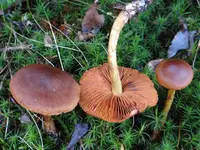
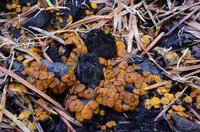
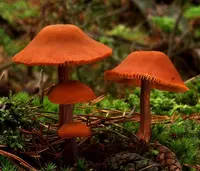
Marsh webcap, Cortinarius uliginosus, is a small to medium-sized mushroom-forming fungus, not a leafy houseplant. It forms rusty to yellow-brown caps with a web-like veil on the gills. This species typically appears in wet, nutrient-poor soils, often in bogs or damp coniferous woodlands, especially in cooler temperate regions.
It grows in association with tree roots, forming mycorrhiza, a mutual partnership where fungus and tree exchange nutrients. Because it depends on this relationship and very specific moisture and soil conditions, it is not practical to cultivate at home. Most people do not actively care for marsh webcap but instead observe it in suitable natural habitats.
In nature, it prefers consistently moist, acidic, low-nutrient soils with cool, shaded conditions.

Care Difficulty
Hard Care

Light Preference
Partial Shade

Water Requirements
Keep Soil Moist

Temperature Preference
Cool Climate

Hardiness Zone
Unknown

Soil Texture
Peaty, Organic-rich, Loamy

Soil pH
Strongly acidic (4.5–5.5), Acidic (5.5–6.5)

Soil Drainage
Waterlogged tolerant

Fertilization
Minimal (feed rarely)
Scan your plant to receive care tips personalized for your specific plant
Available on iOS and Android
This ectomycorrhizal fungus prefers cool, moist woodland light rather than open sun.
This woodland mushroom depends on consistently moist, not waterlogged, soil around its host trees.
This species is adapted to cool, temperate climates and does not thrive in sustained heat.
This ectomycorrhizal fungus depends more on moist soil than on air humidity, so indoor humidity control is generally unnecessary.
This fungus grows only in naturally wet, organic forest soils and cannot be recreated reliably in standard garden or potting setups.
This species is not suitable for container growing, even for experienced mushroom growers, because it depends on complex tree-root and wetland interactions.
This ectomycorrhizal fungus does not need direct fertilization, since it relies on nutrient exchange with its host trees rather than added nutrients.
Pruning is not applicable to Cortinarius uliginosus, as it is a wild, mycorrhizal mushroom that is not maintained through cutting or shaping.
This species is not suited to conventional repotting, since it lives in symbiosis with tree roots in consistently moist, acidic, organic-rich soils.
Propagation of Cortinarius uliginosus is rarely attempted, because successful establishment depends on complex mycorrhizal associations with suitable host trees.
This fungus is cold hardy in its native range and does not require special winter care beyond conserving its woodland habitat conditions.

Plant Health Check
Not sure what's wrong with your plant? Check your plant's health inside the app.
This species is strongly associated with nutrient-poor, wet, often Sphagnum-dominated bogs and fens, making it an indicator of intact, low-disturbance peatland ecosystems in parts of Europe.
It forms ectomycorrhizal associations with willow species, especially Salix repens in wet heath and bog habitats, exchanging mineral nutrients for plant-derived sugars at the root interface.
Young fruitbodies have a dense, rust-colored cobweb-like veil (the cortina) that leaves rusty deposits on the stem and between the gills as the cap expands, helping field mycologists separate it from similar wetland Cortinarius species.
This species is considered poisonous and must not be eaten. Several Cortinarius species contain dangerous toxins, including orellanine, which can cause severe kidney damage. Identification is difficult, so all similar-looking mushrooms should be treated as inedible.
Keep your plants happy and healthy with plant identification, disease detection, and easy care guidance.