slimleaf pawpaw Care (Asimina angustifolia)

slimleaf pawpaw

About slimleaf pawpaw

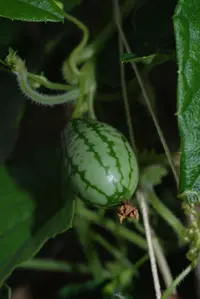
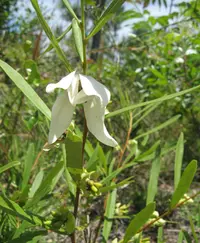
Slimleaf pawpaw (Asimina angustifolia) is a small, deciduous shrub or slender tree native to sandy pinelands and scrub habitats in the southeastern United States. It typically forms an airy, open shape with narrow, strap-like leaves and small, drooping flowers that develop into elongated green fruits.

This species is adapted to dry, acidic, well-drained soils and tends to be more drought tolerant than the common pawpaw. It suits naturalistic or restoration plantings where conditions mimic its native habitat. Gardeners who care for slimleaf pawpaw should note that it prefers full sun to light shade and benefits from low-competition sites.

Main Plant Requirements

Care Difficulty

Moderate Care

Light Preference

Full Sun

Water Requirements

Moderate Water

Temperature Preference

Cold Hardy

Hardiness Zone

7–9

Soil Texture

Sandy, Loamy, Organic-rich

Soil pH

Acidic (5.5–6.5), Slightly acidic (6.5–7.0)

Soil Drainage

Moist but well-drained

Fertilization

Minimal (feed rarely)

Get Personalized Care Plan

Scan your plant to receive care tips personalized for your specific plant

Available on iOS and Android

How to Care for the slimleaf pawpaw

This species prefers bright outdoor exposure with some protection during the hottest part of the day.

  • Provide 6–8 hours of direct sun, ideally with morning sun and light afternoon shade, especially in hotter climates.
  • Young slimleaf pawpaw plants benefit from partial shade or filtered light for the first 1–2 years to prevent leaf scorch and stress.
  • Avoid deep shade, which reduces flowering and fruiting; in summer, monitor for leaf yellowing or crisp edges that indicate excessive intense sun.

This species prefers consistently moist but not waterlogged soil, especially while establishing.

  • Allow the top 3–5 cm of soil to dry slightly, then water deeply so moisture reaches the full root zone, particularly during the first 2–3 growing seasons.
  • Choose well-drained, loamy soil; standing water, a sour smell, or blackened roots indicate overwatering and poor drainage.
  • In hot, dry weather, check soil every 2–3 days for wilting or dull, curling leaves, which signal the need for a thorough soak.

This species is a hardy, outdoor plant adapted to warm-temperate climates with cool winters.

  • Optimal growth occurs around 70–85°F (21–29°C), with active shoot and leaf development in late spring and summer.
  • Mature plants tolerate winter lows near 10°F (−12°C), though young plants benefit from mulch to buffer soil temperature and protect roots.
  • In hot spells above 95°F (35°C), provide extra water and some afternoon shade to limit heat stress, leaf scorch, and premature leaf drop.

This species handles a wide humidity range and humidity is rarely a limiting factor outdoors.

  • Slimleaf pawpaw grows well at 30–60% humidity and does not require targeted humidity control in most US climates.
  • Leaves generally tolerate dry air if soil moisture is steady and roots do not dry out completely.
  • Humidity stress is uncommon; if leaf edges brown, check for drought, heat, or wind exposure rather than low air humidity.

This species prefers light, well‑drained soil that still holds moderate moisture.

  • Use sandy or sandy‑loam soil with some organic matter to mimic Asimina angustifolia’s native habitats.
  • Aim for slightly acidic to neutral pH around 6.0–7.0 to support nutrient availability and root health.
  • Blend native sand or sandy topsoil with 20–30% compost to improve structure without making the mix heavy or waterlogged.
  • Avoid dense clay, compacted ground, or sites where water stands after rain, which quickly causes root decline.

This species can be grown in containers for a few years, but long‑term culture is challenging due to its deep root system.

  • Choose a tall, deep container to accommodate the taproot and reduce circling roots near the base.
  • Use a heavy or weighted pot to keep the plant stable against wind as the top growth becomes larger.
  • Select a potting mix that drains quickly yet stays slightly moist, preventing both standing water and complete drying.

This species is adapted to lean, sandy soils, so slimleaf pawpaw usually needs only light fertilization in cultivation.

  • Use a light topdressing of compost or a low-rate, slow-release balanced NPK fertilizer (around 10-10-10).
  • Apply once in early spring as new growth begins; a second light feeding in midsummer is usually enough.
  • Dilute liquid feeds to 1/2 strength and water into moist soil to avoid root burn.
  • Stop feeding in late summer so growth hardens before winter dormancy.

Asimina angustifolia needs minimal pruning, mainly to maintain structure and remove problem wood.

  • Prune in late winter to early spring while the plant is still dormant.
  • Remove dead, diseased, crossing, or storm-damaged branches with clean, sharp bypass pruners or loppers.
  • Thin crowded interior shoots lightly to improve light penetration and airflow without over-opening the canopy.
  • Limit cuts on young trees to shaping a single main trunk and sturdy scaffold branches.

This species develops a deep taproot, so focus on careful early transplanting rather than frequent repotting.

  • Look for roots circling inside the pot, slow growth, or quick drying soil as signs a young plant needs a larger container or planting site.
  • Transplant in late winter to early spring before active growth, handling the root ball very gently to avoid taproot damage.
  • Move up only 1 pot size or set into the ground at the same depth, using loose, well-drained soil and firming lightly.
  • Water thoroughly after planting, then keep evenly moist and shaded for 1–2 weeks to reduce transplant shock.

Seed propagation is the primary method for Asimina angustifolia and demands patience and specific conditions.

  • Collect ripe fruits, clean seeds, and sow fresh or store slightly moist; seeds need 3–4 months of cold stratification at 34–41°F.
  • Sow stratified seed in deep containers with well-drained, slightly acidic medium in spring, keeping it evenly moist.
  • Provide warm temperatures (68–75°F) and bright, indirect light; germination may be slow and staggered.
  • Avoid disturbing seedlings, since early taproot injury can severely reduce survival.

Mature plants are generally cold hardy in their native range and need little winter care in the ground.

  • Tolerates light to moderate frost once established, but young plants benefit from extra protection in the first 1–2 winters.
  • Apply a 5–8 cm layer of mulch around the root zone, keeping it a few cm away from the trunk.
  • Move container-grown plants into an unheated garage or sheltered spot where temperatures stay above about 20°F.

Care Tips

Taproot-friendly planting

Use deep nursery containers or planting holes at least 30–40 cm deep so the strong taproot can establish without circling, and avoid transplanting older seedlings once the taproot has set to reduce loss and stress.

Mycorrhiza support

Incorporate a small amount of native woodland soil or a commercial mycorrhizal inoculant into the planting backfill to encourage beneficial fungi that improve nutrient uptake and drought tolerance.

Seedling shade management

Provide 30–50% shade cloth or dappled shade for the first 1–2 summers, then gradually remove shading over 2–3 weeks in spring to harden young plants to higher light without leaf scorch.

Targeted pollination aid

To improve fruit set, especially in isolated plantings, grow at least 2–3 genetically different individuals and hand-pollinate flowers in early spring using a soft brush to transfer pollen between plants.

Mulch ring strategy

Maintain a 5–8 cm ring of coarse organic mulch around but not touching the trunk to suppress weeds, keep roots cool, conserve moisture, and reduce competition during the early years of growing slimleaf pawpaw.

Common Pests and Diseases

pawpaw peduncle borer

This pest is a caterpillar that tunnels into flower stalks and young fruit stems, causing buds and small fruits to yellow, wilt, and drop prematurely.

Solution

Prune off and destroy wilted flower clusters and fruitlets that show boring damage to break the life cycle, and keep fallen material picked up. In small plantings, inspect flower stalks in spring and early summer and crush or remove any visible larvae; encourage birds and predatory insects by maintaining diverse surrounding vegetation.

pawpaw webworm

This pest is a small caterpillar that ties leaves together with silk, creating messy webbed clusters where foliage is skeletonized and discolored.

Solution

Cut out and destroy webbed leaf clusters as soon as they appear, especially on young plants. Light infestations can be managed by handpicking larvae; for repeated problems, a targeted Bacillus thuringiensis (Bt) product labeled for caterpillars can be used on actively feeding larvae while avoiding beneficial insects as much as possible.

pawpaw leaf spot

This disease causes small dark spots that enlarge into irregular brown to black lesions on leaves, sometimes leading to early leaf drop in humid, rainy periods.

Solution

Rake and discard fallen leaves to reduce overwintering spores and promote good air circulation by thinning crowded shoots if necessary. If leaf spot recurs severely, a gardener may use a copper-based fungicide labeled for fruit trees at the start of wet periods, following label directions carefully and avoiding unnecessary repeat sprays.

powdery mildew

This disease appears as a white to gray powdery coating on upper leaf surfaces, which can lead to distorted growth and reduced vigor, especially on shaded, poorly ventilated plants.

Solution

Improve light and airflow by removing dense surrounding vegetation and avoid overhead watering in the evening. If needed, apply a sulfur or potassium bicarbonate fungicide labeled for powdery mildew early in the infection period, and focus on protecting new growth rather than trying to clear older damaged leaves.

scale insects

These insects attach tightly to twigs and sometimes leaves, appearing as small bumps; symptoms include sticky honeydew, sooty mold on surfaces below, and gradual decline in vigor.

Solution

Prune out heavily infested twigs and dispose of them, then wipe accessible branches with a cloth dipped in soapy water or horticultural oil to dislodge scales. During the growing season, use a light horticultural oil spray targeting the crawler stage, applying thoroughly to bark and leaf undersides while following label instructions and avoiding high-temperature periods.

Interesting Facts

Southeastern sand specialist

This species is naturally restricted to deep, well-drained sandy soils of the coastal plain in the southeastern United States, where it often grows in open pine or scrub habitats that many other pawpaw relatives cannot tolerate.

Slender foliage adaptation

Its unusually narrow, strap-like leaves reduce surface area compared to broader-leaved pawpaw species, an adaptation that helps limit water loss in hot, dry, sandy environments.

Specialist pollination strategy

The pale, drooping flowers are pollinated mainly by small flies and beetles attracted to their scent, which is less showy than many garden flowers but effective in the low-wind, understory conditions where the shrub grows.

Botan icon

Did you know?

Asimina angustifolia is part of a small group of North American members of the mostly tropical custard apple family (Annonaceae), making it a temperate outlier within a lineage otherwise dominated by species from warm, tropical regions.

FAQs about slimleaf pawpaw

Lack of flowers usually comes from too much shade, young age, or poor pollination. This species often needs cross-pollination between genetically different plants and several years of growth before consistent flowering and fruiting begin.

Grow Healthy Plants with Botan Care

Keep your plants happy and healthy with plant identification, disease detection, and easy care guidance.

Botan plant care app — identify plants on mobile

Explore More Plants