Rhizome Sun Exposure
When planting or dividing, leave the top third of each rhizome exposed to light and air to reduce rot risk and improve flowering.

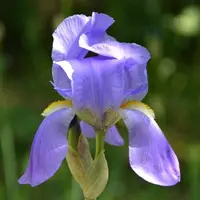
Sweet iris, Iris pallida, is a rhizomatous perennial grown for its upright sword-like leaves and elegant, fragrant spring flowers. It forms clumps that slowly expand over time, creating a structured, architectural look in borders and mixed plantings.
This species is native to rocky, sunny slopes in southern Europe, especially in the Adriatic region. It is valued both as an ornamental and for its scented rhizomes used in perfumery.
Sweet iris is generally considered easy to grow if given full sun, good air flow, and well-drained soil. Understanding how to care for sweet iris begins with avoiding heavy, waterlogged sites that encourage rot.

Care Difficulty
Easy Care

Light Preference
Full Sun

Water Requirements
Moderate Water

Temperature Preference
Cold Hardy

Hardiness Zone
4–9

Soil Texture
Sandy, Loamy, Rocky

Soil pH
Slightly acidic (6.5–7.0), Slightly alkaline (7.0–7.5)

Soil Drainage
Well-drained

Fertilization
Minimal (feed rarely)
Scan your plant to receive care tips personalized for your specific plant
Available on iOS and Android
Iris pallida grows best in sites with bright, direct sun for strong foliage and flowering.
Iris pallida prefers moderate watering with brief dry periods around the rhizomes.
This iris is a cool- to warm-temperate perennial that tolerates a broad range of outdoor temperatures.
This species prefers relatively dry air and usually does not need special humidity management.
Iris pallida grows best in mineral-rich, free-draining soil that never stays waterlogged.
This species is suitable for container growing when drainage and rhizome positioning are managed carefully.
Iris pallida needs only modest feeding to maintain healthy clumps and flowering.
Pruning Iris pallida is mainly about cleanliness and maintaining strong flowering performance.
This species is usually grown in the ground, so care focuses on lifting and transplanting clumps rather than frequent repotting.
Iris pallida is most commonly propagated by division of rhizomes rather than by seed.
Iris pallida is generally cold hardy and needs minimal winter attention in most temperate gardens.

Plant Health Check
Not sure what's wrong with your plant? Check your plant's health inside the app.
The rhizomes of Iris pallida are dried and aged to produce orris root, a classic base note in high-end perfumery because of its violet-like, powdery scent and strong fixative properties.
This species is known for its striking bluish-gray, glaucous leaves, caused by a waxy coating that helps reduce water loss and reflects excess sunlight in its native rocky, sun-exposed habitats.
In the wild, Iris pallida often grows on limestone slopes and rocky calcareous soils in the northern Adriatic region, showing a strong tolerance for alkaline, mineral-rich substrates.

Orris butter obtained from aged Iris pallida rhizomes is one of the most expensive plant-derived perfumery materials in the world, largely because the rhizomes must mature for several years before they develop their characteristic fragrance compounds in commercially useful concentrations.
Lack of flowers usually comes from too much shade, overcrowded rhizomes, or planting the rhizomes too deep. Divide clumps every 3–4 years, keep the rhizome tops exposed, and ensure strong light for reliable flowering.
Keep your plants happy and healthy with plant identification, disease detection, and easy care guidance.