Establish strong scaffold
During the first 3–4 years, select 3–5 well-spaced main branches and remove steep, crossing, or rubbing shoots in late winter to build a strong framework that can support heavy fruiting later.

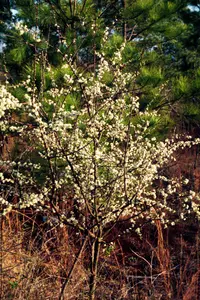
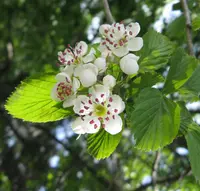
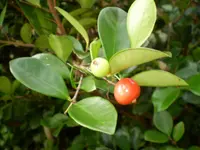
Hog plum (Prunus umbellata) is a small deciduous tree or large shrub native to the southeastern United States. It is often found in open woods, fencerows, and sandy sites. The plant has a rounded, somewhat irregular crown, with small white spring flowers followed by tart yellow to purple plums that attract wildlife. Its branching can be dense and twiggy, forming a thicket-like habit over time. This species is generally resilient, tolerating drought and poor, sandy or loamy soils once established, which makes it relatively easy to manage in low-maintenance landscapes. Understanding how to care for hog plum mainly involves giving it full sun and well-drained soil.

Care Difficulty
Moderate Care

Light Preference
Full Sun

Water Requirements
Moderate Water

Temperature Preference
Cold Hardy

Hardiness Zone
6–9

Soil Texture
Sandy, Loamy, Clay

Soil pH
Acidic (5.5–6.5), Slightly acidic (6.5–7.0)

Soil Drainage
Well-drained

Fertilization
Minimal (feed rarely)
Scan your plant to receive care tips personalized for your specific plant
Available on iOS and Android
Prunus umbellata grows best as a full-sun, outdoor fruiting shrub or small tree with some tolerance for light shade.
Prunus umbellata prefers evenly moist, well-drained soil and becomes more drought tolerant as roots mature.
This species is a hardy, outdoor tree that handles a wide temperature range once established.
This species tolerates a wide humidity range and usually does not need special humidity management outdoors.
This species prefers moderately fertile, well-structured mineral soil with reliable drainage.
This tree can be grown in large containers for several years with careful attention to root space and stability.
Prunus umbellata usually grows well in average soil and needs only light, targeted feeding for best fruiting.
Prunus umbellata benefits from thoughtful pruning to maintain structure, health, and fruit production.
Hog plum is usually grown in the ground, so focus on careful transplanting of young trees rather than frequent repotting.
Prunus umbellata is commonly propagated from seed or semi-hardwood cuttings under suitable conditions.
This species is generally cold hardy in much of its range and usually needs minimal winter care once established.

Plant Health Check
Not sure what's wrong with your plant? Check your plant's health inside the app.
This species is native to the sandy pinelands and scrub habitats of the southeastern United States, especially Florida and neighboring states, where it forms part of the natural understory in dry, well-drained sites.
Its small, tart fruits are heavily used by birds, raccoons, foxes, and other wildlife, making it a key late-summer food source in many native ecosystems.
It has been used in breeding and as a rootstock for other plum species because of its adaptation to heat, drought, and poor, sandy soils, which contributes useful stress-tolerance traits.

Historically, Indigenous communities and early European settlers in the southeastern United States used its tart fruits in preserves, sauces, and fermented beverages, helping to maintain regional food traditions based on locally adapted wild fruit species.
Growth is moderate. Young plants often add 20–40 cm per year once established, sometimes more in ideal conditions. Initial growth may seem slow while roots develop, then shoot growth becomes noticeably stronger after 2–3 seasons.
Keep your plants happy and healthy with plant identification, disease detection, and easy care guidance.