Ashe's magnolia Care (Magnolia ashei)

Ashe's magnolia

About Ashe's magnolia

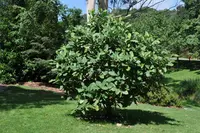
Ashe's magnolia (Magnolia ashei) is a small deciduous tree native to the Florida Panhandle, closely related to the better-known bigleaf magnolia. It forms a broad, open crown and typically stays compact compared to many other magnolias.

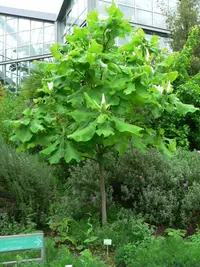
The plant is recognized for its huge, tropical-looking leaves and large, fragrant white flowers with purple markings near the base of the petals. Its bold foliage gives a dramatic, architectural look in gardens.

Magnolia ashei prefers moist, well-drained, slightly acidic soil and thrives in bright, filtered light or light shade, especially in hot climates. With suitable climate and protection from strong winds, it is relatively straightforward to care for Ashe's magnolia.

Main Plant Requirements

Care Difficulty

Moderate Care

Light Preference

Partial Shade

Water Requirements

Regular Water

Temperature Preference

Warm Climate

Hardiness Zone

6–9

Soil Texture

Sandy, Loamy, Organic-rich

Soil pH

Acidic (5.5–6.5), Slightly acidic (6.5–7.0)

Soil Drainage

Moist but well-drained

Fertilization

Minimal (feed rarely)

Get Personalized Care Plan

Scan your plant to receive care tips personalized for your specific plant

Available on iOS and Android

How to Care for the Ashe's magnolia

This panhandle native shrub or small tree needs bright outdoor light but some protection from harsh exposure.

  • Provide 4–6 hours of direct morning sun with light afternoon shade; dappled woodland light also suits Ashe's magnolia well.
  • Allow partial shade, especially in hot climates, but avoid sites with fewer than 3 hours of direct or bright filtered light, which can reduce flowering and cause sparse growth.
  • In summer, shield from strong western sun to prevent leaf scorch, and in winter ensure an open sky exposure so low-angle sun still reaches the canopy.

This species prefers evenly moist, cool soil that never stays waterlogged.

  • Use deep soakings whenever the top 3–5 cm of soil feels dry, letting water infiltrate 15–20 cm rather than giving light surface sprinkles.
  • Increase monitoring in late spring and summer; drooping young leaves and dry, crumbly soil indicate underwatering, while yellowing leaves and sour-smelling, soggy soil suggest overwatering.
  • Plant Magnolia ashei in well-drained, slightly organic soil; raised beds or sloped sites help excess water drain away and lower the risk of root rot.

This deciduous magnolia is adapted to warm-temperate climates with mild winters and hot, humid summers.

  • Optimal growing temperatures are about 65–85°F (18–29°C), with strongest vegetative growth in late spring as soils warm.
  • Mature trees tolerate brief drops to about 0–5°F (-18 to -15°C), but young plants benefit from protection when temperatures fall below 20°F (-7°C).
  • In summer, it copes with highs near 90–95°F (32–35°C) if soil stays moist; prolonged extreme heat or hot, dry winds can scorch large leaves, so mulch and wind protection are useful.

This species prefers moderately moist air but usually adapts to typical outdoor humidity in its range.

  • Target 40–60% humidity in sheltered garden sites, similar to its native woodland-edge conditions for Ashe's magnolia.
  • Expect tolerance of brief drier spells, but prolonged hot, very dry wind can cause marginal leaf browning and bud drop.
  • Increase local humidity by mulching the root zone 5–8 cm deep and placing it away from heat-reflective walls or paving.

Magnolia ashei grows best in deep, moist, well-aerated soil that does not stay waterlogged.

  • Use a loamy, organic-rich soil structure that combines garden loam with compost and leaf mold for moisture retention and nutrients.
  • Ensure drainage by incorporating coarse sand or fine pine bark to prevent standing water around the root zone.
  • Aim for slightly acidic to neutral pH, around 5.5–7.0, avoiding strongly alkaline or saline conditions that limit nutrient uptake.
  • Improve aeration on heavy clay sites by raising the planting area and blending in 30–40% compost plus coarse mineral material.

This species can be grown in large containers for several years, but only with careful attention to stability and moisture management.

  • Choose a wide, heavy container to counterbalance the broad canopy and prevent tipping in strong winds.
  • Use a deep, chunky, bark-based mix that drains freely yet retains enough moisture to stay evenly damp between thorough waterings.
  • Elevate the pot on feet or bricks so drainage holes remain unobstructed and runoff clears quickly during heavy rain or irrigation.

Magnolia ashei benefits from light, thoughtful feeding but grows acceptably in fertile, unamended soil.

  • Apply a balanced slow-release fertilizer (such as 10-10-10) at 1/2 label strength once in early spring as new growth starts.
  • Use a thin layer of compost over the root zone each spring to improve soil structure and slow nutrient release.
  • Avoid summer and fall feeding, which can stimulate tender growth vulnerable to cold and pests.
  • Do not fertilize during winter dormancy; monitor leaf color and growth before increasing nutrients.

Magnolia ashei needs only light structural pruning to maintain health and form.

  • Schedule pruning just after flowering in late spring so flower buds for next year are not removed.
  • Use clean, sharp bypass pruners or a pruning saw to remove dead, diseased, or crossing branches at their point of origin.
  • Thin crowded interior branches slightly to improve airflow while keeping the tree’s natural, open shape.
  • Avoid heavy cutting into older wood, which can reduce flowering and lead to coarse, unbalanced growth.

This species is usually grown in the ground, so focus on careful transplanting rather than frequent repotting.

  • Transplant young trees in late winter to early spring while dormant, before new growth begins for lower stress.
  • Look for roots circling the container, water draining very slowly, or stalled growth as signals a container-grown Magnolia ashei needs moving up.
  • Shift container plants every 2–3 years into a slightly larger pot with a well-drained, slightly acidic mix.
  • Loosen circling roots gently, water deeply after planting, and keep soil evenly moist for several weeks to support re-establishment.

Magnolia ashei can be propagated, but success rates are modest and patience is needed.

  • Sow freshly collected seeds in fall after removing the fleshy coat, then provide cold stratification for several months to trigger germination.
  • Take semi-ripe cuttings in early summer, use rooting hormone, and place in warm, humid, bright shade conditions.
  • Try simple layering by bending a low, flexible branch to the soil, wounding lightly, and securing it until roots form.
  • Grow Magnolia ashei from seed for strongest root systems, accepting that seedlings may take several years to reach flowering size.

This magnolia is moderately cold hardy but benefits from basic winter preparation, especially in colder regions or containers.

  • Tolerates light to moderate freezes but young plants are more sensitive to repeated hard frost below about 15°F.
  • Apply a 5–8 cm mulch layer over the root zone in late fall, keeping mulch a few cm away from the trunk.
  • For container plants, move pots into an unheated garage or sheltered porch where temperatures stay above about 20°F.
  • In exposed sites, use a breathable fabric wrap around young trunks and branches to limit winter scorch and cracking.

Care Tips

Early wind protection

Stake young trunks with two or three low ties on the windward side for the first 2–3 years to prevent root rock and help the tree form a stable, upright framework.

Mulch to cool roots

Maintain a 5–8 cm ring of organic mulch over the root zone, kept a few cm away from the trunk, to keep shallow roots cool and moist and to reduce weed competition.

Leaf litter recycling

Leave a thin layer of fallen leaves under the canopy or shred and return them as mulch so they slowly recycle nutrients and build the slightly acidic, humus-rich soil this species prefers.

Bud protection from frost

In regions with late spring frosts, wrap the lower framework branches loosely with breathable horticultural fleece on forecast frost nights to protect large flower buds from browning.

Canopy spacing management

When planting near buildings or other trees, plan for a wide crown by giving at least 3–4 m of horizontal clearance so that caring for Ashe's magnolia and accessing branches for inspection remains easy as it matures.

Common Pests and Diseases

Magnolia scale

This pest is a sap-sucking insect that often covers young twigs with dome-shaped, brownish scales and produces sticky honeydew that can lead to sooty mold. Symptoms include yellowing leaves, weakened growth, and black fungal coating on leaves and branches.

Solution

Prune out heavily infested twigs and dispose of them, then wash remaining branches with a strong stream of water to remove crawlers and honeydew. For persistent infestations, apply horticultural oil during the crawler stage in late spring or early summer, ensuring thorough coverage of stems and branch crotches.

Leaf spot

This disease causes small brown to purplish spots that can enlarge and coalesce, leading to premature leaf drop, particularly in warm, humid conditions. Symptoms include irregular lesions often starting on older leaves and may be more evident on shaded inner foliage.

Solution

Remove and discard fallen leaves and heavily spotted foliage to reduce fungal spores, and maintain good spacing and airflow around the plant. In seasons with repeated wet weather, a preventive copper-based or chlorothalonil fungicide can be applied to newly emerging leaves according to label directions as part of Magnolia ashei care instructions.

Phyllosticta leaf blotch

This disease produces tan to dark brown blotches with distinct darker borders that can give leaves a scorched or tattered look by late summer. Symptoms include scattered blotches that may have tiny black fruiting bodies in the dead tissue.

Solution

Collect and destroy infected leaves at the first sign of blotching and again in fall to reduce carryover of the fungus. Improve air circulation and avoid overhead watering; in severe, recurring cases, apply a broad-spectrum foliar fungicide just as new leaves expand in spring and repeat as needed per product label.

Twig blight

This disease causes dieback of young shoots and small branches, often following stress such as drought or mechanical damage. Symptoms include wilting and browning of terminal shoots, with the affected section turning dry and brittle while lower growth remains green.

Solution

Prune out blighted twigs several inches below the dead tissue, sterilizing pruning tools between cuts with alcohol or a 10% bleach solution. Reduce plant stress by watering during dry spells and mulching the root zone, and if blight recurs, consider a targeted fungicide application during wet periods in spring.

Spider mites

These insects are tiny sap-feeders that thrive in hot, dry conditions and can cause fine stippling, dull-looking foliage, and light webbing on the undersides of leaves. Symptoms include bronzing or speckling of leaves and possible premature leaf drop on stressed plants.

Solution

Spray leaves thoroughly with a strong stream of water, especially on the undersides, to dislodge mites and webs, and increase humidity around the plant if possible. For ongoing problems, apply insecticidal soap or horticultural oil to both leaf surfaces at 7–10 day intervals, avoiding applications during high heat or full midday sun.

Interesting Facts

Florida panhandle endemic

This species occurs naturally only on a few limestone bluffs and ravines in the Florida Panhandle, making it one of the most range-restricted magnolias in North America.

Huge but short-lived leaves

It produces very large leaves, often 30–50 cm long, but each leaf typically lives only one growing season before being shed.

Fragrant, night-active flowers

Its large creamy-white flowers open in late spring and produce a strong, sweet fragrance that attracts nocturnal and crepuscular beetles, which act as its main pollinators.

Botan icon

Did you know?

Magnolia ashei is considered one of the rarest native trees in the United States and is listed as threatened in Florida due to its tiny natural range and ongoing habitat loss on its limestone bluff ecosystems.

FAQs about Ashe's magnolia

Growth is moderately fast for a small tree, often adding 30–60 cm per year once established. Young plants may grow more slowly while roots develop, then accelerate with consistent moisture, mulch, and protection from harsh wind.

Grow Healthy Plants with Botan Care

Keep your plants happy and healthy with plant identification, disease detection, and easy care guidance.

Botan plant care app — identify plants on mobile

Explore More Plants