Wind-aware placement
Site the tree where strong prevailing winds are filtered by buildings or taller plants, as its large evergreen leaves tear easily and wind damage can increase water loss and stress.

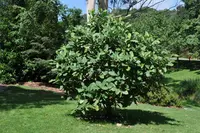
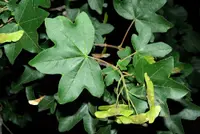
Chinese evergreen magnolia, Magnolia delavayi, is an evergreen small tree or large shrub grown mainly for its bold foliage and summer flowers. It forms a dense, rounded crown with large, leathery green leaves and creamy white, scented blooms that appear on mature plants.
This species is native to southwestern China, where it grows on forested slopes and in valleys with mild, moist conditions. It is considered moderately challenging in cooler or very dry climates, as it dislikes extreme cold, strong drying winds, and prolonged drought.
Gardeners who want to care for Chinese Evergreen Magnolia should provide a sheltered spot with bright, filtered light, evenly moist but well-drained soil, and protection from harsh exposure.

Care Difficulty
Moderate Care

Light Preference
Partial Sun

Water Requirements
Regular Water

Temperature Preference
Warm Climate

Hardiness Zone
7–10

Soil Texture
Loamy, Clay, Organic-rich

Soil pH
Acidic (5.5–6.5), Slightly acidic (6.5–7.0)

Soil Drainage
Moist but well-drained

Fertilization
Minimal (feed rarely)
Scan your plant to receive care tips personalized for your specific plant
Available on iOS and Android
This evergreen magnolia prefers bright, gentle sun with some protection from harsh afternoon exposure.
This species prefers evenly moist but not saturated soil, supported by good drainage.
This magnolia is a hardy evergreen that prefers mild climates without extreme heat or deep freezes.
Magnolia delavayi handles a wide humidity range but benefits from slightly moist air.
Magnolia delavayi prefers deep, moisture-retentive yet free-draining soil.
Magnolia delavayi can be grown in containers for several years if the pot is large and stable.
Magnolia delavayi benefits from light, balanced feeding but grows acceptably in fertile ground without extra inputs.
Magnolia delavayi needs only light, selective pruning to maintain structure and remove problem wood.
This magnolia is usually grown in the ground, so focus on careful transplanting rather than frequent repotting.
Magnolia delavayi is usually propagated by seed or semi-ripe cuttings, both of which need patience and stable conditions.
This magnolia is moderately cold hardy but benefits from basic winter protection in colder regions.

Plant Health Check
Not sure what's wrong with your plant? Check your plant's health inside the app.
This species is naturally evergreen and native to montane forests of southwestern China, often growing at elevations around 1,500–2,800 m in mild, humid conditions.
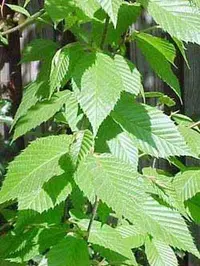
Its leaves are notably large, tough, and leathery, with a pale or slightly glaucous underside that helps reduce water loss and protect the leaf surface in wind-exposed mountain habitats.
The creamy white, bowl-shaped flowers often release their strongest fragrance in the evening and at night, which is thought to help attract nocturnal pollinators in its native range.

Magnolia delavayi was first described scientifically in the late 19th century from material collected in Yunnan, China, and the species name honors the French missionary and botanist Père Jean Marie Delavay, who documented much of the region’s rich mountain flora.
Lack of blooms usually comes from the plant being too young, insufficient light, heavy pruning at the wrong time, or nutrient imbalance. Older wood typically flowers best, so avoid frequent hard pruning and maintain steady, moderate fertility.
Keep your plants happy and healthy with plant identification, disease detection, and easy care guidance.