banana Care (Musa balbisiana)

banana

About banana

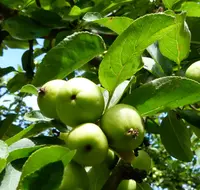
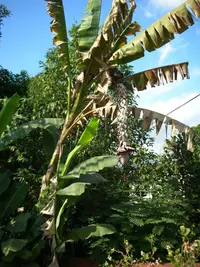
Musa balbisiana is a wild banana species and an important parent of many cultivated bananas and plantains. It forms large, leafy clumps with tall pseudostems and broad, upright leaves. Flowers emerge in hanging clusters, followed by seeded fruits that are usually not eaten fresh. This species is native to South and Southeast Asia, where it grows in warm, humid, lowland habitats. Musa balbisiana tends to be robust and wind-tolerant but needs consistent warmth and moisture, so it is easiest in tropical or protected subtropical gardens. In cooler regions, successful care for banana typically involves growing it in a container under bright light and sheltered conditions.

Main Plant Requirements

Care Difficulty

Moderate Care

Light Preference

Full Sun

Water Requirements

Keep Soil Moist

Temperature Preference

Tropical / Frost Sensitive

Hardiness Zone

9–11

Soil Texture

Loamy, Sandy, Organic-rich

Soil pH

Acidic (5.5–6.5), Slightly acidic (6.5–7.0)

Soil Drainage

Moist but well-drained

Fertilization

Heavy (weekly, diluted)

Get Personalized Care Plan

Scan your plant to receive care tips personalized for your specific plant

Available on iOS and Android

How to Care for the banana

Musa balbisiana grows best in strong, warm light similar to its tropical native habitat.

  • Provide 6–8 hours of direct sun daily, ideally with morning sun and light afternoon shade, especially in hotter regions.
  • Plant in a site that receives full sun but with some filtered light during the harshest midday hours to reduce leaf scorch risk.
  • Tolerates partial shade (4–5 hours sun) but growth and leaf size decline; in winter, maximize exposure by avoiding shade from buildings or trees.

Musa balbisiana needs evenly moist but not waterlogged soil to support rapid growth and large leaves.

  • Water when the top 3–5 cm of soil feel dry, applying a deep soak so moisture reaches the full root zone, then let excess drain away.
  • Use rich, well-drained soil; standing water or heavy clay promotes root rot, yellowing leaves, and a sour smell in the root area.
  • In hot growth periods, expect faster drying and more frequent watering; in cooler months, slow watering and watch for drooping, crisp edges as a sign of underwatering.

This species prefers warm, stable conditions and reacts quickly to cold or frost.

  • Aim for active growth temperatures of 75–90°F (24–32°C), which support fast leaf production and strong pseudostems.
  • Protect from cold; growth slows below 60°F (16°C), and tissue damage begins near 32°F (0°C), especially on young leaves and new shoots.
  • In very hot spells above 95°F (35°C), provide extra water and some afternoon shade to limit heat stress, leaf scorch, and wilting.

This species performs best in consistently humid air that mimics a tropical environment.

  • Aim for 60–80% humidity; growth slows and leaves may crisp at edges below roughly 40%.
  • Dry indoor air causes curled, brown-tipped leaves and stalled new leaf unfurling on the banana.
  • Increase humidity with grouped plants, a room humidifier, or a wide pebble tray placed directly beneath the pot, not touching the drainage holes.

Musa balbisiana grows best in deep, loose, organic-rich soil that drains quickly yet retains some moisture.

  • Use a loamy mix of roughly 40% compost, 40% peat or coco coir, and 20% perlite or coarse sand for structure and aeration.
  • Ensure fast drainage; water should move through within seconds, with the mix staying lightly moist rather than saturated.
  • Keep pH slightly acidic to neutral, around 6.0–7.0, which supports nutrient uptake and reduces micronutrient lockout.
  • Avoid heavy clay, poorly drained low spots, or mixes dominated by fine particles that compact and suffocate roots.

This species can be grown in containers if the pot is large, stable, and managed carefully for moisture and weight.

  • Choose a wide, heavy container that reduces tipping risk as the tall pseudostem and large leaves catch wind.
  • Select a pot depth that allows a broad root zone, leaving several cm of space at the top so water does not overflow during irrigation.
  • Use thick-walled clay or concrete pots outdoors in windy sites to balance moisture retention with extra weight for stability.

Musa balbisiana responds well to moderate, consistent feeding during its active growing season.

  • Use a balanced NPK fertilizer (such as 10-10-10) or well-rotted compost as the main nutrient source.
  • Feed every 4–6 weeks in spring and summer, when growth is strongest and leaves are forming.
  • Apply liquid fertilizer at 1/2 strength to avoid salt buildup and root burn in the soil.
  • Reduce feeding to once in late autumn or stop entirely in winter when growth slows.

Pruning Musa balbisiana focuses on removing old tissue and managing clumps for healthier, stronger growth.

  • Carry out main pruning in late winter or early spring before vigorous new growth starts.
  • Cut out dead, diseased, storm-damaged, or heavily shredded leaves with clean, sharp pruners.
  • Remove weak, crowded, or poorly placed suckers at ground level to favor 3–5 strongest stems.
  • After fruiting, cut the spent pseudostem down to near soil level to redirect energy to new shoots.

Transplanting Musa balbisiana is mainly about giving vigorous clumps enough room and fresh soil for strong root development.

  • Look for roots circling the pot, pushing out of drainage holes, soil drying very fast, or stalled growth as signs it needs more space.
  • Plan transplanting or pot-up in late spring to early summer, once soil is warm and active growth has started.
  • Move up 1 pot size or space field plants 2–3 m apart, disturbing roots as little as possible and keeping the root ball intact.
  • Water thoroughly after transplanting, provide light shade and wind shelter for 1–2 weeks, and keep soil evenly moist to reduce stress.

New Musa balbisiana plants are most reliably produced by division of rooted suckers from a mature clump.

  • Choose well-formed suckers (pups) 60–90 cm tall with their own roots attached to the parent.
  • Divide in late spring or early summer, when soil is warm and the mother plant is actively growing.
  • Cut pups away with a clean, sharp spade, keeping a solid root section and a bit of corm tissue.
  • Replant into fertile, well-drained soil, keep evenly moist, and provide bright, sheltered conditions until new leaves emerge.

Musa balbisiana is sensitive to hard frost, so winter care focuses on protecting its root system and pseudostems in cooler climates.

  • In regions below about 30–32°F, treat it as tender and plan for outdoor protection or indoor shelter.
  • Pile 10–20 cm of dry mulch around the base to insulate the root zone from freezing.
  • In borderline climates, cut leaves after the first light frost and wrap pseudostems with breathable insulation.
  • Grow Musa balbisiana in large containers in cold regions and move plants indoors or into a frost-free greenhouse for winter.

Care Tips

Wind-resistant staking

Install 2–3 sturdy stakes around the pseudostem and secure it with soft, wide ties before the plant reaches full height, especially in windy sites, so the tall growth does not snap or lean under its own weight.

Sucker selection

Remove weak, crowded, or poorly placed suckers and keep only 1–2 strong sword suckers emerging near the base so the plant channels energy into a stable clump and more reliable fruiting stems.

Mulch for root stability

Maintain a 5–10 cm ring of coarse organic mulch around, but not touching, the base to buffer root temperature, reduce soil splash that can spread disease, and keep the shallow root system evenly protected.

Proactive pest scouting

Inspect leaf undersides, midribs, and the pseudostem weekly for early signs of aphids, spider mites, and scale, and wash small infestations off with a firm water spray before they build up and weaken the plant.

Seasonal windbreak use

In exposed gardens, set up temporary windbreaks such as mesh fencing or shrub screens on the prevailing wind side during stormy seasons to reduce leaf shredding and mechanical stress while growing banana in marginal climates.

Common Pests and Diseases

Banana bunchy top virus

This disease causes severe stunting, upright narrow leaves, and a stacked or bunchy appearance at the top of the plant. Symptoms include dark green streaks along leaf veins and midribs, and plants often fail to produce normal fruit.

Solution

Immediately remove and destroy infected plants, including the rhizome, to stop virus spread, and control banana aphids in the area with horticultural soap or oil sprays. Avoid moving suckers from unknown sources, and use only virus-free planting material for Musa balbisiana plant care in home or small-scale plantings.

Panama disease (Fusarium wilt)

This disease is caused by a soil-borne fungus that blocks the water-conducting tissues, leading to yellowing and wilting of older leaves. Symptoms include brown or reddish discoloration in the pseudostem when cut open and eventual plant collapse.

Solution

Remove and destroy affected plants and avoid replanting bananas in the same contaminated soil, because the fungus can persist for many years. Improve drainage, keep tools and footwear clean between sites, and use resistant or tolerant cultivars when available.

Black Sigatoka

This disease affects leaves, starting as small dark streaks that expand into brown or black lesions with yellow halos. Symptoms include rapid leaf death, reduced photosynthesis, and poor bunch development.

Solution

Remove and dispose of heavily spotted or dead leaves to reduce the source of infection, and avoid overhead watering that keeps foliage wet for long periods. Improve air circulation around plants by proper spacing and pruning of excess suckers, and in high-pressure areas consider protective fungicide sprays according to local guidelines.

Banana aphid

This pest is a small sap-sucking insect that clusters on young leaves, pseudostems, and undersides of foliage. These insects cause leaf curling, sticky honeydew, and sooty mold growth, and also act as the main vector of banana bunchy top virus.

Solution

Rinse colonies off with a firm stream of water on small plantings, and treat persistent infestations with insecticidal soap or neem oil, ensuring full coverage of the undersides of leaves. Remove heavily infested older leaves and avoid planting near ant nests that protect aphids in exchange for honeydew.

Banana weevil borer

This pest is a beetle whose larvae tunnel into the corm and pseudostem, weakening plants and reducing vigor. Symptoms include poor growth, lodging of plants, and visible galleries in the corm when split open.

Solution

Remove and destroy old corms, pseudostems, and heavily infested plants to eliminate breeding sites, and keep the planting area free of decaying banana residues. Use clean, pest-free suckers or tissue-cultured material, and in outdoor plantings consider trapping adults with cut pseudostem pieces that are later collected and destroyed.

Interesting Facts

Key wild banana ancestor

Musa balbisiana is one of the two main wild banana species that gave rise to most edible bananas and plantains, contributing genes for hardiness and disease tolerance in many modern cultivars.

Hard seeds and drought tolerance

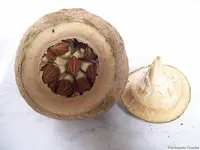
Unlike seedless dessert bananas, this species produces large, hard seeds and has a tougher, more drought-tolerant constitution, which helps it survive in seasonal monsoon climates of South and Southeast Asia.

Genetic backbone of plantains

Many cooking bananas and plantains carry the B genome from Musa balbisiana, which is linked to firmer starchy flesh, better cooking quality, and improved resistance to some pests and fungal diseases.

Botan icon

Did you know?

In some regions, the leaves, pseudostems, and sap of Musa balbisiana play an important role in traditional agroecosystems, where they are used as biodegradable wrapping material, animal fodder, and organic mulch, integrating the plant into both local agriculture and daily life.

FAQs about banana

Brown leaf edges usually come from low humidity, underwatering, or fertilizer burn. Sudden dark patches often indicate cold or wind damage. Trim only the dead tissue and correct the underlying issue rather than removing whole leaves.

Grow Healthy Plants with Botan Care

Keep your plants happy and healthy with plant identification, disease detection, and easy care guidance.

Botan plant care app — identify plants on mobile

Explore More Plants