Use host substrate
Establish the fungus by burying small pieces of rotting hardwood or well-decayed wood chips from an existing site into your chosen area, as Lycoperdon umbrinum fruits best where its mycelium can colonize compatible woody debris.

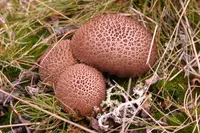
Lycoperdon umbrinum, commonly called the umber-brown puffball, is a small terrestrial fungus rather than a leafy plant. It forms round, brown fruiting bodies with a rough, spiny surface that often appear in clusters on soil, moss, or decaying wood.
This species is typically found in coniferous or mixed forests across temperate regions, especially on well-drained, slightly acidic substrates. It is not commonly cultivated, and attempts to care for Umber-brown Puffball at home are usually challenging because it depends on natural soil communities and specific forest-like conditions.
In nature, it develops best in dappled light with steady moisture and undisturbed soil rich in organic matter.

Care Difficulty
Moderate Care

Light Preference
Partial Shade

Water Requirements
Regular Water

Temperature Preference
Cool Climate

Hardiness Zone
Unknown

Soil Texture
Loamy, Sandy, Organic-rich

Soil pH
Acidic (5.5–6.5), Slightly acidic (6.5–7.0)

Soil Drainage
Moist but well-drained

Fertilization
Minimal (feed rarely)
Scan your plant to receive care tips personalized for your specific plant
Available on iOS and Android
This terrestrial fungus prefers dappled forest light rather than full exposure.
This puffball develops best in consistently moist but not waterlogged soil or leaf litter.
This species prefers cool to mild conditions typical of shaded woodland floors.
This fungus does not need managed humidity, as it grows outdoors in a wide range of conditions.
Lycoperdon umbrinum develops best in loose, well-aerated mineral soils with organic debris on the surface.
This species is not suitable for container growing, as it is a wild ectomycorrhizal fungus dependent on natural soil and host roots.
This wild fungus typically gains all nutrients from its substrate and does not require added fertilizer in natural or garden settings, even when caring for Umber-brown Puffball.
Lycoperdon umbrinum does not need true pruning; only minimal hygiene is useful around fruiting bodies.
This species is not suited to normal pot culture, so focus on careful transplanting of substrate rather than the fungus itself.
Propagation of this puffball in cultivation is unreliable and usually left to natural spore dispersal and habitat management.
This fungus is naturally cold hardy in temperate climates and needs no special winter care once established in suitable soil.

Plant Health Check
Not sure what's wrong with your plant? Check your plant's health inside the app.
Young fruiting bodies have a dark umber to brown outer layer covered in small, stiff spines that often fall away, leaving a finely pitted or scurfy surface that helps distinguish it from similar puffball species.
This species is most often recorded on acidic, sandy soils in coniferous or mixed woodlands, where it fruits on the ground among needles, moss, or short grass rather than on wood or decaying logs.
When mature, it develops a small opening at the top, and even a light touch or raindrop can compress the interior and force olive-brown spores out in a visible puff, a classic example of mechanical spore dispersal in gasteroid fungi.
Young, firm, white-fleshed specimens are considered edible in some regions, but accurate identification is critical because similar puffballs and immature deadly Amanita species look alike. When uncertain, do not eat any wild fungi.
Keep your plants happy and healthy with plant identification, disease detection, and easy care guidance.