Select correct substrate
Use a hardwood-based, well-rotted woodchip or sawdust mix instead of garden soil, as this mimics the natural decaying-wood habitat and supports reliable fruiting when growing Curtis's Puffball.

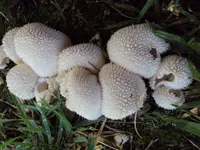
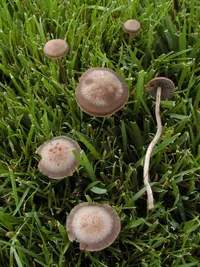
Curtis's puffball, Lycoperdon curtisii, is a small, saprobic fungus that feeds on decaying wood and leaf litter rather than living as a traditional green plant. It typically forms rounded, pale to yellowish fruiting bodies that mature into dry, powdery spore masses.
This species is usually found in forests and woodlands, often on rotting logs or rich organic debris, especially in warm and temperate regions. Its life cycle is brief and strongly linked to humidity and the availability of decomposing material, which can make it unpredictable to cultivate.
Because it is a wood-decay fungus, attempts to care for Curtis's Puffball focus on maintaining consistently moist, shaded, and organic-rich conditions that mimic its natural woodland habitat.

Care Difficulty
Moderate Care

Light Preference
Partial Shade

Water Requirements
Moderate Water

Temperature Preference
Cool Climate

Hardiness Zone
Unknown

Soil Texture
Loamy, Sandy, Organic-rich

Soil pH
Acidic (5.5–6.5), Slightly acidic (6.5–7.0)

Soil Drainage
Well-drained

Fertilization
Minimal (feed rarely)
Scan your plant to receive care tips personalized for your specific plant
Available on iOS and Android
This fungus favors bright, open woodland conditions rather than dense shade or harsh, exposed sun.
This puffball relies on consistently moist, well-aerated ground rather than direct, targeted watering.
This species fruits best in mild to warm conditions and is sensitive to hard frost and extreme heat.
Humidity is not a major factor for Curtis's Puffball, which tolerates a wide range of ambient conditions.
This fungus prefers loose, organic-rich, well-drained ground rather than compacted or waterlogged sites.
This species is not well suited to container growing because it naturally fruits from soil or decaying organic debris outdoors.
Curtis's Puffball typically grows on nutrient-rich decaying wood and does not need supplemental fertilizer in garden or container culture.
Pruning needs for Lycoperdon curtisii are minimal and focus on sanitation rather than shaping.
This puffball is rarely maintained as a potted specimen, so management focuses on moving or resetting colonized substrate rather than conventional repotting.
Propagation of Lycoperdon curtisii is spore-based and is generally left to natural dispersal rather than controlled home methods.
In most temperate climates this puffball needs no special winter care because the main organism is a hardy mycelium hidden in the substrate.

Plant Health Check
Not sure what's wrong with your plant? Check your plant's health inside the app.
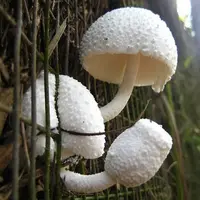
Curtis's puffball produces a dense covering of persistent, pyramid‑shaped warts on the outer surface of the fruit body, which helps distinguish it from smoother or more fragile-spined puffball species in the field.
This species usually fruits on the ground among leaf litter in woodland or heathland habitats, where it lives as a saprotroph, breaking down dead organic material and contributing to nutrient cycling in the upper soil layer.
The fruit body often has a slightly rooted, narrowed base that anchors it in the soil, a feature that helps separate it from similar puffballs that sit more loosely on the surface.
Young, firm fruiting bodies are considered edible by some foragers, but correct identification is critical because similar-looking species can be harmful. Only eat specimens verified by an expert and always cook thoroughly before consumption.
Keep your plants happy and healthy with plant identification, disease detection, and easy care guidance.