Use breathable containers
Choose unglazed clay or other breathable pots with many drainage holes so the substrate stays aerated and the fine fungal mycelium does not suffocate or rot in stagnant moisture.

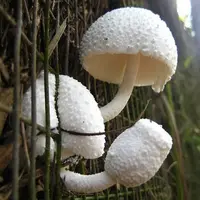
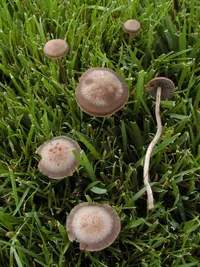
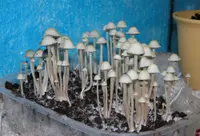
Leucocoprinus cretaceus is a small saprotrophic mushroom, not a leafy houseplant. It typically produces delicate, white to cream caps with slender, fragile stems. The fruiting bodies often appear in clusters on rich organic material such as compost, greenhouse soil, or potted plant substrates.
This species occurs in tropical and subtropical regions but also shows up indoors in heated homes and greenhouses. It tends to appear and disappear quickly, following moisture and temperature changes. For anyone who wants to care for Leucocoprinus cretaceus, it is important to remember it thrives in consistently moist, organic-rich media and sheltered, shaded locations.

Care Difficulty
Moderate Care

Light Preference
Partial Shade

Water Requirements
Keep Soil Moist

Temperature Preference
Tropical / Frost Sensitive

Hardiness Zone
Unknown

Soil Texture
Organic-rich, Peaty, Loamy

Soil pH
Acidic (5.5–6.5)

Soil Drainage
Moist but well-drained

Fertilization
Minimal (feed rarely)
Scan your plant to receive care tips personalized for your specific plant
Available on iOS and Android
This saprotrophic mushroom prefers bright, indirect light rather than full, direct sun.
This species needs evenly moist, well‑drained organic substrate rather than strict watering schedules.
This warm‑loving fungus fruits best in stable, mild to warm temperatures.
This mushroom tolerates typical indoor humidity but grows best in mildly moist air.
Leucocoprinus cretaceus prefers a loose, airy, organic-rich substrate rather than dense garden soil.
This species is suitable for container growing in substrates or potting mixes kept evenly moist.
This saprophytic fungus grows on nutrient-rich substrates and usually needs no additional fertilizer when used as a houseplant companion species.
Leucocoprinus cretaceus does not require pruning in the usual horticultural sense, but some management keeps indoor displays tidy and reduces spore spread.
This species usually appears spontaneously in potting mixes, so repotting focuses on managing its presence rather than supporting Leucocoprinus cretaceus growth.
Intentional propagation of this fungus is uncommon in home settings, as it typically colonizes commercial potting mixes on its own.
Cold-sensitive mycelium survives best indoors, so winter care focuses on the host plant and the indoor environment rather than on specific Leucocoprinus cretaceus care instructions.

Plant Health Check
Not sure what's wrong with your plant? Check your plant's health inside the app.
This species was first described scientifically by the German mycologist Heinrich Christian Friedrich Schumacher in 1801, making it one of the earlier formally named members of the genus Leucocoprinus.
It is frequently recorded from greenhouses, potted plants, compost, and heated glasshouses across temperate regions, suggesting that global horticulture and soil trade have helped it spread far beyond its probable tropical origin.
Mature fruiting bodies show a white to cream cap covered with a fine, mealy to powdery surface that often cracks with age, a feature that helps distinguish it from similar small white mushrooms in indoor potting mixes and gardens.
This mushroom is not considered edible and should be treated as inedible. Identification can be tricky, and some related species cause gastrointestinal upset. For safety, do not taste or cook it, and discard unwanted specimens promptly.
Keep your plants happy and healthy with plant identification, disease detection, and easy care guidance.