Desert Inkcap Care (Montagnea arenaria)

Desert Inkcap

About Desert Inkcap

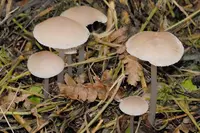
Desert inkcap (Montagnea arenaria) is a small, specialized fungus rather than a leafy houseplant. It forms narrow, club-like fruiting bodies that darken and disintegrate as spores mature, resembling traditional inkcap mushrooms.

This species typically appears in arid and semi-arid regions, often on sandy soils or disturbed desert ground. Its life cycle is brief and closely tied to rare moisture events, which makes it difficult to cultivate reliably at home.

Those interested in how to care for Desert Inkcap should understand that it relies on very specific soil conditions and climate, so it is usually observed in nature rather than grown as an ornamental.

Main Plant Requirements

Care Difficulty

Moderate Care

Light Preference

Full Sun

Water Requirements

Low Water

Temperature Preference

Warm Climate

Hardiness Zone

Unknown

Soil Texture

Sandy, Rocky

Soil pH

Neutral (7.0), Slightly alkaline (7.0–7.5)

Soil Drainage

Well-drained

Fertilization

Minimal (feed rarely)

Get Personalized Care Plan

Scan your plant to receive care tips personalized for your specific plant

Available on iOS and Android

How to Care for the Desert Inkcap

This desert fungus thrives in intense light but still has some tolerance for brief shade during the day.

  • Provide 6–10 hours of direct sun daily in open, exposed sites typical of sandy deserts or dunes.
  • Allow brief partial shade in early morning or late afternoon; prolonged shade reduces fruiting and weakens Desert Inkcap.
  • Avoid sites shaded by buildings, shrubs, or rocks in winter, since low sun angle already shortens effective light hours.

This species is adapted to very dry, fast-draining sandy soils and depends mainly on natural rainfall.

  • Ensure soil is very free-draining; water only when the top 5–8 cm of sand is completely dry after extended drought.
  • Observe the site rather than follow a schedule; lack of fruiting alone does not mean Montagnea arenaria needs extra water.
  • If supplemental water is used, apply a light soaking then let the area dry fully; standing moisture or soggy sand promotes rot and loss of fungal tissue.

This desert-adapted fungus tolerates a wide temperature range but is most active in warm to hot conditions.

  • Optimal activity occurs around 75–95°F (24–35°C), especially after warm periods followed by brief moisture events.
  • It can survive heat up to about 105–110°F (40–43°C) if soil remains dry, but fruiting may become sporadic.
  • Temperatures below 32°F (0°C) do not usually harm dormant structures, though repeated freeze–thaw cycles in wet soil can reduce viability over time.

Humidity level is not a significant factor for Montagnea arenaria, which is strongly adapted to arid conditions.

Montagnea arenaria grows best in very loose, fast-draining, sandy substrates that mimic desert or dune conditions.

  • Use a mix of 60–80% coarse sand with the rest as fine gravel or perlite to keep the substrate open and airy.
  • Ensure water drains immediately; any mix that stays wet or compacted for more than a few hours is unsuitable.
  • Keep organic matter very low, adding only a small amount of mineral potting substrate if needed for structure.
  • Avoid clay, peat-heavy, or compact mixes, which hold moisture and restrict air flow around the fungal mycelium.

This species is generally unsuitable for container growing because its desert-adapted mycelium performs poorly in confined, artificially moist substrates.

Montagnea arenaria naturally grows in nutrient-poor sandy soils and usually does not need fertilizer in cultivation.

Montagnea arenaria does not form typical leafy stems, so pruning needs are minimal and mostly hygienic.

This desert-dwelling fungus is rarely kept in containers, so care focuses on careful site establishment rather than frequent repotting.

  • Transplant only during cool, dry weather to reduce stress on the underground structures.
  • Choose a sharply drained, sandy substrate that mimics its native desert conditions.
  • Handle the substrate gently, disturbing the presumed mycelium as little as possible.
  • Water very lightly after transplanting, then allow the site to dry between sparse irrigations.

Propagation of Montagnea arenaria in home or garden settings is experimental and rarely successful for beginners, so it is not usually recommended.

In its native ranges this fungus is adapted to natural seasonal shifts and typically needs no special winter care in the ground.

Care Tips

Substrate Depth Control

Maintain a very shallow, sandy substrate layer (3–5 cm) over a coarser mineral base so the fungal mycelium stays aerated and does not rot in compacted or organic-rich soil.

Dry Rest Periods

Schedule intentional dry intervals of several weeks after fruiting, mimicking desert drought cycles, which helps the mycelium consolidate energy and reduces the risk of opportunistic mold growth.

Sparse Organic Matter

Limit organic amendments to a thin, well-mixed layer of aged, low-salt material and avoid fresh compost or manure, as excessive nutrients encourage competitor fungi and bacteria over Montagnea arenaria.

Targeted Surface Disturbance

Lightly rake or roughen only the top 0.5–1 cm of the sand after each season to break surface crusts, improve gas exchange, and maintain conditions suitable for growing Desert Inkcap without damaging deeper mycelium.

Controlled Airflow Management

Provide steady, gentle airflow across the substrate surface in enclosed setups to keep the top layer dry and oxygenated, which supports healthy fruiting body formation and suppresses fungal pathogens.

Common Pests and Diseases

Fungus gnat larvae

This pest lives in damp organic substrates and can feed on delicate fungal tissue and young fruiting bodies. Symptoms include slowed or distorted development of the mushroom structures and visible small black gnats hovering near the substrate surface.

Solution

Reduce moisture in the upper substrate layer, improve drainage, and allow the surface to dry slightly between waterings; this makes conditions less favorable for larvae. Use fine sticky traps to catch adult gnats and, if needed, drench the substrate with a biological control such as Bacillus thuringiensis israelensis (BTI), following label rates for mushroom or greenhouse use.

Springtails

These insects thrive in consistently moist, sandy or organic substrates and may graze on developing fungal tissue. Symptoms include small, jumping white or gray insects visible when the substrate is disturbed and minor scarring on young fruiting bodies.

Solution

Lower surface moisture slightly, avoid overwatering, and maintain good air movement around the growing area to make conditions less favorable. If populations are high, physically remove heavily infested substrate patches and use fine mesh or covers to limit reinfestation while maintaining airflow for growing Desert Inkcap.

Mite infestation

This pest includes various small mites that can colonize fungal cultures, feeding on spores or young tissue. Symptoms include slowed or deformed fruiting, roughened surfaces, and tiny moving specks on the substrate or mushroom structures.

Solution

Quarantine any affected culture, discard heavily infested substrate, and clean all tools and containers with hot water and detergent before reuse. Improve hygiene, reduce excess humidity, and if necessary introduce predatory mites suitable for mushroom systems, following supplier guidance to avoid harming the target fungus.

Bacterial blotch

This disease is caused by opportunistic bacteria that exploit persistently wet surfaces on developing fungal structures. Symptoms include water-soaked, greasy, or dark patches on the caps and stems that may become slimy and collapse.

Solution

Limit overhead wetting of the fruiting bodies by watering the substrate directly and ensuring good airflow so surfaces dry between irrigations. Remove and discard affected structures promptly, reduce humidity peaks, and sanitize trays, tools, and nearby surfaces with an appropriate disinfectant before starting new flushes.

Interesting Facts

Inkcap-like desert fungus

This species is a desert-dwelling agaric that looks like an inkcap mushroom but belongs to a small, distinct genus adapted to arid and sandy habitats.

Stalked spore column

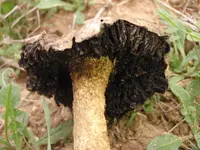
Instead of a soft umbrella-shaped cap, it develops a dry, cylindrical spore mass on top of a stalk, with the spores exposed in vertical grooves rather than enclosed under gills.

Sand-stabilizing habit

It typically grows in loose sandy soils of deserts and dunes, where its mycelium helps bind the sand and contributes to nutrient cycling in otherwise poor substrates.

Botan icon

Did you know?

Montagnea arenaria has a highly reduced cap that opens into a star-like structure early in development, leaving behind a persistent, column-like spore mass that can remain visible on desert sands long after many other fungi have disappeared for the season.

FAQs about Desert Inkcap

Yes, this fungus can be raised from spores rather than traditional seeds. It needs sterile technique, a suitable nutrient substrate, and very dry, warm, sandy conditions. Success rates are low, so small-scale experimental projects are more realistic than reliable production.

Grow Healthy Plants with Botan Care

Keep your plants happy and healthy with plant identification, disease detection, and easy care guidance.

Botan plant care app — identify plants on mobile

Explore More Plants