

Use clean substrates
Prepare fruiting substrates from well-rotted hardwood chips or leaf litter that have been heat-treated or pasteurized to reduce competing fungi and soil invertebrates before introducing wild Mycena vitilis mycelium.

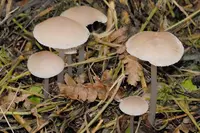
Snapping bonnet (Mycena vitilis) is a small woodland mushroom, not a true houseplant. It produces delicate, bell-shaped caps on very slender, flexible stems. The fruiting bodies often appear in clusters on decaying twigs, leaf litter, and other forest debris, especially in damp, shaded sites. It is native to temperate forests across Europe and North America. This species depends on consistently moist, cool, and shaded conditions, which makes it challenging to maintain in typical indoor or garden settings. For those who want to care for Snapping Bonnet, the main requirement is a stable, humid microhabitat with abundant decomposing organic matter as a substrate.

Care Difficulty
Hard Care

Light Preference
Shade

Water Requirements
Keep Soil Moist

Temperature Preference
Cool Climate

Hardiness Zone
Unknown

Soil Texture
Loamy, Peaty, Organic-rich

Soil pH
Strongly acidic (4.5–5.5), Acidic (5.5–6.5)

Soil Drainage
Moist but well-drained

Fertilization
Minimal (feed rarely)
Scan your plant to receive care tips personalized for your specific plant
Available on iOS and Android
This small woodland mushroom prefers low, gentle light that mimics a shaded forest floor.
This fungus thrives in consistently moist, cool substrates rather than in dry or waterlogged conditions.
This species favors cool, mild conditions similar to a shaded temperate woodland.
This fungus needs very moist air to fruit reliably in cultivation.
This woodland fungus grows on very moist, decaying organic material rather than standard potting soil.
This species can be grown in containers only as a specialized fungal culture on wood or leaf-based substrate, not as a typical houseplant.
Mycena vitilis, the Snapping Bonnet, gains little from fertilization and usually relies on decaying organic matter in its habitat.
Mycena vitilis requires no true pruning because the fruiting bodies are short-lived and the organism persists as hidden mycelium in the substrate.
This fungus is not suited to conventional repotting; focus instead on carefully moving colonized substrate if relocation is needed.
Propagation of Mycena vitilis is specialized and not typically attempted by home growers.
This woodland fungus is generally cold hardy in its native range and needs no special winter care in the ground.

Plant Health Check
Not sure what's wrong with your plant? Check your plant's health inside the app.
This fungus has an unusually thin, wiry stem that breaks with a distinct, brittle snap rather than bending, a feature that inspired its common name snapping bonnet.
It grows mainly on fallen twigs and small branches in moist woodlands, helping break down dead hardwood debris and returning locked-up nutrients to the forest soil.
The stem contains a cartilaginous to slightly gelatinous inner core, which contributes to its toughness and distinguishes it from many other delicate bonnet mushrooms.

Mycena vitilis is considered a characteristic species of very humid, oceanic-influenced forests in parts of Europe, and its presence is sometimes used by field mycologists as an indicator of consistently moist, relatively undisturbed woodland microhabitats.
This species is a woodland mushroom that grows best outdoors in cool, moist, shaded habitats with decaying wood or leaf litter. Indoors it is difficult to maintain long term because replicating natural airflow, microorganisms, and stable humidity is challenging.
Keep your plants happy and healthy with plant identification, disease detection, and easy care guidance.

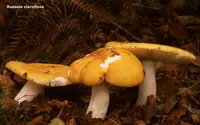
yellow swamp brittlegill
Russula claroflava
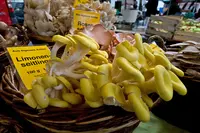
Golden Oyster Mushroom
Pleurotus citrinopileatus
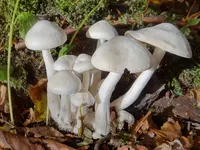
White Domecap
Leucocybe connata
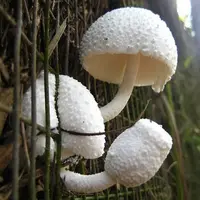
Leucocoprinus cretaceus
Leucocoprinus cretaceus
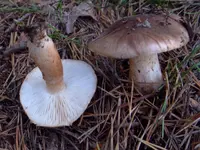
Tricholoma albobrunneum
Tricholoma albobrunneum
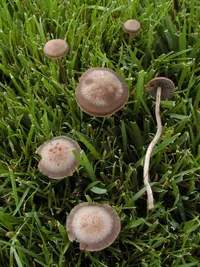
Mower's Mushroom
Panaeolus foenisecii
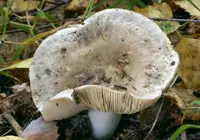
Blackening Russula
Russula adusta
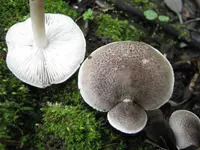
dark-scaled knight
Tricholoma atrosquamosum