

Use host trees
Establish culture beds under mature pines or other known host conifers from the same region, since this ectomycorrhizal fungus depends on a living tree root system to complete its life cycle.

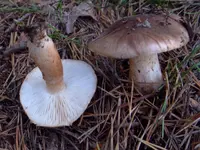
Tricholoma albobrunneum is a mycorrhizal mushroom, not a typical houseplant. It forms a symbiotic relationship with conifer tree roots, helping both partners exchange water and nutrients. The cap is usually brown with paler streaks, and the gills are white to cream, giving it a distinctive two-tone look in the forest floor litter.
This species occurs mainly in temperate coniferous forests of Europe and parts of Asia, fruiting in soil rich in organic material. It is difficult to cultivate because it depends on living tree partners, so attempts to care for Tricholoma albobrunneum at home or in containers are rarely successful.
In nature it prefers cool conditions, consistent moisture, and well-drained, slightly acidic soils under pines or related conifers.

Care Difficulty
Hard Care

Light Preference
Partial Shade

Water Requirements
Keep Soil Moist

Temperature Preference
Cool Climate

Hardiness Zone
Unknown

Soil Texture
Loamy, Sandy, Organic-rich

Soil pH
Acidic (5.5–6.5)

Soil Drainage
Moist but well-drained

Fertilization
Minimal (feed rarely)
Scan your plant to receive care tips personalized for your specific plant
Available on iOS and Android
This mycorrhizal mushroom prefers cool, dappled woodland light rather than direct exposure.
Moist, aerated, well-drained soil is essential for healthy mycelium development.
This forest mushroom favors cool to mild conditions, especially during its fruiting season.
Humidity is not a controlling factor for this outdoor mycorrhizal fungus, which relies mainly on overall soil and weather moisture rather than ambient indoor humidity.
This ectomycorrhizal fungus depends on suitable forest soil rather than a conventional potting substrate.
This species is not suitable for long-term container growing because it forms complex mycorrhizal partnerships with tree roots in natural soil.
This ectomycorrhizal fungus relies on its tree partners, so Tricholoma albobrunneum usually needs no direct fertilization in natural or woodland-style plantings.
Pruning is not applicable to this mushroom-forming fungus, as the visible part is only a temporary fruiting body.
This species is not suited to normal pot culture because it depends on a living host tree for survival.
Propagation of this fungus is specialized and rarely attempted by home growers.
In its natural range, this woodland fungus is cold hardy and requires no active winter care from gardeners.

Plant Health Check
Not sure what's wrong with your plant? Check your plant's health inside the app.
This species forms ectomycorrhizal partnerships with pine trees, especially Scots pine, meaning its underground hyphae wrap around fine roots and help the tree absorb water and minerals in exchange for sugars.
The cap surface is characteristically sticky to slimy when moist and shows distinct concentric brown zones on a paler background, a combination used by field mycologists to help separate it from similar Tricholoma species.
Although the flesh has a mild taste and the species has been listed as edible in some European literature, modern field guides increasingly recommend avoiding it because identification within the Tricholoma sect. terreum group can be difficult and some relatives are suspected of causing toxicity.

This fungus often fruits in dense, sometimes fairy-ring-like groups on acidic sandy soils in conifer plantations, making it a characteristic component of managed pine forest fungal communities across northern and central Europe.
This mushroom is generally considered inedible or mildly toxic and should not be collected for food. Identification within the Tricholoma genus is difficult, and confusion with seriously poisonous relatives is possible, so consumption is strongly discouraged.
Keep your plants happy and healthy with plant identification, disease detection, and easy care guidance.

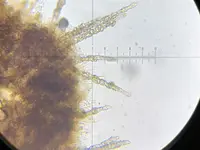
olive duster
Coniophora olivacea
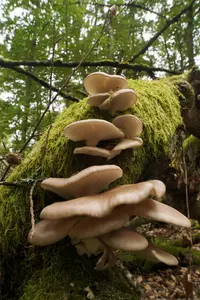
summer oyster mushroom
Pleurotus pulmonarius
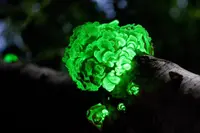
Luminescent Panellus
Panellus stipticus
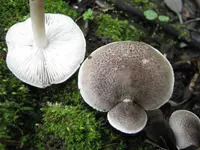
dark-scaled knight
Tricholoma atrosquamosum
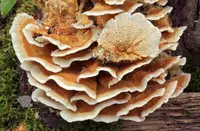
Deer-colored Trametes
Trametopsis cervina
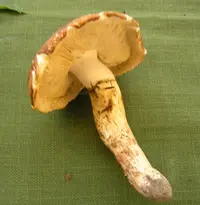
False Matsutake
Tricholoma caligatum
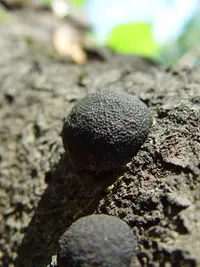
Cramp Balls
Annulohypoxylon thouarsianum
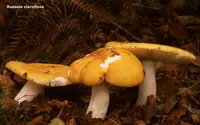
yellow swamp brittlegill
Russula claroflava