yellow swamp brittlegill Care (Russula claroflava)

Also known as: yellow swamp russula
yellow swamp brittlegill

About yellow swamp brittlegill

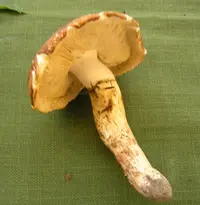
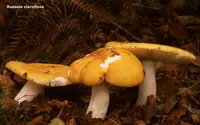
Yellow swamp brittlegill (Russula claroflava) is a wild ectomycorrhizal mushroom, not a typical houseplant, forming symbiotic associations with birch trees. It produces bright yellow, brittle caps with white gills and stems, often appearing in damp, mossy woodland clearings and boggy ground. This species occurs mainly in cooler regions of Europe and parts of North America, where soils are acidic and consistently moist. It is not suited to standard pot culture, so attempts to grow Russula claroflava at home are usually unsuccessful. For most people, learning how to care for yellow swamp brittlegill means protecting and conserving its natural woodland habitat rather than trying to cultivate it indoors or in gardens.

Main Plant Requirements

Care Difficulty

Hard Care

Light Preference

Partial Shade

Water Requirements

Keep Soil Moist

Temperature Preference

Cool Climate

Hardiness Zone

Unknown

Soil Texture

Peaty, Organic-rich

Soil pH

Strongly acidic (4.5–5.5), Acidic (5.5–6.5)

Soil Drainage

Moist but well-drained

Fertilization

Minimal (feed rarely)

Get Personalized Care Plan

Scan your plant to receive care tips personalized for your specific plant

Available on iOS and Android

How to Care for the yellow swamp brittlegill

This woodland mushroom prefers cool, dappled light similar to a moist conifer or birch forest floor.

  • Provide bright, filtered light or light shade, similar to 2–4 hours of soft morning sun reaching the ground through tree canopy, rather than direct midday sun.
  • Tolerates partial shade to fairly deep shade; consistent low light is better than alternating full sun and darkness for yellow swamp brittlegill habitat.
  • Avoid strong afternoon sun, which dries the substrate and mycorrhizal roots; in summer, protect from bare, exposed sites with reflected heat.

Russula claroflava thrives in consistently moist but not waterlogged soil around its host trees.

  • Aim for soil that feels evenly damp 5–10 cm down, never dusty dry or soggy; natural rainfall often suffices in cool, boggy or swampy woodlands.
  • Improve drainage with loose, organic-rich substrates so excess water drains away yet moisture is retained, reducing standing water that can suffocate fine roots and fungal mycelium.
  • Watch for stress signs: prolonged cracking, very dry soil, and shrinking fruiting bodies suggest underwatering, while sour smell, slimy patches, or standing puddles indicate chronic overwatering.

This species prefers the cool to mild temperatures of temperate forests and boggy birch woods.

  • Optimal fruiting and growth occur around 50–68°F (10–20°C), common in late summer to autumn in many northern temperate regions.
  • Tolerates cool conditions down to about 32°F (0°C) in the soil, but fruiting bodies are damaged by hard frost below 28°F (-2°C).
  • Handles short warm spells up to about 77–80°F (25–27°C) if soil stays moist and shaded; prolonged heat and dry air sharply reduce fruiting and can kill surface mycelium.

Humidity is not a major controllable factor for this wild, mycorrhizal mushroom and is rarely practical to manage indoors.

This ectomycorrhizal fungus relies on natural, undisturbed forest soil rather than conventional potting mixes.

  • Forms associations with birch roots in moist, organic-rich, sandy to loamy forest soil, so artificial mixes cannot replicate its needs well.
  • Prefers consistently moist but not waterlogged soil where excess water drains away quickly through a loose mineral and leaf-litter layer.
  • Typically occurs in slightly acidic soil around pH 4.5–6.0, often in conifer or birch woodland with deep humus.
  • For educational or experimental setups, mimic natural habitat by combining forest leaf litter, sand, and native topsoil from birch stands, avoiding compacted or fertilized substrates.

This species is not suitable for container growing, as it depends on complex mycorrhizal relationships with trees in natural soil.

This mycorrhizal fungus does not need routine fertilization, and excess nutrients can disrupt its partnership with host trees when caring for yellow swamp brittlegill.

Pruning is not applicable to Russula claroflava, as it is a wild ectomycorrhizal mushroom rather than a cultivated foliage or woody plant.

Transplanting Russula claroflava is rarely successful because it depends on a specific mycorrhizal relationship with birch roots in undisturbed, moist, acidic soils.

  • Treat any move as habitat creation rather than true transplanting, focusing on matching soil type, moisture, and nearby tree species.
  • If attempting culture, introduce compatible birch saplings into similar wet, acidic ground instead of lifting existing fungi.
  • Avoid disturbing existing fruiting sites; digging or potting often breaks the fine mycelial network and stops future mushrooms.
  • Minimize soil compaction in the new area to support gas exchange and healthy mycelial spread.

Propagation of Russula claroflava is complex and usually left to natural spore dispersal in suitable wet birch habitats.

No special winter care is needed for Russula claroflava, which overwinters as mycelium in soil and resumes fruiting in suitable warm, wet conditions.

Care Tips

Host tree selection

Establish patches only near compatible birch species, since this fungus forms essential mycorrhizal partnerships with birch roots and will not fruit reliably without the correct host.

Low‑disturbance zone

Mark and protect the fruiting area from foot traffic, raking, and compaction so the underground mycelium and fine birch roots remain intact and productive year after year.

Moisture buffering layer

Apply a thin, natural leaf litter layer from healthy birch trees over the colonized area to help retain soil moisture and mimic the fungus’s preferred forest floor conditions.

Minimal soil disturbance

Avoid digging, hoeing, or pulling weeds aggressively in the fruiting zone; instead, cut competing vegetation at the base so the hyphal network and root tips remain undamaged.

Clean harvest practice

Use a clean knife to cut mushrooms at the base rather than pulling them out, and leave small or damaged fruit bodies in place to complete spore release, which supports long‑term sustainability when growing yellow swamp brittlegill.

Common Pests and Diseases

Mycophagous slugs

These pests feed on the caps and gills of fruiting bodies, leaving ragged holes and slime trails, especially in damp conditions.

Solution

Handpick slugs at dusk or after rain, remove nearby debris that offers shelter, and use physical barriers such as copper tape or gritty mulch around the fruiting area; iron phosphate pellets can be used sparingly if needed, following label directions and keeping them away from pets and wildlife.

Fungus gnats

These insects are attracted to moist, organic-rich substrates and can damage developing primordia and gill tissue by larval feeding.

Solution

Reduce excess surface moisture, improve drainage of the cultivation substrate, and apply yellow sticky traps to capture adults; for persistent issues in controlled setups, use a biological control such as Bacillus thuringiensis israelensis (BTI) in irrigation water according to label instructions.

Parasitic Hypomyces

This disease is caused by parasitic fungi in the genus Hypomyces that overgrow caps and gills, producing discolored, powdery or crusty patches and distorting the mushroom structure.

Solution

Promptly remove and discard infected fruiting bodies, avoid handling healthy mushrooms after touching diseased ones, and limit disturbance of the affected patch to reduce spore spread; avoid collecting or encouraging growth in heavily contaminated sites for at least one season.

Mycoparasitic molds

This disease involves opportunistic molds that colonize injured or aging caps, leading to soft, water-soaked spots that turn fuzzy, gray, or green and accelerate decay.

Solution

Harvest mushrooms when caps are firm and unblemished, remove and discard any fruiting bodies that show mold growth, and maintain good air movement and moderate humidity in cultivation or storage to prevent prolonged surface wetness.

Interesting Facts

Strict birch associate

This species forms ectomycorrhizal partnerships almost exclusively with birch trees in wet, boggy or swampy soils, which is why it is rarely found away from birch stands in the wild.

Distinctive yellow cap

Its bright sulphur-yellow cap and pale, brittle gills make it one of the more easily recognisable yellow russulas in northern bog habitats, although accurate identification still requires checking several macroscopic features.

Northern peatland specialist

Russula claroflava is characteristic of nutrient-poor, acidic peat and wet podzolic soils and is most frequently recorded in boreal and cool temperate regions such as Scandinavia, Scotland, and northern parts of North America.

Botan icon

Did you know?

The spores of Russula claroflava have a finely ornamented surface that appears warty and partly reticulate under a microscope, a feature mycologists use to separate it from several similar yellow russulas that share the same birch bog habitat.

FAQs about yellow swamp brittlegill

This species is generally considered edible when correctly identified, with firm, mild-tasting flesh. However, it resembles some toxic Russula species, so only experienced foragers should eat it. When in doubt, do not consume any wild mushroom.

Grow Healthy Plants with Botan Care

Keep your plants happy and healthy with plant identification, disease detection, and easy care guidance.

Botan plant care app — identify plants on mobile

Explore More Plants