yellow sweetclover Care (Melilotus officinalis)

Also known as: Ribbed Melilot, Common Melilot, Yellow Melilot
yellow sweetclover

About yellow sweetclover

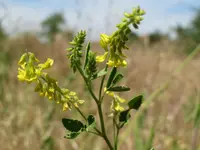
Yellow sweetclover (Melilotus officinalis) is a hardy biennial legume often found in fields, roadsides, and disturbed soils. It forms tall, branching stems with trifoliate leaves and many small yellow flowers. The plant is valued in agriculture and land restoration because it fixes nitrogen, improves soil structure, and attracts pollinators. Its deep taproot helps break up compacted soil and supports drought tolerance once established. Yellow sweetclover grows readily from seed, can self-sow, and often behaves like a vigorous wildflower rather than a delicate garden plant. It prefers full sun and well-drained, moderately dry to average soils. Because it can spread, those who care for yellow sweetclover should monitor unwanted self-seeding.

Main Plant Requirements

Care Difficulty

Easy Care

Light Preference

Full Sun

Water Requirements

Low Water

Temperature Preference

Cold Hardy

Hardiness Zone

3–9

Soil Texture

Sandy, Loamy, Clay

Soil pH

Neutral (7.0), Slightly alkaline (7.0–7.5)

Soil Drainage

Well-drained

Fertilization

Minimal (feed rarely)

Get Personalized Care Plan

Scan your plant to receive care tips personalized for your specific plant

Available on iOS and Android

How to Care for the yellow sweetclover

Melilotus officinalis grows best in open, bright conditions with long daily sun exposure.

  • Provide 6–10 hours of direct sun daily; full sun promotes sturdy stems, dense foliage, and abundant flowering in yellow sweetclover.
  • Plant in sites with morning and midday sun; light afternoon shade is acceptable in very hot areas to reduce leaf scorch and moisture stress.
  • In early spring and late fall, choose the sunniest available position; in summer, monitor for pale, leggy growth as a sign of insufficient light.

This species prefers moderately dry, well‑drained conditions and does not tolerate prolonged soil saturation.

  • Allow the top 5–8 cm of soil to dry between rains or irrigations; only water when soil feels dry and crumbly, not cool and sticky.
  • Use well‑draining soil or a slope so excess water runs off; soggy ground and standing puddles lead to root rot and weak, yellowing plants.
  • In cooler seasons, natural rainfall usually suffices; during hot, windy periods, watch for wilting or dull, folding leaves as cues for a deeper soak.

This plant is adapted to temperate climates and tolerates a wide temperature range once established.

  • Optimal growth occurs around 60–77°F (16–25°C), when stems elongate steadily and flowering is most reliable.
  • Established plants tolerate heat up to about 90–95°F (32–35°C) if soil is not waterlogged; light afternoon shade reduces stress in hotter regions.
  • Seeds and young seedlings are more sensitive to cold; hard frosts below 25°F (−4°C) can damage tender growth, though mature plants and seed often survive winter conditions.

This species is highly tolerant of low atmospheric moisture and does not need special humidity control.

Melilotus officinalis prefers lean, well‑drained mineral soils rather than rich, heavy mixes.

  • Use a sandy or gravelly loam with low to moderate organic matter, allowing roots to penetrate easily without staying wet.
  • Aim for pH 6.5–8.0, as this plant copes well with slightly acidic to moderately alkaline conditions, including calcareous soils.
  • In garden beds, mix in coarse sand or fine gravel to improve drainage and aeration on compact or clay‑prone sites.
  • Avoid waterlogged, peaty, or very high‑nutrient soils, which encourage weak, lush growth and increase the risk of root problems.

This plant can be grown in containers, but only where large, deep pots are available and outdoor space allows for its tall, spreading growth.

  • Choose a heavy, stable container 30–40 cm deep so the tall stems do not tip the pot in wind.
  • Use a very free‑draining mix, such as 50% coarse sand or grit blended into standard potting mix, to prevent water retention around the taproot.
  • Position the container where air can move freely around the tall foliage so stems dry quickly after rain and stay structurally strong.

Melilotus officinalis usually grows well in average, moderately fertile soil and needs only light feeding.

  • Apply a thin layer of compost or well-rotted manure in early spring to support strong vegetative growth.
  • Use a balanced NPK granular or slow-release fertilizer at half strength once at the start of the main growing season.
  • Avoid repeated or high-nitrogen feeding, which can cause lush, weak growth and reduce flowering and nitrogen-fixing benefits.
  • Do not fertilize in late fall or winter, as the plant is not actively growing and excess nutrients may leach away.

Melilotus officinalis responds well to timely cutting, which helps manage size and promote dense growth.

  • Cut back stems in late spring or early summer just after the first main flush of flowering to encourage branching and more blooms.
  • Remove dead, broken, or diseased stems whenever noticed, using clean, sharp pruning shears to reduce infection risk.
  • Thin out crowded or leggy growth to improve air circulation and light penetration through the stand.
  • At season’s end, mow or cut plants close to the ground to prevent excessive self-seeding and to tidy the area.

This species is most often grown in the ground, so focus on thoughtful transplanting rather than frequent repotting.

  • Transplant young plants in early spring or early fall, when weather is cool and soil moisture is steady.
  • Shift or transplant if roots circle the container, growth stalls, or soil dries out very quickly after watering.
  • Move Melilotus officinalis only every 1–2 years in containers, as its deep taproot dislikes disturbance.
  • Water thoroughly before and after transplanting, handle the root ball gently, and shade for a few days to reduce transplant shock.

This plant is most commonly propagated from seed, which allows quick establishment of new stands.

  • Sow fresh seeds in early spring or late fall outdoors, where natural cold exposure improves germination.
  • Lightly scarify hard seed coats by rubbing with sandpaper, then soak for several hours to enhance water uptake.
  • Broadcast seeds over prepared, weed-free soil and cover very lightly, as small seeds germinate best near the surface.
  • Keep soil evenly moist until seedlings are established, then thin crowded plants to encourage strong, upright growth.

In most temperate climates this species is cold hardy and generally needs minimal winter care outdoors.

  • Established plants tolerate typical winter frost and snow down to roughly USDA zone 3–4.
  • Apply a light mulch layer around the base in late fall to moderate freeze–thaw cycles and protect the root zone.
  • Container-grown yellow sweetclover is more exposed; move pots to a sheltered, unheated area to reduce root freezing risk.

Care Tips

Timely first mowing

For field or meadow plantings, cut plants back to 10–15 cm when they reach 30–45 cm tall in the first year to encourage denser branching and reduce lodging in windy conditions.

Support on poor soils

In very nutrient-poor or compacted sites, lightly cultivate or subsoil the ground before sowing to allow deep taproot penetration, which improves stand stability and long-term soil structure.

Inoculate for vigor

Before sowing, coat seeds with an appropriate Rhizobium inoculant for legumes to improve nitrogen fixation, especially in soils that have not recently grown legumes.

Manage self-seeding

If you want to limit spread, mow or cut plants just after peak flowering but before seed pods harden, and remove or compost the cut material away from the site.

Staggered sowing blocks

For forage or cover crop use, sow in 2–3 blocks spaced 2–3 weeks apart so that flowering and biomass peak at different times, giving more flexibility in mowing and in caring for yellow sweetclover across the season.

Common Pests and Diseases

Sweetclover weevil

This pest feeds on leaves and stems, causing ragged foliage and stunted growth, and larvae can damage crowns and roots.

Solution

Monitor plants in spring and early summer and hand-pick adults where practical; on larger stands, use trap crops or mow before peak adult activity to reduce egg laying, and encourage ground beetles and other predators by limiting broad-spectrum insecticides.

Sweetclover aphid

These insects cluster on young shoots and flower stalks, sucking sap and causing curling, yellowing, and sticky honeydew that can lead to sooty mold.

Solution

Spray infested stems with a strong jet of water to dislodge colonies, encourage lady beetles and lacewings, and if needed use an insecticidal soap or horticultural oil, applied thoroughly to undersides of leaves and repeated at 5–7 day intervals until populations drop.

Fusarium root and crown rot

This disease may develop in poorly drained or stressed stands, leading to reduced vigor, yellowing, and premature plant death as roots and crowns decay.

Solution

Improve soil drainage, avoid overwatering in heavy soils, rotate away from sweetclover and other susceptible legumes for several years, and remove and destroy severely affected plants to reduce pathogen buildup in the planting area.

Powdery mildew

This disease appears as white, powdery patches on leaves and stems, which can cause reduced photosynthesis, leaf yellowing, and early leaf drop in dense stands.

Solution

Increase spacing and airflow, avoid overhead irrigation, and remove heavily infected plant material; in persistent cases, apply a labeled sulfur or potassium bicarbonate product, coating all leaf surfaces and repeating as directed.

Sweetclover bloat-associated gas production

This issue is not a plant disease but a fermentation risk; lush growth of yellow sweetclover can contribute to foam formation in ruminants, linked to high soluble protein and gas production in the rumen.

Solution

When growing yellow sweetclover for forage, avoid turning hungry animals directly onto very lush, wet growth, introduce grazing gradually, mix with grasses or other forages, and use hay or dry forage before turnout to lower bloat risk as part of responsible Melilotus officinalis plant care.

Interesting Facts

Coumarin-rich aroma

The plant’s leaves and flowers contain high levels of coumarin, which gives dried material a strong sweet odor often described as like new-mown hay or vanilla, especially after wilting and curing.

Nitrogen-fixing pioneer

This species forms nodules on its roots with Rhizobium bacteria, allowing it to fix atmospheric nitrogen and improve soil fertility, which is why it has been used in some regions as a green manure and soil-improving cover crop.

Bee forage specialist

The small yellow flowers produce abundant nectar and are considered valuable forage for honeybees and other pollinators, particularly in disturbed or nutrient-poor sites where few other nectar plants thrive.

Botan icon

Did you know?

In hay or silage made from this species, improper curing can allow fungi to convert coumarin into dicoumarol, a potent anticoagulant compound historically linked to “sweet clover disease” in cattle, which was the basis for developing early pharmaceutical anticoagulant drugs.

FAQs about yellow sweetclover

This species self-seeds heavily and can spread quickly in open, disturbed ground. In many regions it is listed as invasive. Regular cutting before seed set and removing unwanted seedlings helps keep populations under control.

Grow Healthy Plants with Botan Care

Keep your plants happy and healthy with plant identification, disease detection, and easy care guidance.

Botan plant care app — identify plants on mobile

Explore More Plants