

Host tree selection
Match the fungus with suitable mycorrhizal hosts such as pine, fir, or other conifers, and avoid mixing many unrelated tree species in the same bed so the fungus can form stable associations.

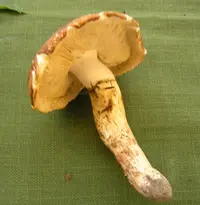
False matsutake, Tricholoma caligatum, is a gilled mushroom rather than a leafy plant. It forms stout, fleshy caps with a brown, scaly surface and thick stems often wrapped in a ring-like veil remnant.
This fungus typically appears in pine and mixed forests, often forming mycorrhizal associations, which are nutrient-sharing partnerships with tree roots. It is native to parts of Europe, Asia, and North Africa, with related forms reported elsewhere.
Because it depends on living host trees and complex soil fungi networks, it is challenging to cultivate at home. Gardeners who want to learn how to care for False Matsutake should focus on understanding woodland conditions and its close link with suitable conifer partners.

Care Difficulty
Hard Care

Light Preference
Partial Shade

Water Requirements
Regular Water

Temperature Preference
Cool Climate

Hardiness Zone
Unknown

Soil Texture
Loamy, Sandy, Organic-rich

Soil pH
Acidic (5.5–6.5)

Soil Drainage
Moist but well-drained

Fertilization
Minimal (feed rarely)
Scan your plant to receive care tips personalized for your specific plant
Available on iOS and Android
This ectomycorrhizal mushroom prefers dappled woodland light rather than open, direct sun.
This species depends on consistently moist, well-drained forest-type soil rather than fixed calendar watering.
This forest mushroom performs best in mild, temperate conditions with cool nights.
This ectomycorrhizal mushroom prefers moderately moist, not saturated, air near the soil surface.
This species requires a loose, organic-rich, well-drained substrate that mimics forest soil.
This species is generally unsuitable for container growing because it normally requires a living tree host and complex soil fungi interactions.
Tricholoma caligatum, a mycorrhizal mushroom, normally requires no added fertilizer when grown in natural soil with a suitable host tree.
Pruning is not applicable to Tricholoma caligatum, since it forms underground mycelium and short‑lived fruiting bodies rather than persistent stems or foliage.
Transplanting focuses on moving colonized substrate or associated host seedlings rather than the mushroom itself, which is tightly integrated with tree roots.
Reliable propagation of Tricholoma caligatum in gardens is difficult because it depends on a stable mycorrhizal partnership with suitable host trees.
Outdoor colonies of False Matsutake in suitable climates are generally cold hardy and need no special winter protection beyond normal soil conditions.

Plant Health Check
Not sure what's wrong with your plant? Check your plant's health inside the app.
This fungus forms ectomycorrhizal associations specifically with pine species in Mediterranean-type habitats, exchanging mineral nutrients and water for host tree sugars in the upper soil layers.
The species name caligatum refers to the stem that looks as if it is wearing a boot, with a ring and darker, ornamented lower portion that contrasts with the paler upper stem.
In some Mediterranean regions it has a history of local consumption, yet other sources report gastrointestinal toxicity, so modern field guides often classify it as suspect or not recommended for eating.

Genetic and morphological studies suggest that material once placed under the name Tricholoma caligatum actually represents a complex of closely related taxa, and some non-European collections traditionally called this species have since been reassigned to different, more regionally restricted Tricholoma species.
This mushroom is reported as inedible or potentially poisonous and should not be eaten. It can resemble true matsutake but has different chemistry. Foragers should avoid consumption unless identified by an experienced local mycologist.
Keep your plants happy and healthy with plant identification, disease detection, and easy care guidance.

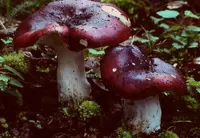
Purple Brittlegill
Russula atropurpurea
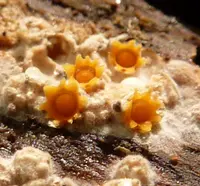
cannonball fungus
Sphaerobolus stellatus
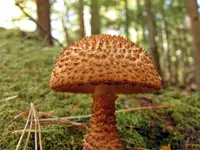
Decorated Pholiota
Leucopholiota decorosa
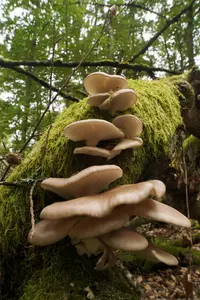
summer oyster mushroom
Pleurotus pulmonarius
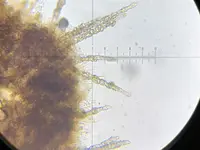
olive duster
Coniophora olivacea
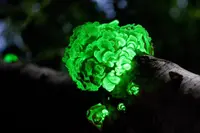
Luminescent Panellus
Panellus stipticus
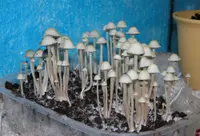
blue meanies
Panaeolus cyanescens
Cramp Balls
Annulohypoxylon thouarsianum