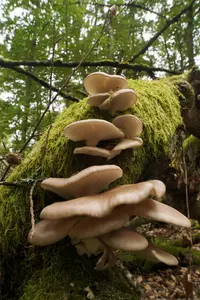
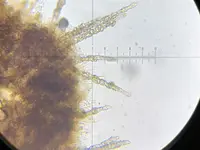
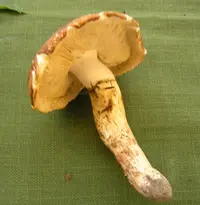
dark-scaled knight Care (Tricholoma atrosquamosum)

dark-scaled knight

About dark-scaled knight

The dark-scaled knight, Tricholoma atrosquamosum, is a ground-dwelling mushroom, not a true plant, forming symbiotic relationships with trees in temperate forests. It usually appears in leaf litter or moss under conifers and broadleaf trees.

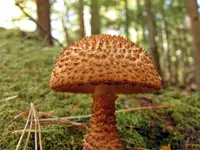
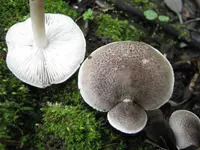
Caps are gray to brown with darker, rough scales, giving a textured, mottled look, while the gills and stem remain paler. It often fruits in small groups or loose clusters.

This species can be challenging to cultivate because it depends on living tree roots and specific soil fungi communities. Gardeners who want to care for dark-scaled knight need stable woodland-like conditions with undisturbed soil and consistent moisture.

In nature it prefers well-drained, slightly acidic soils and cool, humid microclimates, often in mature or semi-mature woodland settings.

Main Plant Requirements

Care Difficulty

Hard Care

Light Preference

Partial Shade

Water Requirements

Keep Soil Moist

Temperature Preference

Cool Climate

Hardiness Zone

Unknown

Soil Texture

Loamy, Organic-rich, Peaty

Soil pH

Acidic (5.5–6.5)

Soil Drainage

Moist but well-drained

Fertilization

Minimal (feed rarely)

Get Personalized Care Plan

Scan your plant to receive care tips personalized for your specific plant

Available on iOS and Android

How to Care for the dark-scaled knight

This woodland fungus prefers low to moderate light that mimics a forest floor under trees.

  • Provide dappled or filtered light, similar to light under deciduous trees, with no more than 2–3 hours of weak morning sun and full shade the rest of the day.
  • Avoid direct midday or afternoon sun, which can overheat leaf litter and upper soil, drying the substrate and inhibiting fruiting of dark-scaled knight.
  • Site in partial to full shade year-round; in summer use deeper shade, while in late autumn slightly more open canopies still provide sufficient low-angle light.

Moist but not waterlogged soil is essential for the mycelium of this forest-dwelling mushroom.

  • Aim for consistently moist mineral soil under leaf litter; the surface can feel slightly dry while the top 2–5 cm remain damp when checked by hand or trowel.
  • Ensure excellent drainage with loose, well-structured soil; prolonged puddling, sour smell, or slimy, collapsing caps indicate overwatering and poor aeration.
  • Reduce supplemental moisture in cool, wet seasons and increase only during extended droughts, watching for shrinking, cracked soil or brittle leaf litter as signs of underwatering in Tricholoma atrosquamosum habitats.

This species fruits best in cool to mild conditions typical of temperate woodlands.

  • Optimal fruiting usually occurs around 50–60°F (10–16°C), with mycelium growth possible over a broader cool range if soil stays moist and aerated.
  • The fungus tolerates brief drops near 32°F (0°C), but repeated hard frosts below 28°F (-2°C) can damage emerging fruiting bodies at the soil surface.
  • Sustained heat above 77°F (25°C), especially with dry soil, suppresses fruiting; cooler autumn conditions are generally more favorable than midsummer warmth for Tricholoma atrosquamosum.

This ectomycorrhizal fungus needs consistently moist, humid conditions to fruit well.

  • Aim for 70–90% relative humidity around the fruiting area, avoiding rapid swings that dry surfaces between watering cycles.
  • Dry air causes caps to crack, edges to curl, and mycelium to stall or brown at the substrate surface.
  • Increase humidity with fine misting, a humidity tent, or a humidifier, while ensuring strong fresh-air exchange to limit bacterial and mold issues when caring for dark-scaled knight.

This species fruits in association with trees and needs a loose, humus-rich, well-drained substrate rather than conventional potting soil.

  • Use a mix that mimics forest topsoil: roughly 40% leaf litter or hardwood chips, 40% loamy mineral soil, and 20% coarse sand or fine bark for structure.
  • Aim for slightly acidic to neutral conditions (pH 5.5–7.0), avoiding limed or strongly alkaline substrates that suppress fungal activity.
  • Ensure drainage is free by avoiding compaction; lightly mix, do not pack, so air can move through the substrate and oxygen reaches the mycelium.
  • Avoid waterlogged, anaerobic substrates, heavy clay, or peat-only mixes, which hold too much water and create conditions favorable to competing molds.

This species is generally unsuitable for container growing because it relies on ectomycorrhizal partnership with tree roots in undisturbed soil.

This mycorrhizal mushroom relies on its tree partners for nutrition and normally does not benefit from added fertilizer.

Tricholoma atrosquamosum does not require pruning in the horticultural sense, only routine removal of spent fruiting bodies for hygiene and monitoring.

  • Harvest mature caps with a clean knife at the base of the stem, avoiding disturbance of surrounding soil and tree roots.
  • Remove decaying or insect-damaged mushrooms promptly to limit spread of molds and pests in the fruiting area.
  • Avoid raking, cutting, or disturbing leaf litter heavily, as this can damage the underground mycelium and reduce future fruiting.

As a woodland, mycorrhizal fungus, this species is not suited to conventional containers, so management focuses on transplanting inoculated substrate rather than repotting.

  • Transplant only when colonized substrate is dense with white mycelium yet not fully depleted of organic matter, usually after 1–2 seasons of establishment.
  • Carry out moves in cool, moist weather in spring or fall to limit desiccation and shock to the fungal network.
  • Shift reasonably sized blocks of inoculated soil and litter intact, placing them near compatible host trees without breaking the structure.
  • Water gently after transplanting to settle soil contact, then maintain even moisture without waterlogging to support recovery of fine mycelial strands.

Reproducing Tricholoma atrosquamosum is technically complex, as it depends on a symbiosis with suitable host tree roots.

This temperate woodland fungus is naturally cold hardy and typically needs no special winter care outdoors.

  • Maintain an undisturbed layer of leaf litter or wood mulch 3–5 cm deep over the colony area to buffer freeze–thaw cycles.
  • Avoid compacting frozen ground above the mycelium with heavy traffic, machinery, or stored materials.
  • For experimental container cultures, move tubs into a cold, sheltered spot to prevent complete freezing and rapid drying.

Care Tips

Use host trees

Establish the fungus near compatible host trees such as oak or beech, since this mycorrhizal species needs living roots to form a nutrient-exchanging partnership and will not fruit reliably in isolated substrate beds.

Limit soil disturbance

Mark the colonized area and avoid digging, raking, or compacting the soil there, because disturbing the fine root-fungus network can sharply reduce or delay mushroom production for several seasons.

Maintain leaf litter

Leave a thin, natural layer of leaf litter over the colonized zone to buffer moisture and temperature around the mycelium, removing only dense, matted layers that could become waterlogged and anaerobic.

Targeted irrigation

If rainfall is low in late summer to autumn, apply gentle, infrequent irrigation over the root zone of partner trees rather than directly on developing mushrooms, so the mycelium benefits from even moisture without encouraging rot.

Monitor stand health

Regularly assess the vigor of the associated trees and manage pests or nutrient deficiencies promptly, since stable hosts with healthy root systems are critical for long-term success when caring for dark-scaled knight.

Common Pests and Diseases

fungal gnat larvae

This pest targets moist, organic-rich substrates and can damage developing fungal mycelium and pins. Symptoms include poor or patchy fruiting bodies and tiny black flies around trays or bags.

Solution

Allow the substrate surface to dry slightly between waterings, use fine mesh or filters on air inlets, and apply a biological control such as Bacillus thuringiensis israelensis (BTi) to the casing or substrate. Removing heavily infested blocks and improving hygiene around the growing area are key parts of dark-scaled knight indoor care.

sciarid fly infestation

These insects lay eggs in nutrient-rich fungal substrates, and their larvae feed on mycelium and young fruiting bodies. Symptoms include tunneling in stems and caps and reduced yield or deformed mushrooms.

Solution

Use sticky traps to reduce adult populations, cover inoculated bags or trays with breathable but insect-proof barriers, and maintain good sanitation by promptly removing spent or contaminated blocks. In severe cases, introduce biological controls such as predatory mites or nematodes that specifically target fly larvae in the substrate.

green mold (Trichoderma)

This disease is caused by aggressive competitor fungi that colonize the same substrate, producing dense white mycelium that quickly turns bright green. Symptoms include stalled or contaminated mycelial growth and failure of mushroom formation in affected areas.

Solution

Discard heavily contaminated substrates, clean and disinfect all tools and work surfaces, and reduce airborne spores by improving filtration and avoiding handling contaminated material near clean cultures. For future batches, ensure proper pasteurization or sterilization of the substrate and limit excess moisture that favors Trichoderma growth.

bacterial blotch

This disease develops in high-humidity, low-airflow conditions and causes slimy, discolored spots on caps and stems. Symptoms include yellow to brown, water-soaked lesions that can merge and spoil the mushrooms.

Solution

Increase fresh air exchange and slightly reduce humidity to prevent surface water from standing on caps. Remove and discard affected mushrooms promptly, avoid overhead misting directly on fruiting bodies, and disinfect surfaces and tools between harvests to limit spread.

mites

These insects can colonize damp substrates and fruiting areas, feeding on mycelium, spores, and mushroom tissue. Symptoms include tiny moving dots on substrate or gills, slowed growth, and in severe cases pitted or scarred caps.

Solution

Lower excess humidity, remove heavily infested blocks, and thoroughly clean shelving, floors, and nearby organic debris. Introduce predatory mites compatible with mushroom cultivation or use physical barriers and fine mesh filters to reduce mite entry into the growing area.

Interesting Facts

Distinct dark scaling

The cap of this species is covered with dense, dark brown to almost black scales on a paler gray background, giving it a strongly two-toned appearance that helps separate it from many other grey Tricholoma species in the field.

Characteristic odor profile

Fresh fruiting bodies often have a strong, somewhat unpleasant smell described as coal gas, tar, or sometimes like old flour, a trait mycologists use alongside microscopic features to confirm identification.

Mycorrhizal conifer partner

This fungus forms ectomycorrhizal associations, meaning its hyphae wrap around the fine roots of trees, and it is most often recorded with conifers such as spruce and pine in temperate European forests.

FAQs about dark-scaled knight

This mushroom is considered inedible or mildly poisonous by many sources. Identification is difficult, and confusing it with truly toxic Tricholoma species is easy. It should not be collected or eaten, especially by beginners.

Grow Healthy Plants with Botan Care

Keep your plants happy and healthy with plant identification, disease detection, and easy care guidance.

Botan plant care app — identify plants on mobile

Explore More Plants