Deer-colored Trametes Care (Trametopsis cervina)

Deer-colored Trametes

About Deer-colored Trametes

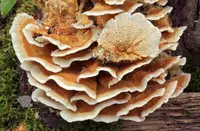
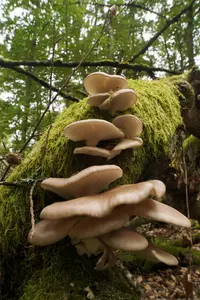
Deer-colored Trametes (Trametopsis cervina) is a wood-decay fungus, not a leafy houseplant. It forms thin, semicircular brackets on dead hardwood, often overlapping in layered shelves. The surface is usually pale brown to gray with fine zones, while the underside shows small pores instead of gills.

This species is native to temperate forests in Europe and parts of Asia but can appear in similar climates where suitable dead wood is present. Since it feeds on dead logs rather than soil, gardeners generally observe it rather than actively try to care for Deer-colored Trametes.

Main Plant Requirements

Care Difficulty

Moderate Care

Light Preference

Shade

Water Requirements

Keep Soil Moist

Temperature Preference

Cool Climate

Hardiness Zone

Unknown

Soil Texture

Organic-rich, Peaty, Loamy

Soil pH

Acidic (5.5–6.5)

Soil Drainage

Moist but well-drained

Fertilization

Minimal (feed rarely)

Get Personalized Care Plan

Scan your plant to receive care tips personalized for your specific plant

Available on iOS and Android

How to Care for the Deer-colored Trametes

This wood-decaying fungus prefers cool, shaded woodland conditions rather than direct sun exposure.

  • Provide dappled or filtered light under trees, allowing roughly 1–3 hours of weak morning sun and shade or deep shade the rest of the day.
  • Avoid strong midday or afternoon sun, which can dry the substrate and slow or stop Deer-colored Trametes fruiting; keep logs or stumps in a consistently shaded spot.
  • In summer, increase shade with leaf litter or nearby shrubs; in winter, low-angle sun is usually acceptable as long as the substrate does not dry or overheat.

This bracket fungus depends on steady moisture in its woody substrate rather than direct watering of the fruiting bodies.

  • Maintain evenly moist, not waterlogged, wood; if cultivating, soak the log thoroughly, then allow the outer 2–5 cm to feel just slightly dry before rehydrating.
  • Ensure excess water can drain away; persistent puddling, sour smell, or soft, rotting wood indicates overwatering and poor aeration around Trametopsis cervina mycelium.
  • In dry or windy weather, mist or hose the surrounding area and wood surface, watching for shrinking, brittle caps as a sign of underwatering and swollen, mushy tissue as a sign of excess moisture.

This species fruits best in cool to mild conditions and slows or stops in temperature extremes.

  • Aim for 50–68°F (10–20°C) as the main fruiting range, where mycelium growth and bracket formation are most consistent on logs or stumps.
  • It tolerates down to about 32°F (0°C), but repeated hard freezes below this can damage young fruiting bodies; protect by leaving logs in insulated leaf litter or woodland duff.
  • Short periods up to 77–82°F (25–28°C) are usually tolerated if humidity stays high, but prolonged heat above this range can dry the substrate and halt development.

Humidity is a minor factor for Trametopsis cervina, which is adapted to ambient outdoor conditions.

This wood-decaying fungus colonizes dead hardwood rather than growing in conventional garden soil.

  • For cultivation, provide a substrate rich in lignin and cellulose, such as hardwood sawdust, chips, or logs, instead of mineral soil.
  • Ensure the woody substrate stays moist but not waterlogged by allowing excess water to drain away and avoiding standing water in trays or beds.
  • Maintain a slightly acidic to neutral environment (pH 5.5–7.0) by avoiding lime additions and using non-treated hardwood materials.
  • Increase aeration by mixing coarse wood chips with finer sawdust so air pockets remain while still holding enough moisture for mycelial growth.

This species is suitable for container growing when provided with an appropriate woody substrate instead of soil.

  • Use a deep, rigid tub or bucket that holds a stable block of hardwood sawdust or chips so the colonized substrate does not compact or collapse.
  • Drill multiple side and bottom holes in the container to let excess water escape and to increase oxygen exchange around the mycelium core.
  • Choose an opaque container to reduce light reaching the substrate surface, helping the block retain moisture more evenly during fruiting.

This bracket fungus usually grows on nutrient-rich dead wood and does not benefit from added fertilizer in typical cultivation or observation settings.

Trametopsis cervina requires no deliberate pruning, as fruiting bodies form and age naturally on dead wood without needing shape control.

This wood-decaying fungus is not managed like a potted plant, so repotting is irrelevant; only minimal disturbance is useful when relocating colonized wood.

  • If moving colonized logs or branches, do so in cool, moist weather to limit drying of the mycelium, the fungal feeding network.
  • Transfer the entire piece of wood rather than scraping or breaking it apart, which reduces stress on the organism.
  • Place the wood in a similarly shaded, humid site with comparable tree species and decay stage to favor continued growth.
  • Avoid frequent moving; once positioned, allow the fungus to remain undisturbed so the internal mycelium can stabilize.

Propagation of Trametopsis cervina is mainly of scientific or ecological interest and is not a routine garden activity.

This temperate woodland fungus is naturally cold hardy and needs no special winter care; it tolerates normal freezing conditions where it occurs.

Care Tips

Substrate rotation

Harvest older brackets from the outer zones first and rotate fruiting blocks or logs every 2–3 weeks so fresh surface area is exposed and new primordia form more evenly across the substrate.

Clean-cut harvesting

Use a sharp, disinfected knife to cut brackets cleanly at the base rather than tearing them off, which reduces mechanical damage to the mycelium and helps maintain productive flushes over multiple months.

Moisture gradient control

Maintain a slightly drier core in logs or blocks by misting only the surface and not drenching the entire substrate, which limits bacterial issues while still providing enough surface moisture for reliable sporocarp formation when growing Deer-colored Trametes.

Ventilation management

Provide gentle cross-ventilation or use a small fan on a low setting to prevent carbon dioxide buildup, which helps brackets develop thicker, more natural form instead of thin, elongated shelves.

Sanitation between cycles

After each fruiting cycle, remove decayed tissue and loose debris from around the culture and disinfect nearby tools and work surfaces to reduce contamination pressure from competing fungi and molds in subsequent flushes.

Common Pests and Diseases

Microscopic wood-boring larvae

This pest lives inside the dead hardwood that the fungus colonizes, tunneling through the substrate and sometimes through the fruiting bodies. Symptoms include crumbly, perforated brackets and fine frass or dust around the base of logs or stumps.

Solution

Remove and discard heavily damaged fruiting bodies and, if possible, replace the most infested sections of wood. Store cut logs in a dry, well-ventilated area off the ground and, for cultivation, use fresh, sound hardwood and cover stacks with insect-proof netting during peak insect activity.

Competing saprobic fungi

This disease pressure comes from other wood-decay fungi that colonize the same log or stump, outcompeting Trametopsis cervina for space and nutrients. Symptoms include mixed patches of different-colored crusts, brackets, or moldy growths on the same wood surface where T. cervina was introduced or expected to fruit.

Solution

During cultivation, start with clean, freshly cut hardwood and inoculate it promptly so T. cervina establishes first. Cut away or discard sections of wood with heavy competitor growth, maintain good airflow and moderate shade, and avoid reusing logs that have already been overrun by other fungi.

Green Trichoderma mold

This disease is caused by Trichoderma species that invade moist, nutrient-rich wood or sawdust and can overgrow T. cervina mycelium. Symptoms include dense, bright to dark green powdery patches on colonized substrates and a reduced or absent fruiting of T. cervina.

Solution

Reduce moisture on cultivation blocks or logs by improving drainage and airflow and avoiding standing water or constant saturation. Remove and discard heavily contaminated pieces, sterilize or pasteurize any sawdust-based substrates before inoculation, and space logs so surfaces can dry between rains to support stable Trametopsis cervina care instructions.

Interesting Facts

Thin, leathery fruiting bodies

This species produces very thin, soft-leathery brackets that are often concentrically zoned in shades of fawn, gray, and brown, giving it the characteristic deer-like coloration that inspired its common name deer-colored trametes.

Pore surface that bruises

The underside pore layer starts whitish but often discolors grayish or brownish when bruised or with age, and the small, round pores are irregularly arranged, which helps distinguish it from many other polypores in the field.

Wood-decaying white rot fungus

Trametopsis cervina causes white rot in dead hardwoods by breaking down both lignin and cellulose, leaving behind a whitish, fibrous wood that plays an important role in nutrient cycling in temperate forests.

Botan icon

Did you know?

Molecular studies have shown that this species, once placed in the large catch-all genus Trametes, is distinct enough to warrant its own genus Trametopsis, illustrating how DNA-based research has reshaped understanding of polypore relationships and led to its current name Trametopsis cervina.

FAQs about Deer-colored Trametes

This bracket fungus spreads steadily but not aggressively, colonizing dead or decaying wood rather than living plants. It forms overlapping shelves on stumps, logs, or buried wood, gradually expanding as the underlying wood decomposes.

Grow Healthy Plants with Botan Care

Keep your plants happy and healthy with plant identification, disease detection, and easy care guidance.

Botan plant care app — identify plants on mobile

Explore More Plants