Rusty Porecrust Care (Fuscoporia ferruginosa)

Rusty Porecrust

About Rusty Porecrust

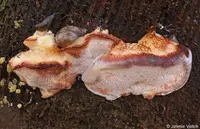
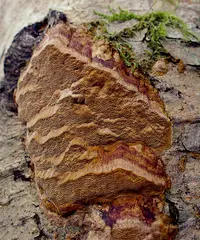
Rusty porecrust, Fuscoporia ferruginosa, is a bracket fungus rather than a leafy houseplant. It forms thin, crust-like, rust-brown fruiting bodies tightly attached to dead or living wood. The surface is usually velvety to rough, with tiny pores on the underside where spores are released.

This species is common in temperate forests of Europe and parts of North America, especially on birch and other hardwoods. It functions as a wood-decay fungus, slowly breaking down lignin and cellulose.

Because it is a specialist on dead or stressed wood, it is not suited to typical pot culture, and attempts to care for Rusty Porecrust focus on providing stable wood, shade, and consistent moisture.

Main Plant Requirements

Care Difficulty

Moderate Care

Light Preference

Partial Shade

Water Requirements

Moderate Water

Temperature Preference

Cool Climate

Hardiness Zone

Unknown

Soil Texture

Loamy, Silty, Organic-rich

Soil pH

Acidic (5.5–6.5), Slightly acidic (6.5–7.0)

Soil Drainage

Moist but well-drained

Fertilization

Minimal (feed rarely)

Get Personalized Care Plan

Scan your plant to receive care tips personalized for your specific plant

Available on iOS and Android

How to Care for the Rusty Porecrust

This wood-decaying fungus naturally grows on shaded trunks and receives only filtered, indirect light.

  • Provide dappled or forest-edge light, roughly 1–3 hours of weak morning sun and bright shade the rest of the day, similar to a woodland understory.
  • Avoid intense midday or afternoon sun, which can dry host wood quickly and slow fruiting of Rusty Porecrust.
  • In hotter months, prioritize deeper shade; in cooler seasons, slightly more open light is acceptable as long as wood surfaces do not heat or dry excessively.

This bracket fungus depends on steady moisture in its host wood rather than direct watering.

  • Ensure the host log or branch stays evenly moist but not waterlogged; surface should feel slightly damp, not dripping or powder-dry.
  • Improve drainage around host wood so excess rain can run off, reducing standing water that encourages competing molds and anaerobic decay.
  • In dry, hot periods, rising cracking of bark and very light, brittle brackets indicate underwatering of the substrate, while sour smell and slimy surfaces suggest chronic over-saturation.

This temperate-zone decay fungus performs best in cool to mild conditions typical of shaded woodlands.

  • Optimal activity occurs around 50–70°F (10–21°C), with steady moisture and shade supporting stable growth in colonized wood.
  • Fuscoporia ferruginosa tolerates down to about 20–25°F (-7 to -4°C), but repeated hard freezes can damage exposed fruiting bodies, though inner mycelium often survives.
  • Sustained heat above 85°F (29°C), especially with low humidity, can slow growth and dry host wood, so deeper shade and mulch around logs help buffer temperature swings.

This wood-decaying fungus grows on logs and is not meaningfully affected by ambient humidity in typical outdoor conditions.

Fuscoporia ferruginosa does not grow in conventional soil but on dead or decaying hardwood.

  • Provide well-decayed hardwood logs or large branches with intact bark rather than any soil-based substrate.
  • Keep the wood evenly moist but not submerged, as prolonged standing water halts aeration and can favor competing fungi.
  • Place colonized wood in shaded, humid microhabitats to slow drying and allow the mycelium to penetrate deeper into the log.
  • Avoid treated timber, conifer wood with heavy resins, or logs contaminated with oils, paints, or chemical preservatives.

This species is not suited to standard container culture, since it naturally colonizes dead wood rather than soil-filled pots.

This wood-decaying fungus usually gains all needed nutrients from its host and surrounding organic matter, so active fertilization is not recommended when caring for Rusty Porecrust.

Fuscoporia ferruginosa does not require horticultural pruning, but fruiting bodies can be removed when needed for safety or monitoring.

  • If brackets form on vulnerable trees, remove them with a sharp, clean hand saw or chisel to inspect underlying wood.
  • Cut away only the fungal tissue, avoiding unnecessary damage to the tree’s bark and cambium, the thin growth layer under the bark.
  • Disposal by bagging and removing from the site helps limit spore spread to nearby stressed or wounded trees.

This species is not managed as a potted plant; care focuses on managing its presence on host trees rather than repotting.

  • Transplanting is not practical because the fungus is embedded within the host wood and forms extensive internal mycelium networks.
  • If removal is necessary, focus on safely cutting and disposing of infected branches or sections rather than attempting to move the organism.
  • Monitor affected trees for structural decline and consult an arborist if fruiting bodies recur or if large limbs show advanced decay.

Intentional propagation of this wood-decay fungus is rarely appropriate in home or garden settings and is generally left to natural spore dispersal.

This hardy wood-rotting fungus survives outdoor winters without special protection in most temperate climates.

  • When growing on landscape trees, routine winter tree inspections help identify fruiting bodies that signal internal decay.
  • For urban or high-traffic sites, remove heavily decayed limbs during dormancy to reduce breakage risk in snow or ice.
  • Container trees with known decay issues are best evaluated by an arborist before winter storms to decide on pruning or removal.

Care Tips

Use hardwood hosts

Establish this fungus on well-seasoned hardwood logs or branches from broadleaf trees such as oak, beech, or birch, avoiding conifers and pressure-treated timber that can inhibit colonization.

Partially bury wood

For more stable moisture, sink host logs or branches 5–10 cm into the soil or leaf litter in a shaded spot so the wood stays damp but not waterlogged.

Mimic forest litter

Top-dress the base of the host wood with a thin layer of shredded bark, dead leaves, and small twigs to imitate natural woodland debris and buffer against rapid drying.

Limit disturbance

Once fruiting bodies form, avoid moving or rotating the colonized wood and handle brackets minimally, as repeated disturbance can slow new growth and spore production.

Monitor competing fungi

Inspect the wood regularly and remove clearly competing, fast-spreading bracket fungi early, leaving the surface intact, to give this species a better chance of maintaining its territory when growing Rusty Porecrust.

Common Pests and Diseases

Wood-decay competition fungi

This disease involves other wood-decay fungi colonizing the same dead hardwood substrate, competing for space and nutrients and sometimes overrunning existing fruiting bodies. Symptoms include patchy or deformed brackets, discolored pore surfaces, and mixed fungal crusts on the same log or branch.

Solution

Remove heavily overgrown or misshapen brackets to reduce competition and allow newer, healthier fruiting bodies to develop, and avoid repeatedly moving or injuring the host wood so the existing mycelium can maintain dominance. When cultivating on logs, keep them in a stable, shaded, moderately humid location with good airflow to limit opportunistic fungi.

Substrate-drying stress

This condition occurs when host logs or branches become too dry, causing fruiting bodies to crack, fade, and stop producing spores. Symptoms include brittle, pale, or sharply cracked crusts and very slow or absent new growth along the wood surface.

Solution

Maintain the host wood in a consistently cool, shaded place, protecting it from direct sun and strong drying winds, and if growing F. ferruginosa deliberately, lightly mist the surrounding environment rather than soaking the fruiting bodies directly. Periodically rehydrate dry logs by brief soaking or heavy watering of the surrounding soil, then allow excess water to drain to prevent waterlogging.

Waterlogging and anaerobic stress

This disease-like stress appears when host wood remains saturated for long periods, reducing oxygen around the mycelium and favoring soft-rot microbes. Symptoms include water-soaked, darkened tissue, sloughing or mushy crusts, and rapid loss of structural integrity in the wood.

Solution

Improve drainage around the log or stump by raising it slightly off the ground on stones or slats and avoiding placement in standing water. Allow the substrate to dry to just moist between watering or rain events, and discard sections of wood that have become foul-smelling or structurally unstable.

Wood-boring beetle larvae

These insects tunnel through the same dead hardwood that supports the fungus, disrupting internal mycelium and sometimes undermining fruiting bodies. Symptoms include small round exit holes, frass (fine wood dust) under or within the log, and localized collapse of crusted areas.

Solution

Physically remove and destroy heavily infested, crumbling sections of wood and retain firmer, less-damaged pieces for ongoing colonization. Store colonized logs in a cool, shaded, well-ventilated place off bare soil to make conditions less favorable for beetle egg-laying, and if needed wrap valuable culture logs in fine insect mesh while still allowing airflow.

Interesting Facts

Rusty pore surface

Its underside forms a rusty to cinnamon-brown pore layer with very small, round pores that stay visible even when the crust is old and weathered, which helps field mycologists separate it from similar brown-rot fungi.

Specialist on birch

This fungus is strongly associated with dead birch wood in temperate Europe and parts of Asia, where it contributes to the brown rot of trunks and branches by selectively breaking down cellulose and hemicellulose while leaving modified lignin behind.

Persistent woody crust

The fruiting bodies form thin, woody, perennial crusts that can persist on the same substrate for several years, slowly expanding and layering as the fungus continues to colonize the dead wood.

Botan icon

Did you know?

Molecular studies using DNA sequencing have shown that this species, once placed in the broad genus Phellinus, belongs in Fuscoporia instead, and it now serves as an important reference taxon in clarifying relationships among many look-alike brown-rot polypores.

FAQs about Rusty Porecrust

This bracket fungus spreads slowly to moderately through spores and colonizes dead or weakened wood. It does not usually explode across a site, but it can gradually cover larger areas of bark or fallen logs over several years.

Grow Healthy Plants with Botan Care

Keep your plants happy and healthy with plant identification, disease detection, and easy care guidance.

Botan plant care app — identify plants on mobile

Explore More Plants