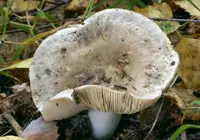
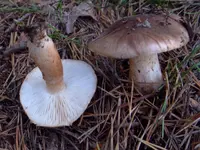
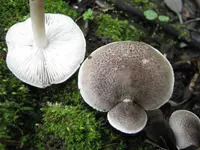
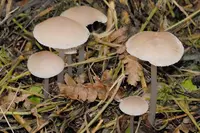
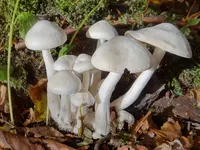
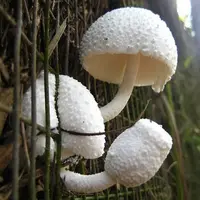
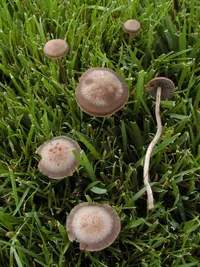
brown-staining cheese polypore Care (Fuscopostia fragilis)

brown-staining cheese polypore

About brown-staining cheese polypore

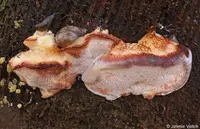
The brown-staining cheese polypore, Fuscopostia fragilis, is a wood-decaying bracket fungus rather than a leafy plant. It typically forms thin, shelf-like clusters on dead conifer wood, with pale caps that bruise brown when handled or aged.

This species is native to cooler forested regions, especially in northern Europe and parts of North America, where it plays an important role in breaking down dead trunks. It is not commonly cultivated, as it depends on specific deadwood conditions and is sensitive to changes in moisture and host type.

For those interested in how to care for brown-staining cheese polypore in a managed setting, it generally prefers cool, shaded locations, steady moisture, and well-decayed conifer logs as its substrate.

Main Plant Requirements

Care Difficulty

Moderate Care

Light Preference

Partial Shade

Water Requirements

Keep Soil Moist

Temperature Preference

Cool Climate

Hardiness Zone

Unknown

Soil Texture

Loamy, Organic-rich

Soil pH

Acidic (5.5–6.5)

Soil Drainage

Moist but well-drained

Fertilization

Minimal (feed rarely)

Get Personalized Care Plan

Scan your plant to receive care tips personalized for your specific plant

Available on iOS and Android

How to Care for the brown-staining cheese polypore

This wood-decaying fungus prefers cool, shaded forest conditions rather than direct open sun.

  • Aim for bright shade or dappled woodland light, with 1–3 hours of weak morning sun at most and no harsh afternoon sun on the fruiting bodies.
  • Site brown-staining cheese polypore on the shaded side of stumps or logs so the substrate stays moist and does not heat or dry rapidly.
  • In summer, protect from strong, drying sun; in winter, leafless canopies can allow more light, which is usually acceptable if the wood remains cool and damp.

This fungus depends on consistently moist, not waterlogged, wood rather than conventional soil watering.

  • Maintain the host log or stump evenly moist; if cultivating, re-wet when the outer 2–5 cm of wood feel dry or light but avoid standing water around the base.
  • Signs of excess moisture include sour or rotten odor and slimy surfaces, while deep cracking and very light, hard wood indicate chronic dryness for Fuscopostia fragilis.
  • Ensure excellent drainage around the substrate, using coarse debris or raised positioning so rainfall can drain away, then increase misting only during hot, drying weather.

This species develops best in cool to mild conditions typical of temperate forests.

  • Optimal fruiting usually occurs around 50–68°F (10–20°C), with steady moisture and shelter from drying winds and sun.
  • Growth can persist down to about 32–40°F (0–4°C), but prolonged freezes may halt activity and damage exposed fruiting bodies.
  • Temperatures above 77–82°F (25–28°C), especially when dry, can slow or stop growth, so provide shade and high ambient humidity during hot spells.

This wood-decaying fungus has minimal humidity requirements in outdoor culture and does not need special air-moisture control.

This saprophytic fungus grows on dead wood rather than in mineral soil, so conditions should replicate decaying logs.

  • Use dense hardwood logs or large, untreated wood chunks with high lignin content instead of conventional potting substrates.
  • Maintain the wood moderately moist but never waterlogged, allowing surface drying between soakings to limit competing molds.
  • Keep pH slightly acidic to neutral (about 5.5–7.0) by avoiding limed materials and using naturally weathered hardwood.
  • Avoid compacted, bark-free, or heavily fertilized mixes, which disrupt the natural decomposition that supports Fuscopostia fragilis.

This species is only loosely suitable for container growing and is best managed as a culture on contained wood pieces rather than as a conventional potted plant.

  • Choose a rigid, ventilated box, crate, or tub that allows side airflow around the wood while still retaining humidity near the substrate surface.
  • Elevate wood pieces slightly above the container base so excess water drains away and does not keep the lower zones saturated.
  • Position the container where rain or irrigation wets the wood but does not pool inside, using a slight tilt if necessary to direct runoff.

Fuscopostia fragilis is a wood-decaying fungus that usually gains all required nutrients from its host and surrounding organic matter, so extra fertilizer is not needed in typical outdoor settings.

Fuscopostia fragilis does not benefit from horticultural pruning, but some management can help control spread and maintain safety on host trees.

  • Remove only dead, loose, or hazardous fruiting bodies using a clean, sharp knife or pruning saw.
  • Carry out removals during dry weather to reduce the chance of secondary infections in exposed wood.
  • Cut flush with the bark without gouging living tissue, keeping the host tree surface as smooth as possible.
  • Dispose of removed brackets with green waste or trash to limit further spore distribution around vulnerable trees.

This bracket fungus is not managed through typical repotting; focus instead on host tree health and site management when transplanting affected wood.

  • Avoid moving logs, stumps, or wood from infected areas into new sites, since the fungus travels with the substrate.
  • If ornamental logs are relocated, choose sound, non-infected wood rather than pieces already colonized by Fuscopostia fragilis.
  • When a host tree is removed, grind or remove the stump where feasible to reduce future fungal activity near new plantings.
  • After tree removal, allow time before replanting in the same spot, and improve soil with organic matter to support vigorous new root systems.

Intentional propagation of this wood-rotting species is rarely practiced in gardens, since it functions mainly as a decomposer on dead or weakened trees.

This fungus is naturally cold hardy in temperate climates and usually needs no specific winter care from gardeners.

Care Tips

Use Fresh Substrate

Prepare fresh, clean hardwood sawdust or fine wood chips for each new culture, since reused or decomposed substrate increases contamination risk and reduces mushroom yield.

Pre-Pasteurize Wood

Heat-treat the wood-based substrate at 160–180°F for 60–90 minutes to reduce competing fungi and bacteria before inoculating with spawn.

Control Inoculation Points

Drill small, evenly spaced holes or create layered spawn bands in the substrate log or bag so the mycelium can colonize quickly and outcompete contaminants.

Manage Gas Exchange

Provide filtered air holes or a loose top seal in grow bags or containers so the mycelium receives enough oxygen without exposing it directly to drafts or unfiltered air.

Monitor Fruiting Surfaces

Inspect the developing fruit bodies regularly and trim away damaged, moldy, or overly tough sections to maintain clean surfaces and better quality when caring for brown-staining cheese polypore.

Common Pests and Diseases

bark beetle tunneling

This pest targets weakened host trees whose dead wood later supports brown-staining cheese polypore fruiting, leaving galleries under the bark and predisposing the substrate to decay. Symptoms include fine boring dust, exit holes, and loose or detached bark on the colonized log or stump.

Solution

Remove and destroy heavily infested sections of wood to reduce beetle populations and future damage, and store any wood intended for growing brown-staining cheese polypore off the ground with good airflow. Cover stacked logs with fine insect mesh if beetle pressure is high, and avoid using freshly beetle-infested wood as a primary cultivation substrate.

wood-boring larvae

These insects, such as longhorn beetle or moth larvae, feed deep within dead or dying wood that later bears the fungus, creating large tunnels that dry out and structurally weaken the substrate. Symptoms include oval or round exit holes, coarse frass, and hollow or brittle log sections around the fungal fruiting bodies.

Solution

Cut out and discard the most damaged portions of wood and prioritize denser, intact pieces for long-term fungal growth. Store logs in shaded, moderately moist but well-ventilated conditions to discourage heavy larval colonization and avoid stacking wood in direct soil contact for extended periods.

secondary mold colonization

This disease occurs when fast-growing competitor molds overrun the same dead wood, forming fuzzy or powdery growths that can overtop or suppress Fuscopostia fragilis fruiting bodies. Symptoms include colored mold patches (often green, blue, or black) and a dusty surface that spreads rapidly across exposed wood and old brackets.

Solution

Physically scrape or cut away heavily molded outer bark and discard obviously contaminated material, then keep remaining wood in a cooler, shaded, and better-ventilated area. Avoid excessive surface wetting of the logs and maintain moderate, not saturated, moisture to reduce mold dominance while still supporting the primary fungus.

soft rot of substrate

This disease affects waterlogged or chronically wet wood, where specialized soft-rot fungi break down the cell walls, turning the interior into a stringy or pulpy mass that can undermine long-term bracket production. Symptoms include very soft, fibrous wood that collapses under light pressure and a sour or musty odor around the colonized area.

Solution

Improve drainage around logs or stumps by lifting them slightly off the soil and ensuring water does not pool after rain. Remove the most degraded sections and retain firmer wood, keeping moisture at a stable, moderately damp level rather than constantly saturated.

Interesting Facts

Brown-staining pores

This bracket fungus is named for its pore surface, which quickly turns brown when bruised or scratched, a field character that helps distinguish it from similar white polypores on conifers.

Short-lived fruitbodies

Its fruiting bodies are typically annual and fragile, breaking down within a single season rather than forming the tough, multi-year brackets seen in many other wood-decay polypores.

Conifer specialist

It occurs mainly on dead or dying conifer wood, especially spruce and pine, where it contributes to the breakdown of lignin-rich tissues as a white-rot fungus.

Botan icon

Did you know?

Molecular studies in polypore systematics led to the recognition of this species in the genus Fuscopostia, separating it from look-alike taxa that had long been lumped together based only on macroscopic features.

FAQs about brown-staining cheese polypore

This species is generally considered inedible. The texture is tough and corky, and the taste is poor. It is not known as a choice culinary mushroom and is usually left in place for its ecological role in wood decay.

Grow Healthy Plants with Botan Care

Keep your plants happy and healthy with plant identification, disease detection, and easy care guidance.

Botan plant care app — identify plants on mobile

Explore More Plants