Geranium Brittlegill Care (Russula fellea)

Geranium Brittlegill

About Geranium Brittlegill

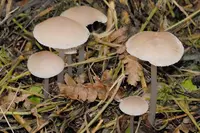
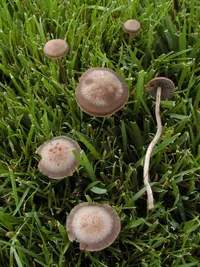
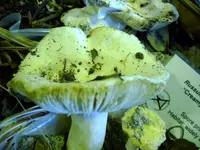
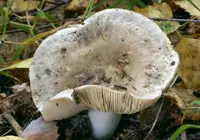
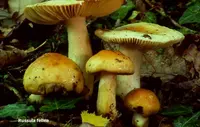
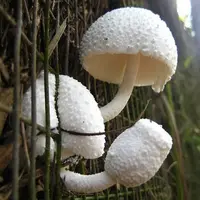
Geranium Brittlegill, Russula fellea, is a small to medium woodland mushroom rather than a true plant. It typically forms pale yellow to straw-colored caps with brittle, widely spaced gills and a stout white stem.

This species usually appears in late summer and autumn in temperate forests, often under beech or other broadleaf trees on well-drained, acidic soils. It has a distinctly bitter taste and a somewhat honey-like smell, which helps separate it from edible lookalikes.

Because it relies on a mycorrhizal partnership with tree roots, it cannot be grown like a houseplant or in pots, so attempts to care for Geranium Brittlegill at home are rarely successful.

Main Plant Requirements

Care Difficulty

Hard Care

Light Preference

Partial Shade

Water Requirements

Regular Water

Temperature Preference

Cool Climate

Hardiness Zone

Unknown

Soil Texture

Loamy, Silty, Organic-rich

Soil pH

Strongly acidic (4.5–5.5), Acidic (5.5–6.5)

Soil Drainage

Moist but well-drained

Fertilization

Minimal (feed rarely)

Get Personalized Care Plan

Scan your plant to receive care tips personalized for your specific plant

Available on iOS and Android

How to Care for the Geranium Brittlegill

Russula fellea is a woodland fungus that thrives in cool, shaded forest conditions rather than direct sun.

  • Position near or under trees where it receives dappled or filtered light for most of the day, with no more than 1–2 hours of weak direct morning sun.
  • Avoid open, exposed sites; strong midday or afternoon sun can overheat the forest floor and dry the leaf litter, discouraging Geranium Brittlegill fruiting.
  • In summer, denser canopy shade is beneficial, while in early spring or late autumn slightly brighter but still indirect light is suitable.

Russula fellea depends on consistently moist but not waterlogged forest soil and leaf litter.

  • Aim for soil that stays evenly damp 3–5 cm down; allow only the top 1–2 cm of leaf litter to dry briefly between natural rain events or supplemental watering.
  • In dry spells, water the surrounding soil rather than the mushrooms themselves, using slow, gentle soaking to maintain moisture without puddling.
  • Watch for signs of overwatering such as standing water, sour smell, or slimy litter, and for underwatering as crisp, brittle litter and visibly shrinking fungal activity.

This species prefers cool to mild conditions typical of temperate woodlands.

  • Optimal activity usually occurs around 50–68°F (10–20°C), with the best fruiting often in cool late-summer to autumn weather.
  • It tolerates brief drops near 40°F (4–5°C) but sustained hard frost below 32°F (0°C) will stop fruiting and can damage exposed mushrooms.
  • Prolonged heat above 77–82°F (25–28°C), especially combined with dry air, tends to halt development and speeds decay of existing fruiting bodies.

Humidity is not a meaningful factor for this ectomycorrhizal fungus in typical outdoor conditions, so no special humidity management is required when caring for Geranium Brittlegill.

Russula fellea only fruits in very specific woodland soil conditions linked to its tree partners, not in standard garden or potting mixes.

  • Prefers light, well-aerated, leaf-litter-rich topsoil over mineral subsoil, often in beech or mixed deciduous woodland.
  • Requires freely draining, non-waterlogged ground; excess standing water suppresses mycelium growth and fruiting.
  • Typically occurs in slightly acidic to moderately acidic soil, roughly pH 4.5–6.0, with a deep organic horizon.
  • Avoid compacted, heavily fertilized, or soilless mixes; disturbance or tilling of the forest floor layer strongly reduces its presence.

This species is not suitable for container growing, since it depends on complex mycorrhizal associations with tree roots in undisturbed soil.

Russula fellea is a wild mycorrhizal fungus that does not benefit from direct fertilizing in the way garden plants do.

Russula fellea does not require pruning, as the mushroom fruiting body is temporary and naturally decomposes.

Transplanting Russula fellea focuses on supporting its tree partner and soil conditions rather than moving the fungus itself.

  • Avoid disturbing forest soil where the fungus appears, since its mycelium forms a fine network attached to tree roots.
  • If attempting cultivation, plant suitable host trees in well-drained, slightly acidic soil and leave the root zone undisturbed.
  • Do not lift or move fruiting bodies; they are short-lived and moving them does not relocate the underlying organism.
  • Reduce stress to associated trees by preventing compaction, maintaining leaf litter, and avoiding chemical inputs around the root area.

Propagation of Russula fellea under controlled conditions is challenging and rarely attempted outside specialist research.

Russula fellea is naturally cold hardy in its native woodland habitats and needs no targeted winter care from gardeners.

Care Tips

Retain Host Roots

When managing woodland edges or lawns, avoid removing or heavily thinning birch, beech, or other likely host trees, since this fungus depends on their fine roots to form mycorrhiza and fruit reliably.

Preserve Leaf Litter

Leave a 3–5 cm layer of natural leaf litter around host trees instead of raking everything away, as this stabilizes moisture and protects the shallow fungal mycelium that produces Geranium Brittlegill fruiting bodies.

Minimize Soil Disturbance

Limit digging, rototilling, and vehicle traffic near host tree drip lines, because compaction and disturbance can break up the underground network and sharply reduce future mushroom flushes.

Avoid Fungicidal Products

Do not apply lawn fungicides, wood-preserving paints that leach into soil, or broad-spectrum soil drenches near host trees if you want to keep this species, since these products can kill or weaken the mycelium.

Maintain Stable Moisture

In dry spells, give host trees a deep soak rather than frequent light watering, to keep the upper 10–15 cm of soil evenly moist without waterlogging, which supports healthier mycorrhizal activity and more consistent growing Geranium Brittlegill colonies.

Common Pests and Diseases

Mycophagous springtails

These insects feed on fungal tissue and gills, especially in humid, organic litter where fruiting bodies emerge. Symptoms include pitted, roughened, or eroded cap and gill surfaces on young mushrooms.

Solution

Remove heavily infested or damaged mushrooms to reduce local springtail populations and avoid spreading them on tools or containers. Limit excessive surface moisture and dense leaf-litter piles around an observation or culture site, and if cultivating, use fine mesh or physical barriers around trays to reduce access while maintaining humidity needed for growing Russula fellea.

Slug and snail grazing

These pests chew irregular holes in caps and gills and may leave slime trails on or around fruiting bodies. Damage is often seen overnight, especially in moist, shaded woodland or garden habitats where this species fruits.

Solution

Hand-remove slugs and snails in the evening, and use copper tape, rough barriers, or shallow beer traps around any managed or observation area to reduce pressure. Keeping surrounding ground litter slightly more open, while not fully bare, can make conditions less favorable for large slug populations without disrupting the fungus–tree association.

Fungal parasitism (Hypomyces spp.)

This disease is caused by parasitic fungi that colonize Russula fruiting bodies, leading to discoloration, a felt-like coating, deformation, and premature decay. Symptoms include loss of typical cap color, a powdery or crusty surface, and a soft, deteriorating texture.

Solution

Promptly remove and discard parasitized mushrooms so spores of the parasite do not build up in the area. Avoid moving contaminated debris or tools between sites, and if monitoring or photographing, focus on unaffected patches to limit mechanical spread and support healthier fruiting where natural Russula fellea care instructions are being followed.

Interesting Facts

Bitterness as defense

This species has a very bitter taste due to specific chemical compounds in its flesh, which strongly discourage mammals and humans from eating it, even though it is not deadly poisonous.

Conifer forest specialist

It forms mycorrhizal associations with the roots of beech and various conifers, especially spruce and fir, and is most often found on acidic soils in montane and submontane forests.

Distinctive honey scent

Mature fruiting bodies often develop a faint honey-like or fruity odor, which helps field mycologists distinguish it from other similar pale russulas that lack this characteristic smell.

Botan icon

Did you know?

The gills of this species are typically a pale cream color that can become slightly pinkish with age, a diagnostic feature used by mycologists to separate it from other bitter russulas that retain pure white or deeper cream gills.

FAQs about Geranium Brittlegill

This mushroom is considered inedible due to its very bitter taste and potential to cause gastrointestinal upset. It should not be collected for food and is best left in the habitat for ecological purposes.

Grow Healthy Plants with Botan Care

Keep your plants happy and healthy with plant identification, disease detection, and easy care guidance.

Botan plant care app — identify plants on mobile

Explore More Plants