Yellow False Truffle Care (Rhizopogon luteolus)

Yellow False Truffle

About Yellow False Truffle

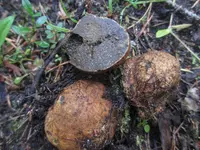
Yellow false truffle (Rhizopogon luteolus) is an underground, truffle-like fungus rather than a leafy houseplant. It forms rounded, yellowish to brownish fruiting bodies hidden in the soil, often associated with pine and other conifers. The surface darkens and cracks slightly as it ages.

This species occurs mainly in temperate forests of Europe and North America, living in symbiosis with tree roots and helping them absorb water and nutrients. It can be challenging to cultivate intentionally because it depends on a compatible host tree and specific soil partners. Gardeners who want to care for Yellow False Truffle usually focus on maintaining healthy conifers, well-drained, slightly acidic soil, and steady moisture rather than treating it as an independent plant.

Main Plant Requirements

Care Difficulty

Hard Care

Light Preference

Partial Shade

Water Requirements

Regular Water

Temperature Preference

Cool Climate

Hardiness Zone

Unknown

Soil Texture

Sandy, Loamy, Organic-rich

Soil pH

Acidic (5.5–6.5), Slightly acidic (6.5–7.0)

Soil Drainage

Moist but well-drained

Fertilization

Minimal (feed rarely)

Get Personalized Care Plan

Scan your plant to receive care tips personalized for your specific plant

Available on iOS and Android

How to Care for the Yellow False Truffle

This underground ectomycorrhizal fungus depends on suitable light conditions for its host tree rather than direct sun on the fruiting bodies.

  • Site associated trees in bright conditions with 4–6 hours of direct morning sun and light afternoon shade, which supports vigorous root growth for Rhizopogon luteolus.
  • Allow partial shade under a light to medium canopy; dappled or filtered light through branches is ideal, while dense, deep shade can reduce host vigor and limit fruiting.
  • Avoid exposed, full afternoon sun in open ground where soil overheats and dries quickly, especially in summer, since this can stress host roots and limit Yellow False Truffle development.

Watering should focus on maintaining steady soil moisture for the host tree and its fine roots, where this ectomycorrhizal fungus lives.

  • Keep soil for the host tree evenly moist but not saturated, letting the top 3–5 cm dry slightly before the next deep soak to support stable mycorrhizal activity.
  • Increase watering frequency in warm, dry periods when transpiration is high, watching for dull, slightly wilted foliage as a cue that root and fungal partners need more moisture.
  • Reduce watering in cool or rainy seasons, and avoid standing water or heavy, compacted clay; persistent sogginess, sour odor, or algae on the surface signals harmful overwatering for Rhizopogon luteolus.

Temperature needs relate mainly to the tree roots that host this subterranean fungus rather than to surface conditions alone.

  • Aim for cool to mild soil and air temperatures of about 55–70°F (13–21°C) during main growth, which favor stable ectomycorrhizal development and nutrient exchange.
  • The fungus and its hosts usually tolerate down to about 20°F (-7°C) once established, but repeated freeze–thaw near the surface can disrupt fine roots and reduce fruiting.
  • In hot climates, prolonged soil temperatures above 80–85°F (27–29°C) combined with drought stress can impair colonization, so use leaf litter or mulch to moderate seasonal heat swings around roots.

This ectomycorrhizal fungus tolerates a broad humidity range but performs best in consistently moist, not saturated, conditions around host tree roots.

  • Aim for ambient humidity around 50–70% when cultivating near potted conifers, combined with evenly moist, airy substrate.
  • It tolerates periods of drier air if the root zone stays slightly moist, but prolonged drying of the substrate slows colonization.
  • Low humidity stress shows as very dry, shrinking substrate and stalled host growth; increase humidity by grouping pots and using a pebble tray rather than misting.

Rhizopogon luteolus develops best in loose, well-aerated, moderately moist soil closely associated with conifer roots.

  • Use a sandy to sandy-loam mix with 20–40% coarse materials such as sharp sand, fine bark, or perlite to keep the structure open.
  • Maintain slightly acidic conditions, ideally pH 5.0–6.5, which support both the fungus and typical conifer hosts like pine or spruce seedlings.
  • Incorporate a small amount of mature compost or forest litter from beneath healthy conifers to provide organic matter and microbial partners, but avoid heavy, clay-rich additions.
  • Avoid compacted, poorly drained, or peat-heavy mixes that stay waterlogged, since low oxygen in the root zone severely restricts fungal growth.

This species can be grown in containers only as a symbiont with young conifers and requires careful root-zone management.

  • Choose a container deep enough for the conifer taproot so the fungus can form a stable mycorrhizal network without crowding.
  • Select a rigid pot material that holds shape so the root–fungus interface is not disturbed when the container is moved or handled.
  • Use a pot with multiple side and base drainage holes so excess water exits quickly and the lower root zone does not remain anaerobic.

Rhizopogon luteolus normally gains nutrients through its mycorrhizal partnership with host tree roots, so extra fertilizer is rarely required.

Pruning is not a standard part of Rhizopogon luteolus care because this fungus lives mostly below ground and does not form stems or foliage.

Transplanting focuses on moving the host tree or soil containing the fungal mycelium rather than the Yellow False Truffle fruiting bodies themselves.

  • Transplant only during the tree’s dormant season, typically late fall or early spring, to limit stress on roots and fungal partners.
  • Move a generous volume of existing soil around the root zone so the fungal network remains attached to host roots.
  • Avoid washing or breaking roots; keep the root ball intact and moist during and after transplanting.
  • Expect infrequent need for transplanting and allow time for the fungus to re-establish in the new site.

Propagation of Rhizopogon luteolus is usually left to specialists, since it depends on complex interactions with host tree roots and soil fungi communities.

Established in-ground Rhizopogon luteolus associated with hardy trees generally needs no special winter care in typical temperate climates.

Care Tips

Host tree pairing

Inoculate the roots of compatible hosts such as pines or other conifers in well-drained, low-competition beds, since this fungus relies on forming a mycorrhizal partnership with the tree to establish and persist.

Use fresh inoculum

Apply spore slurry or colonized substrate as fresh as possible and keep it cool and shaded before use, because heat and drying quickly reduce spore viability and colonization success.

Minimize soil disturbance

Avoid deep tilling, aggressive raking, or frequent repotting around colonized roots, as this breaks up the fine mycorrhizal network and can set back fruiting for several seasons.

Control nutrient inputs

Limit high-nitrogen synthetic fertilizers around host trees and rely more on moderate, slow-release organics, since excessive available nitrogen can suppress mycorrhiza formation and reduce sporocarp production when growing Yellow False Truffle.

Monitor moisture pulse

Time irrigation or natural rainfall pulses so that soil is evenly moist, not waterlogged, in the weeks before expected fruiting season, then reduce watering slightly afterward to lower the risk of rot and competing fungi.

Common Pests and Diseases

Ectomycorrhizal disruption

This problem occurs when the soil environment no longer supports a stable symbiosis between the fungus and pine roots. Symptoms include poor host tree growth, sparse fine roots, and a visible decline in truffle formation.

Solution

Improve site conditions by avoiding soil compaction, limiting heavy machinery, and maintaining a deep, loose organic layer under host pines. Reduce synthetic fertilizer and frequent high-dose phosphorus applications, and favor moderate irrigation practices that keep soil slightly moist but never waterlogged to support stable Rhizopogon luteolus care instructions.

Soil nematode damage

These pests are microscopic roundworms that feed on fine roots, indirectly reducing the mycorrhizal colonization and fruiting of the fungus. Symptoms include stunted host seedlings, poor root branching, and reduced formation of underground sporocarps.

Solution

Use only nematode-free nursery stock and sterile potting substrates when establishing pine hosts. Rotate planting areas, incorporate well-matured compost, and maintain diverse soil biota; in containers, discard severely infested media and replant into clean substrate with healthy, inspected hosts.

Competitive mycorrhizal fungi

This issue arises when other ectomycorrhizal fungi outcompete the desired species on pine roots. Symptoms include low or absent Yellow False Truffle fruiting despite healthy host trees and dominance of other fungal morphotypes on fine roots.

Solution

When establishing plantations or research plots, inoculate pine seedlings with a high-quality Rhizopogon luteolus inoculum before planting and limit introduction of external soil that may carry competing fungi. Maintain consistent host density and avoid mixing different mycorrhizal inocula in the same area to reduce strong competitors like some Suillus or Hebeloma species.

Soil-borne pathogenic fungi

These diseases are caused by root-pathogenic fungi such as some Phytophthora or Fusarium species that attack pine roots, indirectly reducing the habitat for the symbiotic truffle. Symptoms include root browning, needle yellowing on host trees, and loss of fine roots where the fungus normally colonizes.

Solution

Plant only disease-free pine material and avoid poorly drained, chronically wet sites that favor root pathogens. Improve drainage, use raised beds or mounds when necessary, promptly remove and destroy severely affected seedlings, and disinfect tools and containers between batches to limit pathogen spread.

Interesting Facts

Hidden truffle mimic

Despite resembling a small underground truffle, this species is a false truffle and belongs to a different fungal group, producing its spores inside a closed, potato-like fruiting body rather than on exposed gills or pores.

Mycorrhizal pine partner

It forms ectomycorrhizal associations with pine roots, creating a sheath around fine roots that improves water and nutrient uptake in exchange for sugars from the tree.

Soil-dwelling fruiting bodies

Fruiting bodies typically develop partially or completely buried in sandy or disturbed soils, which makes the species easy to overlook during standard mushroom surveys.

Botan icon

Did you know?

This fungus is intentionally introduced into pine nurseries in some regions as a beneficial mycorrhizal inoculant, helping young pines establish more quickly and tolerate poor, nutrient-limited soils.

FAQs about Yellow False Truffle

This underground fungus is not considered a culinary species. Identification is difficult, and it can resemble inedible or undesirable truffle‑like fungi. It is best treated as non-edible and left in the soil to support tree roots.

Grow Healthy Plants with Botan Care

Keep your plants happy and healthy with plant identification, disease detection, and easy care guidance.

Botan plant care app — identify plants on mobile

Explore More Plants