
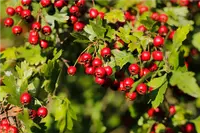

Chinese privet Identification (Ligustrum sinense)

Recognize Chinese privet by its opposite, simple leaves, usually 1 to 2.5 inches (2.5 to 6 cm) long, oval to elliptic with smooth edges, carried on many slender twigs.

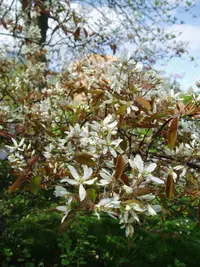
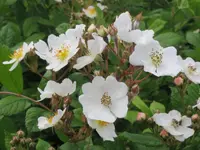
It typically forms a dense, multi-stem shrub or small tree, and bears small white flowers in upright, branched clusters at the tips of stems.

Ligustrum sinense Identification

Check Your Plant with Botan

Upload a plant photo and check the identification in seconds.

Clear images work best. Avoid photos taken too close or too far away

Check Chinese privet for a dense, many-branched shrub form with opposite leaves.

  • Leaves are simple, oval to elliptic, with smooth margins and pointed or blunt tips.
  • Most leaves are about 1 to 2.5 inches long (2.5 to 6 cm) and sit in opposite pairs along the twigs.
  • Twigs are slender, often arching, creating a rounded, thicket-forming outline.
  • Flower clusters are small, white, and held at branch tips; fruits are round, dark berries.

Opposite paired leaves and a twiggy, arching habit are the quickest visual clues.

Chinese privet shows useful visual changes from early growth through flowering and fruiting stages.

  • Seedling: Seedlings have thin green stems with opposite paired leaves that are smaller, softer, and often more widely spaced than on older plants.
  • Young plant: Young plants form many basal shoots and a dense, shrubby outline; leaves become thicker and typically reach about 1-2 inches (2.5-5 cm) long.
  • Flowering stage: Flowering branches carry terminal clusters of many small white flowers, making the shrub look finer-textured and paler at the branch tips than nonflowering plants.
  • Fruiting stage: After flowering, the branch tips hold dense clusters of rounded dark berries, replacing the pale flower clusters with a noticeably heavier, dotted appearance.

Chinese privet often keeps some leaves into winter in mild areas, while colder weather can leave it partly bare. That mix of lingering foliage and dense twiggy branching can stand out in late fall and winter. In late spring to early summer, many small white flower clusters become obvious. By fall, round dark berries replace them and may persist into winter.

A few shrubs are regularly mistaken for Chinese privet.

Japanese privet(Ligustrum japonicum)

Similar evergreen habit and opposite leaves. Japanese privet usually has thicker, glossier, broader leaves, often 2 to 4 inches (5 to 10 cm) long; Ligustrum sinense typically has smaller, thinner leaves and a finer twiggy look.

Glossy privet(Ligustrum lucidum)

Also bears opposite leaves and dark berries. Glossy privet becomes a larger tree or tall shrub and has much larger, leathery leaves, often 3 to 6 inches (8 to 15 cm) long, while Ligustrum sinense stays shrubbier with smaller leaves.

Ligustrum sinense is native to China, Taiwan, and Vietnam. In its native range it occurs in thickets, forest edges, open woodlands, stream banks, and disturbed ground, often from lowlands into lower mountain slopes. That setting helps with identification because this species is often encountered in semi-wild edge habitats rather than deep forest. Finding it along roadsides, fencerows, or woodland margins can help narrow it from more strictly cultivated privets.

  • Toxic berries and leaves: Ligustrum sinense has toxic fruit and foliage. Ingestion can affect humans and pets, especially children, dogs, cats, and livestock.
  • Main exposure route: The main concern is ingestion rather than skin contact. Risk is highest when the dark berries are present and easy to reach.

Does Your Plant Match?

Use Botan to compare a photo and help identify or confirm the plant before you label it.

FAQ

The quickest clue is its opposite leaf arrangement on many twiggy branches, forming a dense shrub or small tree. Small oval leaves with smooth edges and clusters of dark berries often support Chinese privet identification.

More Plant Identification Guides

Find Out What Plant It Is

Identify a plant from a photo with Botan, then review plant details, care information, and common problems for that species.

Botan app identifying a plant from a photo
Plant Pot Sizes: How to Choose the Right Plant Container

7 min read · 20 Aug 2026

Plant Pot Sizes: How to Choose the Right Plant Container

Plant pot sizes can be confusing because the number on the label only tells you part of the required information. A container may look spacious but actually be too shallow. So, how to choose pot size for plant species?

Beginner Guides
Plant Pot Sizes: How to Choose the Right Plant Container
10 Easy Garden Flowers to Grow

8 min read · 10 Sept 2026

10 Easy Garden Flowers to Grow

Discover 10 garden flowers that require minimal care. Learn which characteristics make plants easy to grow and follow tips on how to create a beautiful corner from beginner-friendly blooms on your property.

Beginner Guides
10 Easy Garden Flowers to Grow
12 Most Wanted Rare Houseplants to Grow at Home

6 min read · 21 Sept 2026

12 Most Wanted Rare Houseplants to Grow at Home

Rare houseplants can turn an ordinary corner in your apartment into a living botanical collection. This guide covers 12 most admired picks, what makes them special, and how to grow them successfully at home.

Plant Recommendations
12 Most Wanted Rare Houseplants to Grow at Home