Structured canopy training
While young, select 3–4 strong scaffold branches and lightly prune competing shoots to form an open, bowl-shaped canopy that improves light penetration and air movement, which supports better flowering and fruit set.

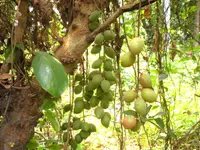
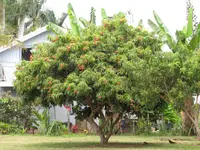
Baccaurea ramiflora, often called Burmese grape, is a tropical evergreen fruit tree from Southeast Asia and parts of India. It forms a rounded crown with dense foliage and grape-like clusters of fruit that hang directly from trunk and older branches. The fruits have thin skin and juicy, tangy-sweet pulp, and are usually eaten fresh or processed. This species prefers warm, humid conditions, consistent moisture, and well-drained, slightly acidic soil. It can be moderately challenging outside the tropics, so learning how to care for baccaurea is important for long-term success.

Care Difficulty
Moderate Care

Light Preference
Partial Sun

Water Requirements
Regular Water

Temperature Preference
Tropical / Frost Sensitive

Hardiness Zone
11–13

Soil Texture
Loamy, Sandy, Organic-rich

Soil pH
Acidic (5.5–6.5), Slightly acidic (6.5–7.0)

Soil Drainage
Moist but well-drained

Fertilization
Minimal (feed rarely)
Scan your plant to receive care tips personalized for your specific plant
Available on iOS and Android
This tropical fruit tree performs best with bright, indirect light and protection from harsh midday sun.
This species prefers consistently moist but not saturated soil, with careful attention to drainage.
This tropical tree needs warm, stable temperatures and does poorly in cold or fluctuating conditions.
This species prefers consistently high humidity similar to tropical understory conditions.
This species grows best in deep, moisture-retentive yet freely draining soil that stays slightly acidic.
This species can be grown in large containers for several years if managed carefully for root space and stability.
Nutrient inputs support healthy growth and fruiting in Baccaurea ramiflora, especially in poor soils or containers.
Thoughtful pruning keeps Baccaurea ramiflora structurally sound and easier to harvest.
This tree is usually field-grown, so focus on careful transplanting rather than frequent repotting.
Propagation of Baccaurea ramiflora is usually done by seed, with vegetative methods used where material is available.
This tropical species has low frost tolerance and needs protection in regions with cool winters.

Plant Health Check
Not sure what's wrong with your plant? Check your plant's health inside the app.
The tree bears its grape-like clusters of yellow to red fruits directly on the trunk and older branches, a trait called cauliflory that makes the fruit easy to harvest in traditional orchards.
This species is usually dioecious, meaning male and female flowers grow on separate trees, so fruit production requires pollen from a nearby male tree.
The edible part of the fruit is a translucent aril surrounding each seed, with a sour to sweet taste that is widely used fresh and in preserves in South and Southeast Asia.

In parts of northeastern India and Bangladesh, this tree is commonly managed in homegardens and mixed agroforestry systems, where it can provide seasonal fruit, shade, and small-scale income without the need for large monoculture plantations.
This species is generally evergreen in tropical and subtropical climates, holding foliage year-round. In cooler or drier conditions it may shed some leaves, but healthy trees maintain a dense canopy when not exposed to extended cold or severe drought.
Keep your plants happy and healthy with plant identification, disease detection, and easy care guidance.