Harvesting strategy
Begin harvesting leaves once stems have at least 6–8 mature leaves, always picking the older outer leaves first so the plant keeps a strong photosynthetic canopy and rebounds quickly.

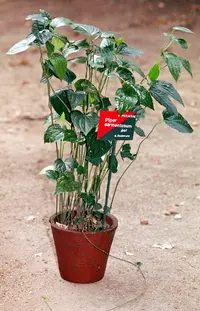
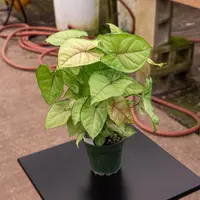
Lolot pepper, Piper sarmentosum, is a tropical, vining herb grown mainly for its glossy, heart-shaped leaves with a mild, peppery flavor. It forms low, spreading clumps that gradually trail or creep, making it suitable for groundcover in warm climates or a contained pot indoors.
This species is native to Southeast Asia, where it thrives in warm, humid, shaded habitats. It is generally considered easy to grow if kept away from strong sun, given consistent moisture, and planted in well-drained, fertile soil. Understanding how to care for Lolot Pepper helps it stay leafy, productive, and long-lived in cultivation.

Care Difficulty
Moderate Care

Light Preference
Partial Shade

Water Requirements
Keep Soil Moist

Temperature Preference
Tropical / Frost Sensitive

Hardiness Zone
10–11

Soil Texture
Loamy, Silty, Organic-rich

Soil pH
Acidic (5.5–6.5), Slightly acidic (6.5–7.0)

Soil Drainage
Moist but well-drained

Fertilization
Light (every 4–6 weeks)
Scan your plant to receive care tips personalized for your specific plant
Available on iOS and Android
Piper sarmentosum prefers bright, gentle light that mimics an understory tropical forest edge.
This species prefers evenly moist, never soggy soil and reacts quickly to extremes in watering.
This plant is a tropical perennial that grows best in consistently warm, frost-free conditions.
This species prefers moderately high humidity to maintain soft, lush foliage.
Piper sarmentosum grows best in loose, moist, organic-rich soil that drains freely.
This species suits container growing and responds well to a stable, evenly moist root zone.
Piper sarmentosum benefits from light, consistent feeding during the warm growing season to support leafy growth without causing soft, weak stems.
Piper sarmentosum responds well to light structural pruning that keeps plants compact and encourages fresh foliage.
Container-grown Piper sarmentosum benefits from occasional repotting or transplanting to maintain root health and steady growth.
Piper sarmentosum is commonly propagated from vegetative material, which maintains the traits of the parent plant.
Piper sarmentosum is tropical and poorly tolerant of frost, so winter protection is important in most temperate climates.

Plant Health Check
Not sure what's wrong with your plant? Check your plant's health inside the app.
This species naturally grows as a creeping understory herb in humid lowland forests of Southeast Asia, often forming dense ground cover along stream banks and shaded edges.
In Vietnam and neighboring countries, its glossy, heart-shaped leaves are traditionally used to wrap seasoned meat or fish before grilling, adding a characteristic peppery, slightly smoky aroma without significant heat.
Although often confused with the betel leaf vine Piper betle due to similar foliage and shared genus, this species is genetically and chemically distinct and is not commonly chewed with areca nut.

Chemical analyses of this species have revealed a rich mixture of phenylpropanoids and amide compounds, and at least one of its key aromatic constituents (such as sarmentine) has been characterized and studied for its biological activity in controlled laboratory settings.
Sparse or absent flowering usually comes from low light, nutrient-poor soil, or heavy pruning of young shoots. Provide bright shade, a balanced fertilizer, and avoid cutting tips in late spring when flower spikes typically form.
Keep your plants happy and healthy with plant identification, disease detection, and easy care guidance.