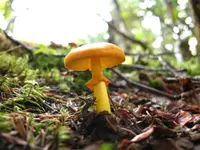
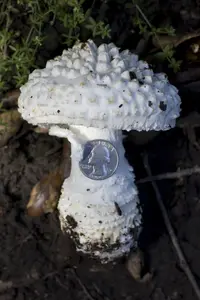
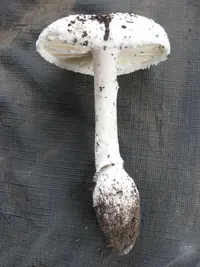
Botryobasidium aureum Care

Botryobasidium aureum

About Botryobasidium aureum

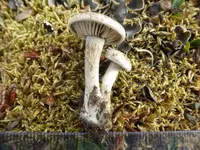
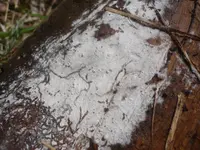
Botryobasidium aureum is not a traditional foliage or flowering plant but a crust-like wood-decaying fungus. It typically forms thin, spreading patches over dead wood or bark, with a smooth to slightly bumpy surface and pale yellowish to golden tones.

This species is usually found in forested areas on fallen branches, logs, or other woody debris, helping break down dead plant material. It is not commonly grown on purpose, and learning how to care for Botryobasidium aureum is mainly of interest to specialists rather than home gardeners.

In nature it favors shaded, humid environments where wood stays consistently moist, rather than the drier and brighter conditions typical of indoor or ornamental plant culture.

Main Plant Requirements

Care Difficulty

Moderate Care

Light Preference

Partial Shade

Water Requirements

Moderate Water

Temperature Preference

Warm Climate

Hardiness Zone

Unknown

Soil Texture

Loamy

Soil pH

Slightly acidic (6.5–7.0)

Soil Drainage

Well-drained

Fertilization

Minimal (feed rarely)

Get Personalized Care Plan

Scan your plant to receive care tips personalized for your specific plant

Available on iOS and Android

How to Care for the Botryobasidium aureum

This fungus prefers low to moderate light levels that mimic shaded forest conditions.

  • Provide bright shade or dappled light, such as beneath shrubs or trees, avoiding direct midday sun that can dry the substrate too quickly.
  • Aim for 2–4 hours of gentle morning sun at most, with the rest of the day in open shade or filtered light through overhanging vegetation.
  • In summer, increase shade cover if leaf litter or wood dries rapidly; in winter, reduced day length is usually sufficient for Botryobasidium aureum activity.

Moist but not waterlogged conditions support healthy development on its organic substrate.

  • Maintain evenly moist leaf litter, mulch, or decaying wood, allowing the top 1–2 cm to begin to dry before rewetting to avoid prolonged saturation.
  • Use well-drained, humus-rich ground that does not hold standing water; pooling indicates poor drainage and a risk of anaerobic conditions.
  • Increase monitoring during hot, windy periods and gently irrigate when the substrate feels dry to the touch; reduce watering in cool, wet seasons to prevent moldy, slime-like overgrowth.

This species favors cool to mild temperatures typical of shaded woodland habitats.

  • Optimal activity generally occurs around 55–70°F (13–21°C), with growth slowing outside this range but often persisting in suitable moisture and shade.
  • It typically tolerates cool conditions down to about 32°F (0°C), though extended hard freezes can halt or damage fruiting structures.
  • In warmer weather up to roughly 80°F (27°C), maintain higher humidity and shade; avoid exposed sites that experience rapid heating or drying.

This fungus tolerates a wide humidity range but favors evenly moist, moderately humid conditions.

  • Aim for 60–80% humidity in cultivation spaces to mimic its natural, damp substrate conditions.
  • Tolerates brief dips to 40–50%, but prolonged dry air leads to shriveling or stalled mycelial growth at colony edges.
  • Increase humidity with covered trays, humidifiers, or plastic tents while maintaining air movement to prevent stagnant, poorly ventilated air.

For cultivation, Botryobasidium aureum benefits from a loose, moist, organic-rich substrate rather than true garden soil.

  • Use a fine-textured mix based on well-pasteurized compost, leaf mold, or hardwood sawdust, kept evenly moist but never waterlogged.
  • Ensure rapid drainage by blending in coarse sand, perlite, or vermiculite so excess water moves through while the substrate still holds moisture.
  • Maintain a slightly acidic to neutral reaction around pH 6.0–7.0, adjusting with a small amount of agricultural lime if the mix is very acidic.
  • Avoid dense clay, unpasteurized manures, or heavily fertilized potting mixes, which can compact, overheat, or favor competing molds and bacteria.

This species can be grown in containers if the substrate remains evenly moist and well aerated.

  • Choose a deep, stable container that allows the substrate layer to be at least 10–15 cm thick for consistent colonization.
  • Use a rigid plastic or glazed ceramic pot when possible, as these retain moisture more evenly than unglazed clay in controlled culture.
  • Elevate the container slightly on blocks or a rack so any leachate can drain freely and air can move around the base to limit anaerobic zones.

This fungus typically grows on natural substrates and usually needs no additional fertilizer in garden or indoor settings.

Pruning is not a standard practice for Botryobasidium aureum, as it is a wood-decaying fungus rather than a conventional garden plant.

  • If removal is desired, physically cut or scrape fruiting bodies from wood using a clean, sharp knife or chisel.
  • Carry out removal during dry weather to reduce spread of spores to nearby susceptible wood.
  • Collect and dispose of infected wood off-site to lower inoculum levels in the area.
  • Disinfect tools with 70% alcohol or a bleach solution after use to limit disease spread to other woody plants.

Botryobasidium aureum is not maintained as a potted ornamental, so management focuses on handling infected wood rather than repotting.

  • Transplanting is effectively the movement of colonized wood; avoid relocating infected logs, boards, or branches to new sites.
  • If colonized material must be moved, do this in cool, dry weather and bag pieces to minimize spore dispersal.
  • For structural timber, consult a professional if decay is extensive, as replacement rather than relocation is usually recommended.
  • To reduce stress on nearby desirable plants, promptly remove heavily decayed wood so it does not serve as a long-term inoculum source.

Intentional propagation of Botryobasidium aureum is rarely recommended outside research or diagnostic work, as it is mainly a wood-decay organism.

This fungus is naturally cold tolerant and typically needs no intentional winter care or protection in outdoor environments.

Care Tips

Host selection

Establish this wood-decay fungus only on already-dead, untreated hardwood rather than living trees or structural timber to avoid unwanted damage and to give it the lignin-rich material it needs to fruit well.

Log conditioning

Before inoculation, keep hardwood logs shaded and slightly moist for 2–4 weeks so the wood equilibrates and small surface cracks close, which helps the mycelium colonize more evenly.

Clean inoculation

Use flame-sterilized tools and work on freshly cut or freshly drilled wood surfaces, sealing inoculation holes with melted wax to reduce contamination from faster-growing competitor fungi.

Moisture management

Sink part of each log into the ground or pack it in moist woodchips so humidity stays high around the colonizing mycelium without leaving the wood waterlogged.

Fruiting rotation

Once fruiting begins, rotate and lightly hose logs in the morning during dry spells to hydrate the surface and encourage more uniform fruiting bodies when growing Botryobasidium aureum.

Common Pests and Diseases

White rot complex

This disease affects the wood and fruiting bodies, leading to pale, spongy, and stringy decay of colonized substrate or host wood. Symptoms include a bleached appearance, reduced structural strength, and slow decline of the fruiting area.

Solution

Remove and discard heavily colonized, structurally weak wood or substrate and replace it with sound, well‑seasoned material. Maintain lower moisture in stored wood, improve ventilation around culture or storage areas, and avoid stacking fresh, damp wood in thick piles that stay wet for long periods.

Competing molds

This disease problem is caused by faster‑growing saprophytic molds that overrun B. aureum on organic substrates. Symptoms include patches of green, blue, or black mold covering the desired fungal growth and halting its spread.

Solution

Discard heavily contaminated substrate and clean containers and tools with a 10% bleach solution or 70% alcohol. Prepare new substrate with proper pasteurization or sterilization, avoid overwatering, and keep culture areas clean, with good airflow and minimal dust to reduce spore load when growing Botryobasidium aureum.

Bacterial blotch

This disease causes water‑soaked, greasy, or dark spots on developing fruiting bodies or mycelial mats on very wet surfaces. Symptoms include localized softening and an unpleasant odor on affected tissue.

Solution

Reduce surface moisture by improving airflow, using finer misting instead of heavy watering, and allowing surfaces to dry slightly between humidification cycles. Remove and dispose of affected tissue, sanitize nearby surfaces, and avoid overhead watering that leaves standing water on the fungal surface.

Sciarid fungus gnats

These insects lay eggs in moist substrate, and their larvae feed on fungal mycelium and delicate fruiting structures. This pest often appears as small dark flies hovering near very damp media, with a gradual thinning or patchy loss of mycelial growth.

Solution

Allow the top layer of substrate to dry slightly between irrigations, and improve drainage to make the surface less favorable for egg‑laying. Use yellow sticky traps to capture adults, physically remove heavily infested substrate sections, and, if needed, apply a biological control such as Bacillus thuringiensis israelensis (Bti) to target larvae without harming the fungus.

Interesting Facts

Corticioid golden crust

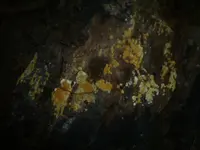
This species forms a thin, resupinate (crust-like) fruiting body with a distinctly golden to yellowish hymenial surface, which is unusual among many otherwise pale Botryobasidium species.

Wood-decaying lifestyle

It is a saprotrophic fungus that decomposes dead wood and other plant litter, contributing to nutrient cycling in forest ecosystems through the breakdown of lignocellulosic material.

Microscopic diagnostic traits

Identification relies on microscopic characters such as smooth, thin-walled basidiospores and specific basidia and hyphal features, since the macroscopic crust is often inconspicuous in the field.

FAQs about Botryobasidium aureum

This species is typically a slow, localized wood-decaying fungus. It colonizes dead organic material rather than sending long, invasive runners. Under normal garden conditions it does not spread aggressively or overtake healthy, established plants.

Grow Healthy Plants with Botan Care

Keep your plants happy and healthy with plant identification, disease detection, and easy care guidance.

Botan plant care app — identify plants on mobile

Explore More Plants