


Host tree selection
Establish the fungus near compatible native trees such as Eucalyptus or related myrtles, since this ectomycorrhizal species depends on forming root partnerships rather than growing in isolation.

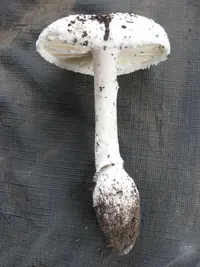
Australian flour lepidella (Amanita farinacea) is a gilled fungus, not a leafy houseplant. It forms classic toadstool-style caps on a short central stem. The cap surface often looks finely powdered, giving a floury appearance that inspires its common name.
This species occurs naturally in Australia, typically in woodland or forest, growing on the ground in association with tree roots. It forms mycorrhizae, a symbiotic partnership with roots, so it cannot be grown like ordinary potted plants and is considered difficult to cultivate.
Those looking into how to care for Australian Flour Lepidella should understand it is mainly a subject of field study and fungal ecology rather than a practical home cultivation species.

Care Difficulty
Hard Care

Light Preference
Partial Shade

Water Requirements
Moderate Water

Temperature Preference
Warm Climate

Hardiness Zone
Unknown

Soil Texture
Loamy, Organic-rich

Soil pH
Acidic (5.5–6.5)

Soil Drainage
Moist but well-drained

Fertilization
Minimal (feed rarely)
Scan your plant to receive care tips personalized for your specific plant
Available on iOS and Android
This mycorrhizal mushroom prefers dappled woodland light that mimics its native forest habitat.
This ectomycorrhizal species relies on consistently moist, free-draining soil rather than direct watering of the fruiting bodies.
This species favors mild, temperate conditions and forms fruiting bodies when soil and air temperatures align within its comfort range.
Amanita farinacea is a wild ectomycorrhizal fungus and humidity is not a manageable factor for typical home cultivation attempts.
This species cannot be grown like a normal potted plant, but understanding its natural substrate helps explain its strict requirements.
This fungus is not suitable for container growing because it relies on complex root partnerships and stable forest-like soil conditions.
Amanita farinacea is a wild mycorrhizal fungus that should not be fertilized, since added nutrients disrupt its natural soil partnerships.
Pruning is not appropriate for Amanita farinacea, as it is a mushroom fruiting body rather than a woody or leafy plant.
This species fruits in soil in association with tree roots and is not suited to standard repotting or indoor container culture.
Propagation of Amanita farinacea outside specialized research or conservation work is not recommended or practical for home growers.
This fungus persists as underground mycelium and usually needs no active winter care in its natural habitat.

Plant Health Check
Not sure what's wrong with your plant? Check your plant's health inside the app.
This species forms ectomycorrhizal partnerships with native Australian trees, especially eucalypts, exchanging mineral nutrients and water from the soil for sugars produced by the host through photosynthesis.
The cap and stem are often covered with a fine, flour-like layer of loose tissue remnants, which inspired both the common name Australian flour lepidella and the species epithet farinacea, meaning floury.
Amanita farinacea is documented mainly from temperate regions of southeastern Australia, where it appears in native woodlands and forests rather than in heavily disturbed or urban habitats.
No. This mushroom is considered inedible and potentially poisonous. It contains unknown but likely harmful compounds. It must never be tasted, cooked, or experimentally consumed, even in small amounts or after drying or boiling.
Keep your plants happy and healthy with plant identification, disease detection, and easy care guidance.

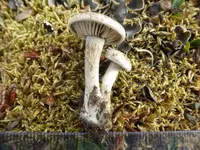
Atractosporocybe inornata
Atractosporocybe inornata
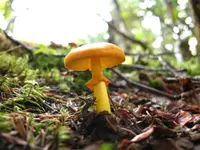
Peck's Yellow Dust Amanita
Amanita elongata
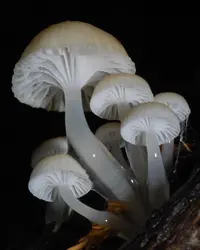
Austral Dripping Bonnet
Roridomyces austrororidus
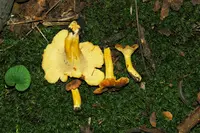
Cantharellus appalachiensis
Cantharellus appalachiensis
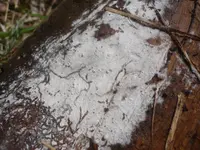
Botryobasidium subcoronatum
Botryobasidium subcoronatum
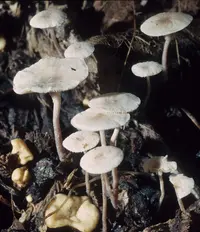
Splitpea Shanklet
Collybia cookei
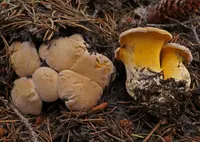
Rainbow Chanterelle
Cantharellus roseocanus
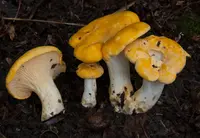
Ghost chanterelle
Cantharellus phasmatis