


Clean substrate tools
Always use disinfected tools and containers when preparing the woody or leaf-litter substrate to reduce contamination by fast-growing molds that can quickly outcompete Collybia cookei mycelium.

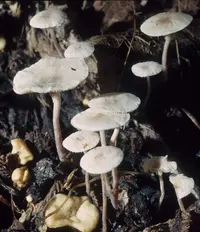
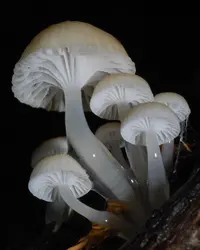
Splitpea Shanklet is a small saprotrophic fungus, not a traditional leafy houseplant. It belongs to Collybia cookei, a species that feeds on decaying organic matter, often on old mushroom remains. The fruiting bodies are tiny, pale to cream, and usually appear in scattered groups on forest floors.
This species is native to temperate regions, especially in Europe and North America, where it prefers moist, shaded woodland habitats. It is difficult to cultivate indoors because it depends on specific decaying substrates and stable humidity, so most people do not actively care for Splitpea Shanklet at home.
Collybia cookei generally favors cool, damp environments and rich, decomposing material rather than standard potting soil.

Care Difficulty
Moderate Care

Light Preference
Shade

Water Requirements
Keep Soil Moist

Temperature Preference
Cool Climate

Hardiness Zone
Unknown

Soil Texture
Organic-rich, Loamy

Soil pH
Acidic (5.5–6.5)

Soil Drainage
Moist but well-drained

Fertilization
Minimal (feed rarely)
Scan your plant to receive care tips personalized for your specific plant
Available on iOS and Android
This small saprotrophic fungus prefers low light similar to a shaded forest floor.
Moist, airy substrate is essential for consistent fruiting of this decomposer fungus.
This species fruits best in cool to mild conditions typical of temperate forests.
This saprotrophic fungus prefers consistently moist, humid air similar to a damp forest floor.
This species develops best in a loose, organic, moisture-retentive yet free-draining substrate that mimics decaying leaf litter.
This fungus is suitable for container culture when grown in shallow trays or boxes that allow lateral spread of the substrate.
Collybia cookei is a saprophytic fungus that usually does not need added fertilizer when grown on suitable decaying organic material.
Pruning is not relevant for Collybia cookei because it is a small decomposer fungus rather than a leafy or woody plant.
Transplanting Collybia cookei focuses on moving colonized substrate rather than handling a traditional root system.
Propagation of Collybia cookei is specialized and usually handled by mycology enthusiasts rather than general plant keepers.
Outdoor Collybia cookei typically needs no special winter care when growing in its natural habitat on organic debris.

Plant Health Check
Not sure what's wrong with your plant? Check your plant's health inside the app.
This fungus produces very small, whitish caps, often only a few millimeters wide, that can be easily overlooked on the forest floor unless examined closely.
It commonly grows on decaying remains of other agaric mushrooms, especially old, blackened fruiting bodies, making it a mycoparasitic or fungicolous species that specializes in recycling other fungi.
Its spores are smooth, nearly spherical to broadly ellipsoid, and in combination with its reduced, stem-like base and habitat, they help mycologists distinguish it from closely related look-alike species.
This fungus is considered inedible. It is small, tough, and lacks culinary value. Identification of tiny white cup fungi is difficult, so it should not be collected for food or eaten under any circumstances.
Keep your plants happy and healthy with plant identification, disease detection, and easy care guidance.

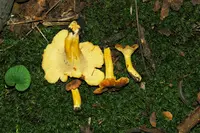
Cantharellus appalachiensis
Cantharellus appalachiensis
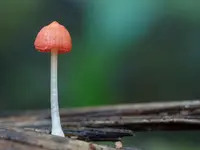
Scarlet Bonnet
Atheniella adonis
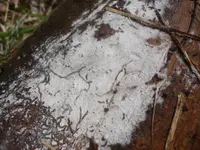
Botryobasidium subcoronatum
Botryobasidium subcoronatum
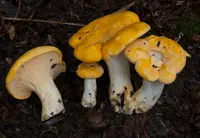
Ghost chanterelle
Cantharellus phasmatis
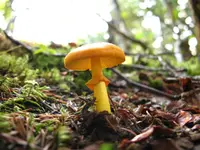
Peck's Yellow Dust Amanita
Amanita elongata
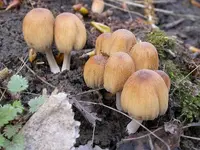
mica cap
Coprinellus micaceus
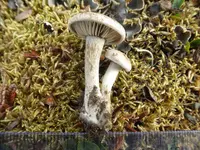
Atractosporocybe inornata
Atractosporocybe inornata
Austral Dripping Bonnet
Roridomyces austrororidus