Peck's Yellow Dust Amanita Care (Amanita elongata)

Peck's Yellow Dust Amanita

About Peck's Yellow Dust Amanita

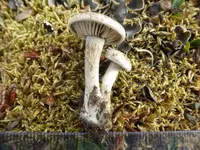
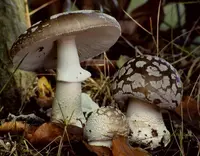
Peck's yellow dust amanita (Amanita elongata) is a forest-dwelling mushroom, not a typical houseplant. It forms fleshy caps on a stout stem, emerging from a cup-like base in soil rich with leaf litter. The cap is usually yellowish to pale, often with powdery or dusty remnants on top.

This species occurs mainly in temperate woodlands of North America, growing in association with tree roots as a mycorrhizal partner, which means it trades nutrients with living trees. Because of this close root relationship, it is very difficult to cultivate reliably at home, and attempts to care for Peck's Yellow Dust Amanita are mostly experimental. It prefers undisturbed woodland conditions with consistent moisture and well-drained, organic-rich soil.

Main Plant Requirements

Care Difficulty

Hard Care

Light Preference

Partial Shade

Water Requirements

Keep Soil Moist

Temperature Preference

Cool Climate

Hardiness Zone

Unknown

Soil Texture

Loamy, Organic-rich

Soil pH

Acidic (5.5–6.5)

Soil Drainage

Moist but well-drained

Fertilization

Minimal (feed rarely)

Get Personalized Care Plan

Scan your plant to receive care tips personalized for your specific plant

Available on iOS and Android

How to Care for the Peck's Yellow Dust Amanita

This fungus prefers woodland-style light similar to its natural habitat on the forest floor.

  • Provide dappled or filtered light with 2–4 hours of gentle morning sun and shade the rest of the day to mimic tree cover.
  • Avoid intense midday and afternoon sun, which can dry the substrate and damage fruiting bodies; partial shade to full shade is usually safest for growing Peck's Yellow Dust Amanita outdoors.
  • In summer, increase shade or leaf litter cover; in cooler seasons, slightly more open canopy light helps maintain energy for mycelium growth.

Amanita elongata relies on consistently moist but not waterlogged soil around its tree partners.

  • Aim for evenly moist ground; the top 2–5 cm of forest soil or mulch should feel slightly damp but never saturated when checked by hand.
  • Use well-drained, humus-rich soil so excess water can move away; standing water or sour, swampy smell suggests overwatering and root-zone stress.
  • In dry or hot periods, increase moisture with gentle soakings, while in cool or wet seasons, reduce added water to avoid fungal rot and loss of mycelium vigor.

This woodland mushroom thrives in cool to mild conditions typical of shaded forests.

  • Optimal activity usually occurs around 55–70°F (13–21°C), with steady moisture and shade supporting stable mycelium growth.
  • It tolerates brief drops to about 35–40°F (2–4°C), but hard frost below freezing can damage fruiting bodies, so expect flushes to slow or stop after cold snaps.
  • Sustained heat above 80°F (27°C), especially with dry air, stresses the organism; deeper mulch, shade, and moisture help buffer summer temperature swings.

This fungus relies on consistently moist, high-humidity environments rather than typical indoor air conditions.

  • Aim for 70–90% humidity in the surrounding microhabitat, such as damp leaf litter or mossy ground.
  • Prolonged exposure to dry air causes caps to crack, edges to curl, and fruiting bodies to abort prematurely.
  • Increase humidity by maintaining thick organic mulch, reducing wind exposure, and lightly misting nearby substrate without soaking the fruiting bodies of Peck's Yellow Dust Amanita.

Amanita elongata depends on specific outdoor soil and mycorrhizal conditions rather than a custom potting blend.

  • Favors naturally formed, loose, organic-rich forest soil with a mix of fine roots, leaf litter, and mineral particles instead of dense, compacted ground.
  • Prefers well-drained yet evenly moist substrates where water percolates through rapidly but the upper 5–10 cm do not dry out completely.
  • Associates best with slightly acidic to neutral soil, roughly pH 5.0–7.0, often under compatible host trees in undisturbed woodland.
  • To improve structure, increase leaf mold and fine bark fragments while avoiding heavy clay, sterilized mixes, synthetic fertilizers, and waterlogged sites.

This species is not suitable for conventional container growing because it requires complex mycorrhizal relationships in natural soil.

Amanita elongata forms a mycorrhizal partnership with trees and normally should not receive fertilizer around its fruiting area.

Pruning is not a standard practice for Amanita elongata because the visible mushroom is only a temporary fruiting body.

This species is not suited to container culture; it lives as a mycorrhizal fungus connected to host tree roots, so transplanting is rarely successful.

  • Transplant only if essential, moving both the host tree seedling and surrounding soil together to preserve the root-fungus contact zone.
  • Attempt any move in cool, moist weather to reduce stress and desiccation of the fine roots and fungal threads.
  • Disturb the soil as little as possible; keep the original orientation and depth consistent with the previous site.
  • Water gently after transplanting and maintain evenly moist, not waterlogged, soil while roots and fungal connections re-establish.

Propagation of Amanita elongata is highly specialized and not recommended for typical home cultivation.

In its natural habitat, Amanita elongata is generally cold hardy and needs no active winter care from gardeners.

Care Tips

Minimal handling

Avoid disturbing the mycelium once it has colonized the substrate, as frequent digging, raking, or repotting can disrupt fruiting and delay cap formation.

Host tree pairing

Establish or maintain compatible host trees, such as certain conifers or hardwoods known to support ectomycorrhizal fungi, since this species depends on a stable tree–fungus partnership to fruit well.

Leaf litter management

Keep a thin, loose layer of leaf litter or forest duff over the colonized area to protect mycelium from drying and temperature swings, but remove heavy, compacted matted layers that can smother developing fruiting bodies.

Gentle harvesting

Cut or gently twist mature mushrooms at the base rather than pulling up clumps of soil, leaving the underground mycelium network intact so it can produce future flushes.

Site monitoring

Mark productive patches discreetly and keep basic notes on fruiting times, rainfall, and temperatures, which helps refine how to take care of Peck's Yellow Dust Amanita in a specific garden or woodland site over several seasons.

Common Pests and Diseases

Mycoparasitic fungi

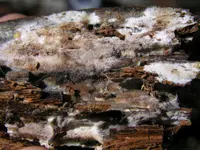
This disease involves other fungi colonizing and parasitizing the fruiting bodies, leading to deformed, discolored, or prematurely collapsing caps and stems. Symptoms include fuzzy, moldy overgrowth on the mushroom surface, often white, gray, or greenish.

Solution

Remove and discard affected fruiting bodies promptly to reduce spread, and avoid disturbing the area when conditions are very wet. Improving air movement at ground level by keeping surrounding low vegetation trimmed and avoiding dense mulch directly around the base can limit prolonged surface moisture that favors mycoparasites.

Slugs and snails

These pests feed on the soft tissues of the caps and stems, leaving irregular holes, shredded edges, and slime trails. This damage often appears overnight in damp, shaded habitats.

Solution

Hand-remove slugs and snails during evening or early morning, and reduce hiding places such as dense ground litter or boards lying on the soil. If necessary, use iron phosphate slug bait placed away from children, pets, and non-target wildlife, and avoid metaldehyde products in natural mushroom habitats.

Fungus gnat larvae

This pest group uses the developing fruiting bodies as a food source, tunneling through stems and caps. Symptoms include small entry holes, softening tissue, and rapid decay from the inside.

Solution

Discard heavily infested mushrooms to break the life cycle, and avoid leaving cut or damaged fruiting bodies on the ground. In managed sites such as outdoor beds or observation plots, reduce excessive organic debris and standing moisture that attract adult gnats, and consider using fine mesh covers over small areas when fruiting is expected.

Bacterial blotch

This disease causes greasy-looking, yellow to brown water-soaked spots on caps that can expand and darken. Symptoms include a slimy surface texture in prolonged wet conditions and rapid breakdown of the mushroom tissue.

Solution

Remove affected mushrooms and avoid handling them when wet to reduce spread of bacteria. In managed environments, improve drainage, limit overhead watering, and avoid splashing soil onto caps to keep surfaces drier and less favorable to bacterial infection.

Interesting Facts

Mycorrhizal forest partner

This species forms ectomycorrhizal associations with trees, especially in mixed and coniferous forests, where its fungal filaments wrap around fine roots and help the host tree absorb water and minerals in exchange for sugars.

Slender, elongated form

The fruiting body often shows a comparatively narrow cap and a long, thin stipe, which is reflected in the name elongata and helps distinguish it from many more robust Amanita species in the same habitat.

Potential look-alike risk

Although less frequently discussed than some well-known toxic Amanita species, it belongs to a genus that includes highly poisonous fungi, so mycologists treat it cautiously and strongly advise against consumption even where it occurs regularly.

FAQs about Peck's Yellow Dust Amanita

Yes, this mushroom is considered poisonous. It contains toxic compounds that can cause serious gastrointestinal and neurological symptoms in humans and animals. It must never be eaten, and children and pets should be kept from handling it.

Grow Healthy Plants with Botan Care

Keep your plants happy and healthy with plant identification, disease detection, and easy care guidance.

Botan plant care app — identify plants on mobile

Explore More Plants