Ghost chanterelle Care (Cantharellus phasmatis)

Ghost chanterelle

About Ghost chanterelle

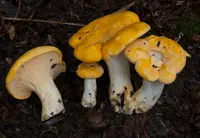
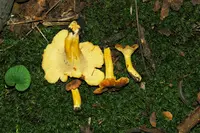
Ghost chanterelle, Cantharellus phasmatis, is a wild mushroom rather than a traditional houseplant. It forms small, pale to yellow funnel-shaped fruiting bodies with hollow, thin stems. The caps are often translucent at the edges, giving a ghostly look in low light.

This species typically grows on forest floors in parts of North America, often in mixed or hardwood woodlands on rich, decaying organic matter. It relies on a mycorrhizal partnership with tree roots, which makes it very difficult to cultivate at home.

Because of this dependency, attempts to care for Ghost chanterelle in containers or gardens are usually not successful. It prefers shaded woodland conditions with consistently moist, well-drained, humus-rich soil.


Main Plant Requirements

Care Difficulty

Hard Care

Light Preference

Shade

Water Requirements

Keep Soil Moist

Temperature Preference

Cool Climate

Hardiness Zone

Unknown

Soil Texture

Loamy, Peaty, Organic-rich

Soil pH

Strongly acidic (4.5–5.5), Acidic (5.5–6.5)

Soil Drainage

Moist but well-drained

Fertilization

Minimal (feed rarely)

Get Personalized Care Plan

Scan your plant to receive care tips personalized for your specific plant

Available on iOS and Android

How to Care for the Ghost chanterelle

This mycorrhizal fungus requires shaded forest light rather than open sun to fruit reliably.

  • Provide bright shade or dappled woodland light, equivalent to 1–2 hours of weak morning sun and filtered light the rest of the day; avoid direct midday and afternoon sun on the fruiting area.
  • Place Ghost chanterelle near deciduous trees where summer canopy filters 70–90% of direct light, mimicking natural mixed or hardwood forest conditions.
  • Monitor caps for bleaching, cracking, or dry edges in summer as a sign of excessive sun exposure, and use leaf litter or low understory plants to increase shade if needed.

This forest fungus depends on consistently moist, well‑drained soil rather than frequent surface soaking.

  • Aim for soil that stays evenly moist 5–10 cm deep, never waterlogged; the surface may dry slightly between rains while deeper soil remains cool and damp.
  • In cultivation with host trees, ensure humus‑rich, loose soil with good drainage so water moves through quickly but organic matter holds moisture around Cantharellus phasmatis mycelium.
  • Watch for soggy, foul‑smelling soil or mold on leaf litter as signs of overwatering, and for cracked, powder‑dry topsoil and shriveling fruiting bodies as signs of underwatering, especially in hot, windy weather.

This species fruits best in cool to mild forest conditions with moderate seasonal variation.

  • Optimal fruiting typically occurs around 55–68°F (13–20°C), often in late summer to autumn when days are mild and nights are cool but not freezing.
  • The underground mycelium tolerates down to about 32°F (0°C), but repeated hard freezes below 28°F (-2°C) will stop fruiting and can damage exposed mushrooms.
  • Heat above 77–82°F (25–28°C), especially with dry air, reduces fruiting; maintain shade, leaf litter, and soil moisture during hot spells to buffer temperature swings around the root zone.

This fungus depends on consistently moist, humid forest conditions rather than dry, indoor air.

  • Target ambient humidity around 70–90% to keep the substrate and surrounding microclimate damp but not waterlogged.
  • Prolonged exposure to dry air leads to shriveling caps, pale or cracked margins, and slowed or halted fruiting.
  • Increase local humidity by using deep leaf litter, damp moss, or a coarse wood-chip layer that stays evenly moist around developing fruiting bodies.

This mycorrhizal fungus relies on a specific forest soil environment instead of a conventional potting mix.

  • Provide a loose, humus-rich, well-aerated mineral soil with abundant leaf litter and decomposing wood fragments, mimicking a mixed-deciduous forest floor.
  • Ensure drainage is free yet moisture-retentive, so the top layer never stays waterlogged but does not dry out completely between rains.
  • Aim for slightly acidic soil, roughly pH 4.5–6.0, avoiding liming or alkaline amendments that disrupt fungal partnership and fruiting.
  • Improve structure by layering native forest soil with fine bark, leaf mold, and small rotted wood pieces rather than sand or perlite, which do not support typical Cantharellus phasmatis associations.

This species is generally not suitable for container growing, as it depends on complex mycorrhizal relationships with host tree roots in undisturbed soil ecosystems.

Cantharellus phasmatis is a mycorrhizal fungus that relies on its tree partners, so it needs little or no direct fertilization.

Cantharellus phasmatis does not need true pruning, but limited removal of mushroom bodies can be done for hygiene and study.

  • Harvest mature fruiting bodies with a clean knife at the base, leaving mycelium in the soil undisturbed.
  • Remove decayed or moldy mushrooms promptly to reduce disease spread in the patch.
  • Avoid raking or disturbing the forest floor structure, which supports future fruiting.
  • Use gentle hand tools only if needed, focusing on minimal disruption of leaf litter.

This forest-dwelling fungus is rarely container-grown, so management focuses on transplanting associated soil or host plants rather than classic repotting.

  • Attempt transplanting only when moving young host trees with intact root balls from late fall to early spring.
  • Watch for poor fruiting after site disturbance as a sign the symbiosis is stressed, not that repotting is needed.
  • Move a generous volume of original soil around the tree roots to carry as much mycelium as possible.
  • Keep roots shaded and moist during transfer, then water the new site well to reduce stress and support re-establishment.

Propagation of Cantharellus phasmatis is challenging and not reliably achieved in typical garden settings.

This species is naturally cold hardy in its native range and usually needs no special winter care.

  • Allow natural leaf litter to remain as an insulating mulch over the root and mycelial zone.
  • Avoid deep soil disturbance or heavy compaction in winter, which can damage the fungal network.
  • Container-grown host trees in very cold zones can be shifted to a sheltered, unheated space to moderate root freezing.

Care Tips

Host tree mapping

Before any cultivation attempt, identify and map existing suitable host trees (typically mixed hardwoods such as beech, birch, or oak) since this ectomycorrhizal fungus will only establish and fruit in association with compatible roots.

Leaf litter management

Maintain a consistent, undisturbed layer of natural leaf litter 3–5 cm deep around host trees, adding raked leaves from the same area rather than commercial mulch to support moisture retention and fungal mycelium near the soil surface.

Low‑disturbance access

Plan narrow, stable access paths with boards or stepping stones so that foot traffic does not compact soil or break fruiting bodies in productive patches year after year.

Selective harvesting technique

Harvest by gently twisting or cutting at the base and leaving very small or damaged specimens in place, which reduces disturbance to the mycelium network and can improve long‑term yields when growing Ghost chanterelle in the same woodland patch.

Microclimate buffering

In dry periods, use coarse, untreated wood chips placed loosely between leaf layers (not directly on emerging fungi) around host trees to buffer moisture and temperature fluctuations without sealing the soil surface.

Common Pests and Diseases

Mycophagous springtails

These insects feed on fungal tissue and can graze young fruiting bodies, causing surface pitting and malformed caps. Symptoms include small holes, roughened surfaces, and slowed or aborted mushroom development.

Solution

Limit disturbance of the forest floor so the fungal mycelium remains extensive and resilient, and avoid piling decaying plant matter directly over developing chanterelles, which attracts large springtail populations. In small foraging or research plots, gently brush away dense leaf litter right around emerging mushrooms and harvest promptly; do not apply insecticides, as these damage the broader soil microfauna needed for growing Ghost chanterelle.

Slug and snail grazing

These pests rasp soft mushroom tissue, leaving irregular bite marks, shredded edges, and slime trails on caps and stems. Symptoms include missing sections of the fruiting body and rapid aesthetic deterioration after rain.

Solution

Encourage natural predators such as ground beetles and birds by avoiding broad-spectrum chemicals, and keep thick, wet debris slightly thinned around productive patches without exposing soil completely. In small managed sites, hand-remove slugs and snails during damp evenings and place coarse barriers like rough gravel or crushed eggshells around key fruiting zones, avoiding direct disturbance of the mycelium.

Fungal parasitism

This disease occurs when other fungi colonize chanterelle fruiting bodies, leading to misshapen, discolored, or waterlogged mushrooms that decay quickly. Symptoms include unusual surface molds, off-colors, and soft, collapsing tissue.

Solution

Remove and discard parasitized mushrooms as soon as they are noticed so spores of the parasitic fungus do not spread through the immediate patch. Maintain good airflow by lightly opening dense ground vegetation around productive areas without deeply disturbing duff or roots, and avoid leaving damaged or old fruiting bodies on the ground in heavily managed or research plots.

Bacterial soft rot

This disease causes localized watery spots that quickly become slimy, malodorous, and collapse the mushroom tissue. Symptoms include translucent patches on stems or caps that turn into soft, foul-smelling decay, especially in warm, wet conditions.

Solution

Harvest only firm, undamaged mushrooms and remove any that show early softening so they do not spread bacteria onto nearby fruiting bodies during handling or in collection containers. In managed forest or cultivation-style trials, reduce standing water and heavy splashing on the forest floor by improving drainage paths and avoiding trampling that compacts soil and creates puddles around productive areas.

Interesting Facts

Recently described species

This North American chanterelle was formally described as a distinct species in 2019, after decades of being overlooked or confused with other yellow chanterelles based on appearance alone.

Ghostly bioluminescent stems

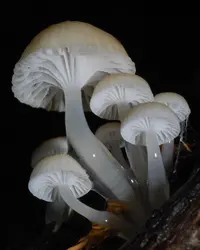
Fresh fruiting bodies show weak natural bioluminescence in the stipe (stem), which glows faintly in the dark and inspired the species name phasmatis, meaning ghostly or spirit-like.

Distinctive two-toned coloring

Mature mushrooms often show a bright yellow, funnel-shaped cap contrasted with a distinctly paler or whitish stipe, a color pattern that helps separate it from other similar chanterelle species in the Great Lakes region.

Botan icon

Did you know?

Molecular phylogenetic work, which compares DNA sequences to reconstruct relationships, revealed that this species forms a separate lineage within the yellow chanterelles of the upper Midwestern United States, highlighting previously hidden diversity in a group once thought to contain only a few widespread species.

FAQs about Ghost chanterelle

This species is considered edible and has been collected as a wild mushroom in parts of North America. However, identification must be certain, as similar pale fungi can be toxic. Beginners should forage only with expert confirmation.

Grow Healthy Plants with Botan Care

Keep your plants happy and healthy with plant identification, disease detection, and easy care guidance.

Botan plant care app — identify plants on mobile

Explore More Plants