Host tree selection
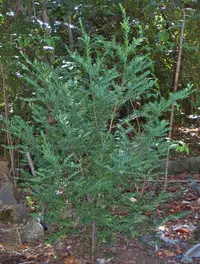
Establish the fungus only near compatible mycorrhizal hosts such as spruce, fir, or beech, and avoid sites dominated by non-mycorrhizal or heavily fertilized turf to give the symbiosis a realistic chance to form.

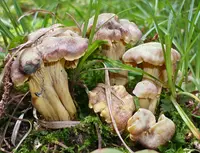
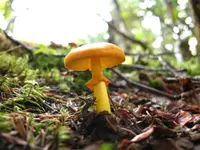
The amethyst chanterelle, Cantharellus amethysteus, is a wild mycorrhizal fungus, not a typical houseplant. It forms funnel-shaped, yellow fruiting bodies dusted with violet to purple scales, especially near the cap center. The underside has shallow, forked ridges rather than true gills.
This species usually grows in association with conifers and beech in European woodlands, often appearing in mossy, well-drained forest soils. It is considered a choice edible in regions where it is naturally found.
For those exploring how to care for amethyst chanterelle, it is important to know that this fungus is difficult to cultivate at home because it depends on a close partnership with tree roots and stable woodland conditions.

Care Difficulty
Hard Care

Light Preference
Partial Shade

Water Requirements
Regular Water

Temperature Preference
Cool Climate

Hardiness Zone
Unknown

Soil Texture
Loamy, Sandy, Organic-rich

Soil pH
Strongly acidic (4.5–5.5), Acidic (5.5–6.5)

Soil Drainage
Moist but well-drained

Fertilization
Minimal (feed rarely)
Scan your plant to receive care tips personalized for your specific plant
Available on iOS and Android
This mycorrhizal fungus prefers dappled forest light rather than open sun exposure.
This woodland species depends on consistently moist, not saturated, soil shared with its host trees.
This fungus fruits best in mild conditions with cool nights and moderate daytime warmth.
This ectomycorrhizal fungus requires consistently moist, humid woodland conditions to fruit well.
This species depends on naturally formed forest soil rather than artificial mixes.
This mycorrhizal fungus is not suitable for true container growing because it depends on extensive contact with living tree roots in undisturbed soil.
This ectomycorrhizal fungus relies on its tree partners, so direct fertilization of Cantharellus amethysteus is usually unnecessary and can be harmful.
Pruning is not applicable to Cantharellus amethysteus, as it is a wild mycorrhizal fungus rather than a garden shrub or houseplant.
This species is not suited to normal repotting, since Cantharellus amethysteus forms complex mycorrhizal relationships with host tree roots in undisturbed soil.
Deliberate propagation of Cantharellus amethysteus is technically challenging and rarely successful for home growers.
This wild forest fungus is naturally cold hardy in its native range and usually needs no specific winter care.

Plant Health Check
Not sure what's wrong with your plant? Check your plant's health inside the app.
The cap and upper stem often show irregular violet to amethyst spots or patches, a pigment pattern that helps distinguish it in the field from the common golden chanterelle Cantharellus cibarius.
This species is native to Europe and is typically found in montane to submontane coniferous or mixed forests, especially with spruce and fir, rather than being a widespread, generalist chanterelle.
It forms ectomycorrhizal associations with its host trees, meaning its fungal threads coat and penetrate the fine roots, improving water and mineral uptake for the tree while receiving sugars produced by photosynthesis.

Molecular and morphological studies indicate that this taxon has been interpreted differently by various authors, and in some regions collections formerly identified as Cantharellus amethysteus have been reassigned to closely related species, reflecting how chanterelle taxonomy is still being actively revised.
Yes, this species is considered a good edible mushroom when correctly identified and cooked. It must never be eaten raw. Always confirm identification with an expert, since toxic look-alikes can cause serious gastrointestinal symptoms.
Keep your plants happy and healthy with plant identification, disease detection, and easy care guidance.