Pinecone Amanita Care (Amanita magniverrucata)

Also known as: Great Pine Jewel, Great-Warted Lepidella
Pinecone Amanita

About Pinecone Amanita

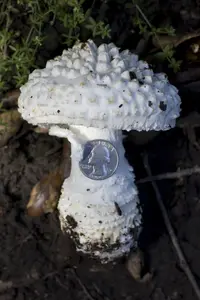
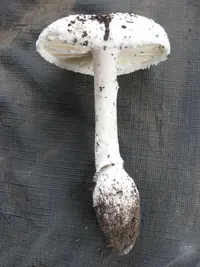
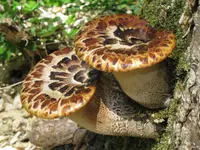
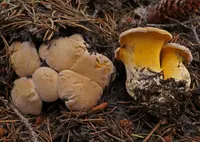
Pinecone amanita, Amanita magniverrucata, is a mycorrhizal mushroom that forms a close partnership with tree roots rather than living as a typical houseplant. It produces sturdy, pale caps covered in large, cone-like warts that resemble a pinecone, with a thick stem and a skirt-like ring. This species is native to western North America, especially coastal conifer and mixed forests. It usually appears in soil under mature trees, often in small groups. In cultivation it is difficult to maintain, because it depends on specific tree partners and undisturbed, woodland-like conditions, so attempts to care for Pinecone Amanita at home are rarely successful.


Main Plant Requirements

Care Difficulty

Hard Care

Light Preference

Partial Shade

Water Requirements

Keep Soil Moist

Temperature Preference

Cool Climate

Hardiness Zone

Unknown

Soil Texture

Loamy, Sandy, Organic-rich

Soil pH

Acidic (5.5–6.5)

Soil Drainage

Moist but well-drained

Fertilization

Minimal (feed rarely)

Get Personalized Care Plan

Scan your plant to receive care tips personalized for your specific plant

Available on iOS and Android

How to Care for the Pinecone Amanita

This ectomycorrhizal fungus prefers light conditions similar to open, mixed woodlands rather than full, exposed sun.

  • Aim for bright, dappled shade with 2–4 hours of gentle morning sun and filtered light the rest of the day under trees or tall shrubs.
  • Avoid strong, direct afternoon sun, which can overheat the soil surface, dry the upper 5–8 cm too quickly, and disrupt Pinecone Amanita fruiting.
  • In summer, provide more shade or leaf-litter cover; in cooler seasons, slightly increased light through thinner canopy is suitable and not harmful.

This woodland fungus depends on consistently moist, well-drained soil rather than frequent surface soaking.

  • Maintain evenly moist, not waterlogged, soil; allow only the top 1–2 cm to begin drying before re-moistening, especially during active fruiting.
  • Use loose, fast-draining, organic-rich soil so water does not pool, since persistent saturation and standing water favor rot and reduce Amanita magniverrucata fruit body production.
  • In hot, dry periods, increase monitoring and water when leaf litter feels dry and crumbly; in cool, wet seasons, reduce supplemental water and watch for sour, anaerobic smells as a sign of overwatering.

This species prefers mild, coastal-type conditions and avoids both hard frost and intense heat.

  • Optimal conditions for growth and fruiting are around 55–70°F (13–21°C), typical of cool, moist woodland or coastal climates.
  • It tolerates brief drops near 32°F (0°C) if soil is insulated with litter, but repeated hard freezes or frozen ground can damage the mycelium and suppress fruiting.
  • Sustained heat above 80–85°F (27–29°C) with dry soil stresses the organism, so maintain shade, mulch, and soil moisture during hot spells to keep the root zone cooler.

This ectomycorrhizal mushroom does not require managed air humidity and is best left in natural outdoor conditions.

This fungus does not grow in conventional potting soil and instead relies on a living tree root system in its native habitat.

  • Amanita magniverrucata forms ectomycorrhizal associations with conifer roots, so it requires undisturbed native forest soil around compatible host trees.
  • Soil should be loose, sandy to sandy-loam with high drainage, often derived from decomposed conifer litter rather than dense, compacted ground.
  • Slightly acidic conditions, typically around pH 5.0–6.0, support its natural habitat, so alkaline or limed soils are unsuitable.
  • Do not amend with heavy compost, peat blocks, or rich potting mixes, since these can disrupt native fungi and water movement around tree roots.

This species is not suitable for container growing and should be observed only in its natural habitat with host trees.

Amanita magniverrucata is a wild ectomycorrhizal fungus that should not be fertilized directly, as added nutrients can disrupt its tree-root partnership.

Pruning is not applicable to Amanita magniverrucata, as it is a wild mushroom rather than a woody or leafy plant.

Transplanting or repotting Amanita magniverrucata is not recommended, because this fungus depends on a complex, site-specific association with host tree roots and soil microbes.

  • Attempted transplanting usually fails, since the underground mycelium is extensive and easily damaged.
  • The species relies on established ectomycorrhizal links with compatible trees, which cannot be moved intact.
  • Disturbing soil around fruiting areas can reduce or stop future mushroom production.
  • Management is best limited to leaving the habitat undisturbed rather than trying to move or repot Pinecone Amanita.

Propagation of Amanita magniverrucata is not a practical home technique, as it relies on natural spore dispersal and complex mycorrhizal development with suitable trees.

No intentional winter care is appropriate for Amanita magniverrucata, since it is a wild, cold-tolerant ectomycorrhizal fungus adapted to natural seasonal cycles in its native range.

Care Tips

Host tree selection

Establish this mycorrhizal fungus only with compatible conifers such as Monterey pine or related pines, and avoid planting under heavily fertilized or irrigated lawns where the necessary root-fungus partnership is unlikely to form.

Low‑disturbance zone

Create a no‑till, low‑traffic ring around the host tree drip line so the fine feeder roots and fungal mycelium remain undamaged, which improves long‑term fruiting reliability when caring for Pinecone Amanita.

Mulch management

Maintain a loose 3–5 cm layer of pine needles or conifer bark over the colonized area to conserve moisture and mimic natural forest litter, but keep mulch airy rather than compacted to avoid waterlogging the mycelium.

Watering pattern control

If irrigation is needed for the host tree, apply deep, infrequent watering that wets the root zone but allows a drying period, because constant surface dampness can encourage competing fungi and reduce mushroom production.

Seasonal observation log

Keep a simple yearly record of first appearance dates, weather patterns, and host tree health so over several seasons you can link management practices to better or worse flushes and fine‑tune how to take care of Pinecone Amanita on your site.

Common Pests and Diseases

fungal gill spotting

This disease causes small dark or olive spots and patches on the gills and cap underside, often appearing as the fruiting body ages in damp conditions. Symptoms include softening of tissues, patchy discoloration, and faster collapse of the cap.

Solution

Remove and discard affected mushrooms promptly to limit spore spread, and avoid handling healthy fruiting bodies after touching infected ones. Improve air movement and reduce standing moisture around the fruiting area by thinning nearby vegetation or adjusting irrigation so caps dry quickly after rain or watering.

slime molds

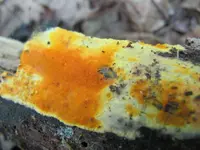
These organisms form slimy, often brightly colored patches or crusts that creep over caps, stems, or nearby litter, especially during long wet periods. This pest can deform young mushrooms and speed up decay of older ones.

Solution

Gently remove affected mushrooms and any visible slime masses with a tool or gloved hand, then dispose of them away from the site. Reduce dense organic debris and excessive surface moisture where possible so fruiting bodies form in better-aerated leaf litter with quicker drying between rains.

mycophagous springtails

These insects are tiny, pale arthropods that gather on the surface and gills of mushrooms, feeding on spores and soft tissue. Symptoms include pitted areas on the cap surface, minor scarring, and a dust-like movement when disturbed.

Solution

Minimize thick, constantly wet leaf layers by lightly loosening or redistributing litter, which reduces ideal habitat for large springtail populations. Harvest specimens early if monitoring a patch for study, and avoid adding extra water that keeps the ground saturated for long periods.

fungus gnat larvae

These insects lay eggs in moist organic matter, and the larvae tunnel through mushroom stems and caps, leaving soft, water-soaked channels and small entry holes. Symptoms include wilting, hollow stems, and rapid breakdown of the fruiting body.

Solution

Remove and discard infested mushrooms as soon as tunneling is noticed and avoid leaving old, decaying fruiting bodies on site, which can support more larvae. If fruiting occurs near managed beds or paths, reduce constant wetness by adjusting watering schedules and improving drainage so the surface layer does not stay saturated.

Interesting Facts

Distinct coastal habitat

This species is strongly associated with coastal pine forests in western North America, especially under Monterey pine and related species in fog-influenced areas near the Pacific Ocean.

Heavy warted cap

The cap is covered with large, coarse, pyramid-shaped white warts that contrast sharply with the darker background, making it more heavily ornamented than many related amanitas.

Local endemism pattern

It is considered regionally restricted to parts of California and the Pacific coast, illustrating how some ectomycorrhizal fungi evolve tight geographic and host associations rather than broad, cosmopolitan distributions.

Botan icon

Did you know?

Molecular phylogenetic studies have shown that this fungus, once grouped broadly within the Amanita pantherina complex, represents a distinct evolutionary lineage that helped clarify species boundaries in this difficult group of look-alike amanitas.

FAQs about Pinecone Amanita

This mushroom is considered toxic and potentially dangerous if eaten by people or animals. It may cause serious neurological and gastrointestinal symptoms. Treat it as strictly non-edible and keep children and pets from handling or consuming it.

Grow Healthy Plants with Botan Care

Keep your plants happy and healthy with plant identification, disease detection, and easy care guidance.

Botan plant care app — identify plants on mobile

Explore More Plants