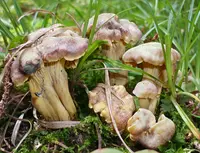
Dryad's Saddle Care (Cerioporus squamosus)

Also known as: pheasant's back mushroom, pheasant's back polypore
Dryad's Saddle

About Dryad's Saddle

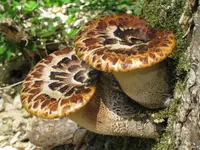
Dryad's saddle, Cerioporus squamosus, is a large bracket fungus rather than a leafy plant. It forms thick, shelf-like caps with brown scales on a creamy background, often layered on top of each other.

It typically grows on dead or weakened hardwood trees, especially maples and elms, across temperate regions of North America and Europe. The fruiting bodies appear mainly in spring and early summer.

This species is considered an edible wild mushroom when young, with firm but tender flesh, although texture becomes tough as it matures. It is not commonly cultivated, so most people who care for Dryad's Saddle focus on encouraging healthy host trees and suitable moist, shaded woodland conditions.


Main Plant Requirements

Care Difficulty

Moderate Care

Light Preference

Partial Shade

Water Requirements

Keep Soil Moist

Temperature Preference

Cold Hardy

Hardiness Zone

4–9

Soil Texture

Loamy, Organic-rich

Soil pH

Acidic (5.5–6.5), Slightly acidic (6.5–7.0)

Soil Drainage

Moist but well-drained

Fertilization

Minimal (feed rarely)

Get Personalized Care Plan

Scan your plant to receive care tips personalized for your specific plant

Available on iOS and Android

How to Care for the Dryad's Saddle

This wood-decaying bracket fungus prefers cool, shaded woodland light rather than strong direct sun.

  • Provide dappled or filtered light under trees, with 1–3 hours of gentle morning sun and full shade by afternoon for stable moisture and temperature.
  • Site Dryad's Saddle on the north or east side of logs or stumps so fruiting bodies are protected from harsh midday and afternoon sun.
  • In hot summers, shield from direct sun to prevent drying and cracking; in early spring or fall, slightly brighter, cool light promotes stronger fruiting.

This fungus relies on consistently moist wood rather than direct soil watering.

  • Ensure the host log or stump stays evenly moist, not waterlogged; the outer 2–3 cm of wood should feel damp but not soft or rotten from standing water.
  • In dry or windy periods, hose or soak the wood thoroughly, then allow excess surface water to drain away before conditions turn warm.
  • Cerioporus squamosus shows underwatering as shrunken, brittle caps and overwatering as slimy, foul-smelling tissue on persistently saturated wood.

This temperate fungus fruits best in cool to mild conditions and struggles with extreme heat or hard freezes.

  • Optimal fruiting typically occurs around 50–70°F (10–21°C), especially in cool, moist spring or fall weather after rains.
  • Fruiting bodies tolerate brief drops near 32°F (0°C) but can be damaged by hard, prolonged frost, so expect flushes mainly outside deep winter.
  • Sustained heat above 80°F (27°C), especially with low humidity, often halts new growth and causes caps to dry and toughen quickly.

Humidity is not a major factor for Cerioporus squamosus, which forms outdoors on wood and relies more on moisture in its substrate than air humidity.

This wood-decay fungus does not use soil in the usual sense but needs an appropriate woody substrate and surface conditions instead.

  • Grow Cerioporus squamosus on fresh to slightly decayed hardwood logs or large branches, avoiding conifers and heavily rotted, crumbly wood.
  • Choose logs that hold moisture yet still feel firm inside, as overly dry or punky wood will not support sustained fruiting.
  • Keep the log surface slightly moist with periodic soaking or gentle watering, but avoid standing water or constantly saturated ground contact.
  • If placing logs on soil, raise them slightly on bricks or stones to improve air movement and reduce rot at the contact points.

This species is not well suited to conventional container growing, since it requires substantial hardwood to colonize and fruit reliably.

This wood-decaying fungus grows on nutrient-rich hardwood and usually needs no added fertilizer when established outdoors, so caring for Dryad's Saddle focuses more on habitat than feeding.

Pruning is not used to manage Cerioporus squamosus, since it is a wild bracket fungus rather than a garden shrub or tree.

This species is normally grown on logs or stumps, so transplanting focuses on moving colonized wood rather than handling roots in containers.

  • Transplant in cool, moist weather to reduce drying of the mycelium, the white fungal network inside the wood.
  • Move whole colonized logs or stump sections instead of cutting them apart, which damages the mycelium.
  • Place the wood in a shaded, humid site with similar tree species and moisture to the original location.
  • Avoid frequent disturbance; once a piece of wood is colonized, it is usually left in place until fully decomposed.

Propagation of Cerioporus squamosus is possible but more technical than propagation of common garden plants.

  • Most cultivation uses plug spawn or sawdust spawn inserted into freshly cut hardwood logs in spring.
  • Drill holes in the log, insert spawn, and seal with food-grade wax to maintain moisture and exclude contaminants.
  • Keep inoculated logs in a shaded, wind-sheltered area with 40–60% moisture and good air movement.
  • Allow 6–18 months for full colonization before expecting fruiting, maintaining consistent moisture but avoiding waterlogged conditions.

This fungus is naturally cold hardy in temperate climates and usually needs no special winter care outdoors.

  • Colonized logs can remain outside year-round, as the mycelium tolerates normal seasonal freezes in its native range.
  • Situate logs where they will not sit in standing winter water, which can reduce oxygen and damage the mycelium.
  • For container or bag culture, keep substrates above prolonged hard freeze, for example in an unheated garage or shed.

Care Tips

Targeted log inoculation

Drill evenly spaced holes (about 10–15 cm apart in a diamond pattern) into fresh hardwood logs such as elm or maple, then plug with spawn and seal with food-grade wax to concentrate fruiting in predictable, harvestable clusters.

Moisture-retentive stacking

Stack inoculated logs in a shaded, off-ground crib or lean-to formation so air can move between them while bark contact and overhead shade help keep the wood moist and extend productive life.

Controlled soaking cycles

When production slows, submerge fully colonized but resting logs in clean, non-chlorinated water for 12–24 hours, then stand them upright to drain and trigger a new flush without promoting wood rot.

Slug and insect management

Elevate fruiting logs on bricks or racks and use simple copper barriers or rough, dry mulch zones to reduce slug damage, inspecting developing caps regularly so any pests are removed before harvest.

Harvest timing and hygiene

Cut clusters when caps are still firm with pale, flexible edges using a clean, sharp knife, and remove trimming debris from the fruiting area to limit mold buildup and support consistent results when growing Dryad's Saddle.

Common Pests and Diseases

Competing wood-decay fungi

This disease issue arises when other wood-decay fungi colonize the same log or stump and outcompete Dryad's saddle for nutrients and space. Symptoms include sparse or distorted fruiting bodies, off-color pores, or the presence of different fungal brackets on the same substrate.

Solution

Remove sections of wood heavily colonized by other bracket fungi and, if cultivating, introduce fresh, clean hardwood with spawn of Cerioporus squamosus only. Maintain good airflow and moderate moisture around the log or bed to favor this species and reduce the chance of mixed, competing fungal communities, which is central to successful Cerioporus squamosus care.

Fungus gnat larvae

These insects lay eggs in moist, organic substrates, and the larvae feed on fungal mycelium and young fruiting bodies. Symptoms include stunted or aborted mushrooms and small maggot-like larvae visible in the flesh when cut open.

Solution

Reduce excess surface moisture and avoid constantly saturated substrate, allowing the top layer to dry slightly between waterings. Use fine mesh or netting to physically exclude adult gnats from the fruiting area, and remove heavily infested fruiting bodies promptly to break the life cycle.

Slugs and snails

These pests feed directly on the soft tissue of developing brackets, leaving irregular holes, slime trails, and sometimes complete loss of young fruiting bodies. Symptoms include chewed edges and damaged pore surfaces, especially in damp, shaded sites.

Solution

Hand-pick slugs and snails in the evening or early morning and use physical barriers such as copper tape, coarse grit, or collars around logs or beds. Keep surrounding vegetation and debris tidy to reduce hiding spots, and if needed, use iron phosphate slug bait placed away from the main fruiting area to limit damage.

Insect larvae (maggots)

These insects, often fly larvae, tunnel into the fruiting bodies and feed internally on the flesh and pores. Symptoms include soft, spongy, or collapsing tissue, small entry holes, and visible larvae when the bracket is cut open.

Solution

Harvest mushrooms promptly at a younger stage, before they become overmature and more attractive to egg-laying flies. Cover outdoor fruiting areas with fine insect netting during peak fly activity and remove and discard heavily infested brackets to reduce the local population.

Interesting Facts

Springtime wood decomposer

This bracket fungus fruits mainly in spring on dead or weakened hardwoods such as maple, elm, ash, and box elder, helping break down lignin and cellulose and returning nutrients to forest soils.

Distinctive scaly cap

The fruiting body forms a tan to yellowish cap densely covered in dark brown, tile-like scales and has pores rather than gills underneath, making it relatively easy to distinguish from many other shelf fungi.

Edible when young

Young, tender fruiting bodies are considered edible and are foraged in some regions, but they quickly become tough and leathery with age, at which point they are no longer suitable for cooking.

Botan icon

Did you know?

The common name dryad's saddle comes from the old idea that tree-dwelling nymphs in Greek mythology, known as dryads, could sit on the broad, saddle-shaped caps of this fungus as if they were small seats.

FAQs about Dryad's Saddle

Young, fresh brackets are edible and often described as having a mild, cucumber-like flavor. Only harvest firm, pale specimens from clean, uncontaminated wood and cook thoroughly. Older brackets become tough, fibrous, and are best avoided.

Grow Healthy Plants with Botan Care

Keep your plants happy and healthy with plant identification, disease detection, and easy care guidance.

Botan plant care app — identify plants on mobile

Explore More Plants