

Simulate fire site
Before inoculation, lightly scorch or kiln-dry a shallow top layer of substrate or collected soil to mimic post-fire conditions that favor Geopyxis carbonaria colonization and fruiting.

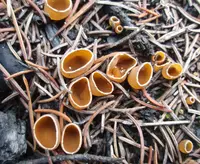
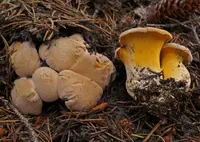
Stalked bonfire cup, Geopyxis carbonaria, is a small cup fungus rather than a traditional leafy plant. It forms shallow, yellow to orange cups on slender stalks, often in clusters.
This species typically appears in recently burned forest soils, especially in conifer areas, where it helps break down organic material after fire. Its growth is strongly linked to fire disturbance, which makes it challenging to cultivate at home.
Most interest focuses on its ecological role, not ornamental use, so information on how to care for Stalked Bonfire Cup in cultivation is limited. It is best appreciated as a seasonal wild fungus in suitable natural habitats.

Care Difficulty
Hard Care

Light Preference
Full Sun

Water Requirements
Low Water

Temperature Preference
Cool Climate

Hardiness Zone
Unknown

Soil Texture
Sandy, Loamy, Rocky

Soil pH
Slightly acidic (6.5–7.0)

Soil Drainage
Well-drained

Fertilization
Minimal (feed rarely)
Scan your plant to receive care tips personalized for your specific plant
Available on iOS and Android
This fire-loving cup fungus thrives in bright, open sites after burns or soil disturbance.
This fungus prefers seasonally moist, well-drained, nutrient-poor soil that is never waterlogged.
This post-fire cup fungus is adapted to cool to moderately warm conditions around burned ground.
Humidity is not a significant factor for Geopyxis carbonaria, which naturally grows on recently burned, exposed substrates.
Geopyxis carbonaria develops on fire-affected, mineral, low-organic substrates rather than typical garden soil.
This fungus is generally not suitable for container culture, as its life cycle depends on complex post-fire soil conditions that are difficult to reproduce in pots.
Geopyxis carbonaria is a saprophytic fungus that gains nutrients from burnt, carbon-rich soil and does not benefit from conventional fertilization.
Geopyxis carbonaria does not require pruning because the visible cups are temporary fruiting bodies, not long-lived plant structures.
This fungus is rarely grown in containers; management focuses on habitat rather than repotting.
Propagation of Geopyxis carbonaria is mainly ecological, relying on spore dispersal and specific post-fire conditions.
Stalked Bonfire Cup is a cold-hardy, fire-adapted fungus that needs no special winter care in outdoor settings.

Plant Health Check
Not sure what's wrong with your plant? Check your plant's health inside the app.
This fungus typically appears only after forest or heathland fires, fruiting on freshly burned soil rich in charred organic matter while many other organisms are still absent.
Its small, pale to orange cup-shaped fruiting bodies often grow directly among charcoal pieces, a growth habit that reflects its strong association with burnt wood and ash substrates.
The cup shape helps concentrate and then release spores into air currents, and it tends to fruit in the first 1–3 years after a burn, taking advantage of open, low-competition habitats created by fire.

Geopyxis carbonaria is frequently used by ecologists and forest managers as an indicator species for recent fire events, helping reconstruct burn history and post-fire succession patterns in coniferous forests.
This cup fungus is generally regarded as inedible. It is not known to be dangerously toxic, but it is small, tough, and of no culinary value. For safety, it is best not to eat it.
Keep your plants happy and healthy with plant identification, disease detection, and easy care guidance.

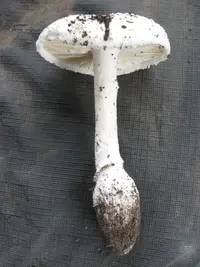
Australian Flour Lepidella
Amanita farinacea
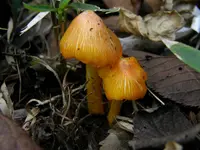
Golden Waxy Cap
Hygrocybe flavescens
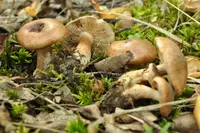
Tricholoma populinum
Tricholoma populinum
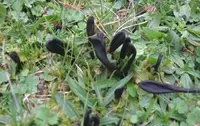
Geoglossum cookeianum
Geoglossum cookeianum
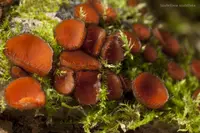
Common Eyelash
Scutellinia scutellata
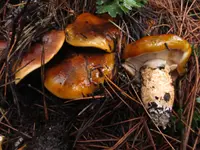
Necklace Tricholoma
Tricholoma focale
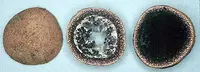
marbled false truffle
Elaphomyces muricatus
Rainbow Chanterelle
Cantharellus roseocanus